

Audio By Carbonatix
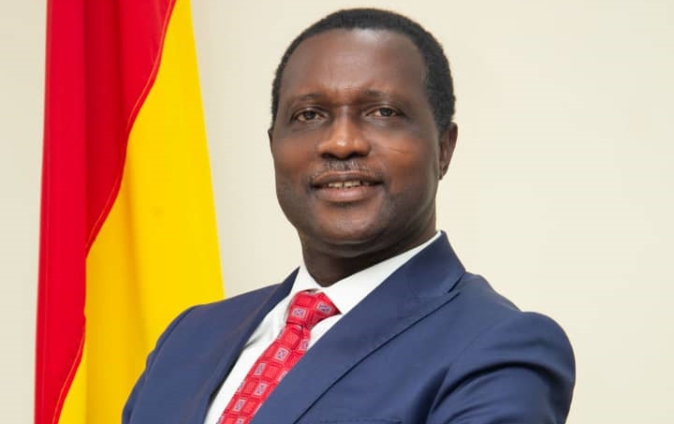
The Education Minister says calls to reverse the procurement and distribution of foodstuffs for senior high schools from the government back into the hands of school authorities are misplaced.
According to Dr. Yaw Osei Adutwum, such a reversal in policy is not the panacea to solving food shortages in senior high schools, as was experienced last year.
Last year, many schools were hit with acute food shortages following the National Buffer Stock Company’s delay in supplying the much-needed commodities to school pantries across the country.
This led to some schools temporarily shutting down, and some parents had to send food to their wards at school.
The Conference of Heads of Assisted Secondary Schools (CHASS) lamented that the frequent shortages were constraining academic work across the country and making it near-impossible to keep senior schools open.
They had called on the government to decentralize the distribution of foodstuffs to allow heads of schools to be responsible for the procurement of food for their students.
However, the Education Minister, speaking in an interview on Accra-based Citi FM, noted that it was the failure of the previous regime that had necessitated the centralization of food procurement and distribution to schools.
“There was a programme called the School Feeding Programme in the north, it was controlled by the schools and every now and then, schools were shut down so it’s not a panacea that the fact that you control it means that there will be no glitches, that’s not the point. The point of the matter is that you set up systems and you improve upon them."
“For example, last year we did procurement and it was sent to certain locations in the regions and it’s been working. So the bottom line is that it’s not so much about if I control then everything will be great. If that was the case during the time of the northern school feeding programme there were great challenges,” he said.
He noted that to overcome the challenges faced by the Buffer Stock company last year, the Commodities Exchange has been added to the distribution and procurement mix.
“That is why we brought in the commodities exchange; they have been doing a fantastic job.”
He explained that “it’s not about the money but the capacity of buffer stock was at a point overstretched. Because we started small, now you’re talking about feeding about 1.4 million and consequently one agency may not have the capacity to do everything so I was happy when we came to the conclusion that commodity exchange should be part of the mix and as you said their participation has led to a marked improvement.”
Latest Stories
-
Drug bust: NACOC should be part of port inspection team – Twum-Barimah
3 minutes -
Ward appointed Liverpool’s sporting director
3 minutes -
This isn’t the first cocaine bust; NPP must stop the politicisation – NACOC deputy boss
7 minutes -
Drug bust case: Only Customs officers, MPS officials in scanning room – NACOC
1 hour -
I don’t mind being insulted; I have a crocodile skin – President Mahama
1 hour -
Samson’s Take: Verify the badge – and verify the story
2 hours -
President Mahama explains why Ghana must rethink regulation of TikTok, other new media platforms
2 hours -
Rule of law must be protected – GBA condemns EOCO action against Baffour Awuah
3 hours -
950,000 barrels of Sankofa crude head to TOR as GNPC deepens domestic refining
4 hours -
Scales of deception removed – Annoh-Dompreh attacks new cocoa price
4 hours -
Young Positivist Writes : My Experience with GCLP
5 hours -
Strong Day 1 turnout sets tone for Day 2 of Republic Bank-JoyNews Habitat Fair Clinic
5 hours -
Ghana Army warns new soldiers against social media misuse, uniform abuse
6 hours -
AMA calls for science-led action to tackle environmental health risks in Accra
6 hours -
NPP Canada Organizer BigMo urges Diaspora to support Kodua Frimpong
7 hours