

Audio By Carbonatix
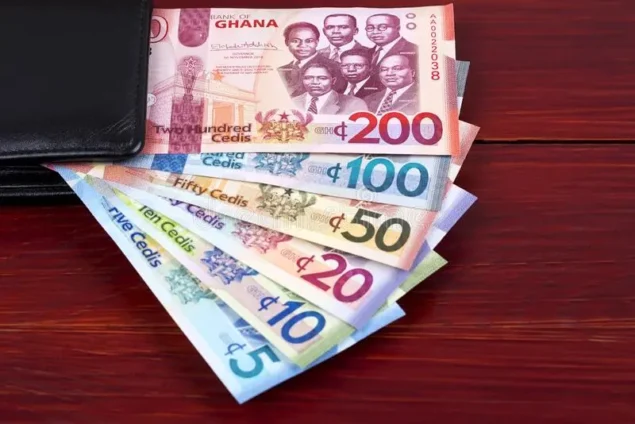
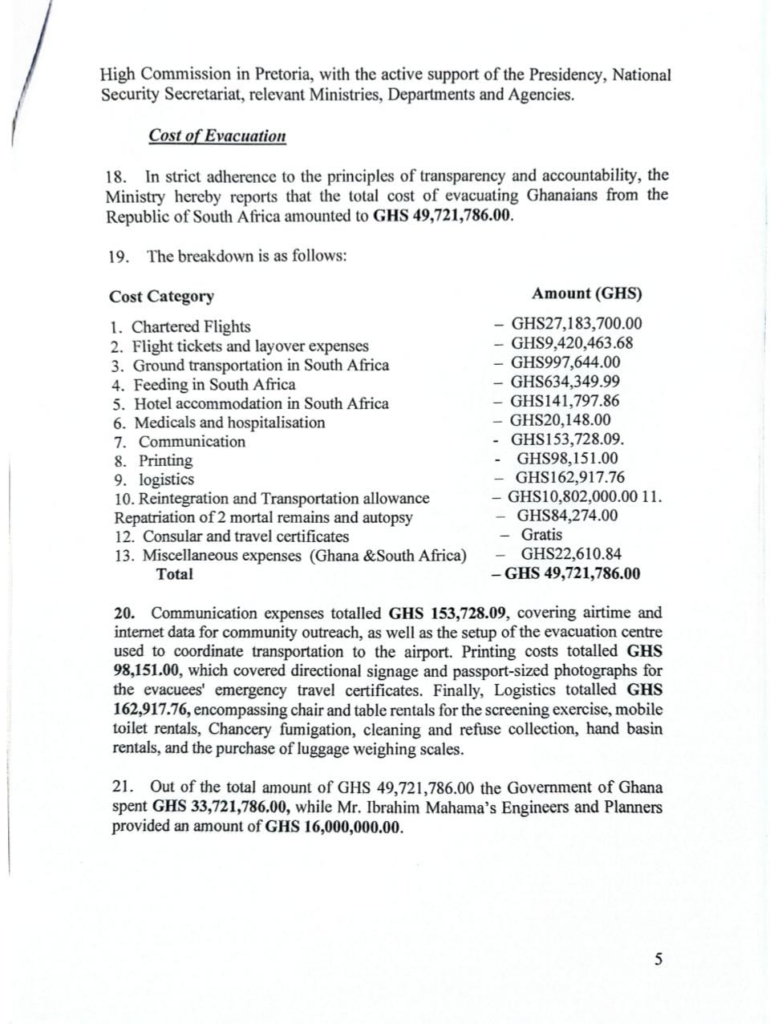
The Ministry of Foreign Affairs earlier disclosed that GH¢27.18 million was spent on chartered flights during the government’s GH¢49.72 million evacuation of Ghanaians from South Africa following a resurgence of xenophobic attacks.
The amount was the single largest expenditure item and accounted for more than half of the operation’s total cost, according to a detailed financial breakdown provided in response to a Right to Information (RTI) request submitted by the Minority in Parliament.
The exercise brought 1,964 Ghanaians home between 27 May and 4 September 2026.
Documents detailing the expenditure show that GH¢27,183,700 was spent specifically on chartered flights.
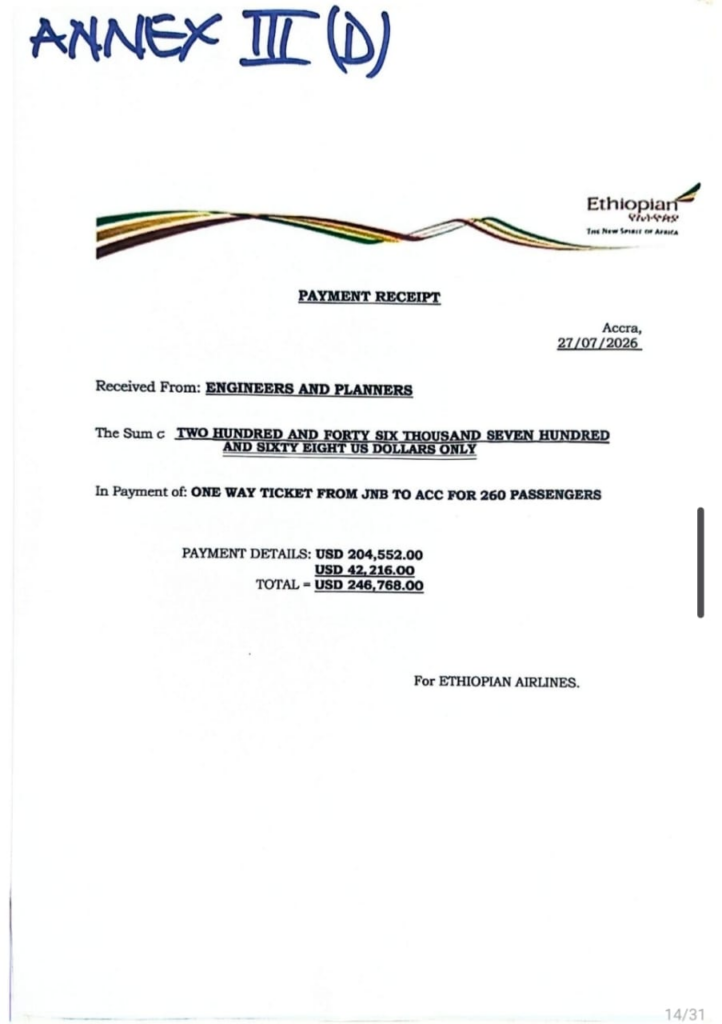
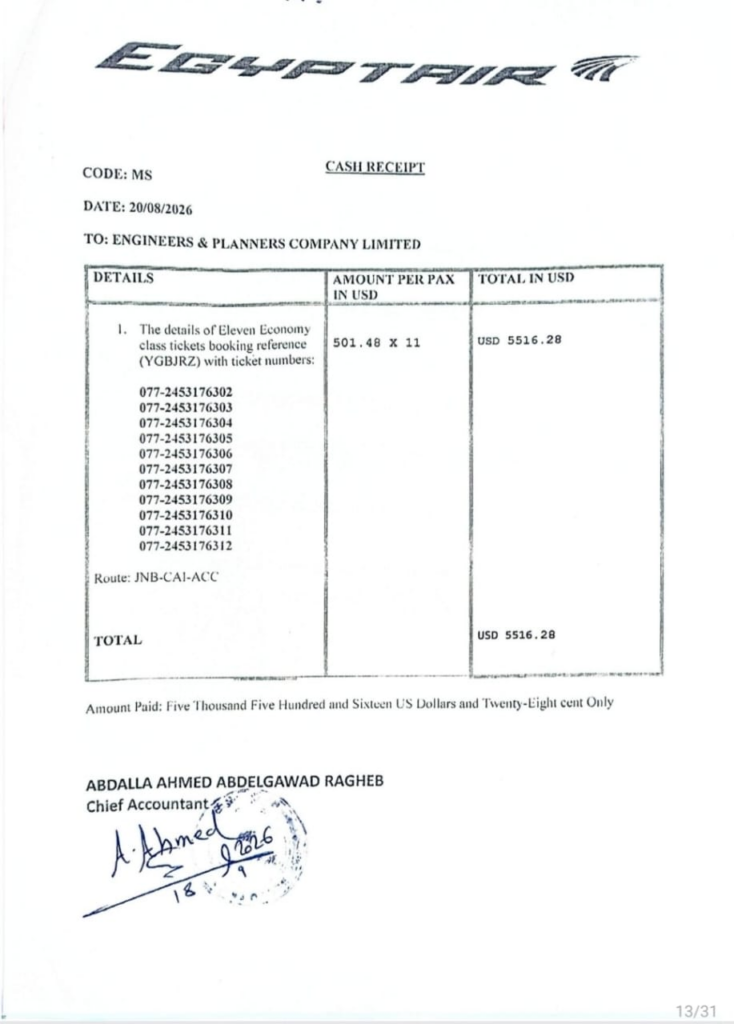
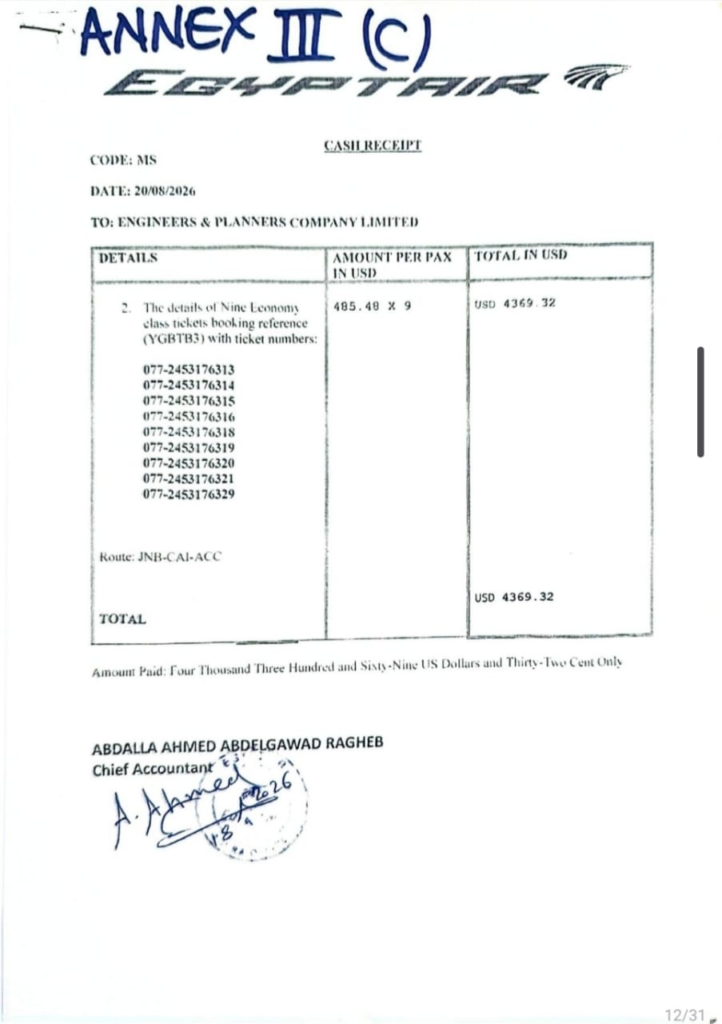
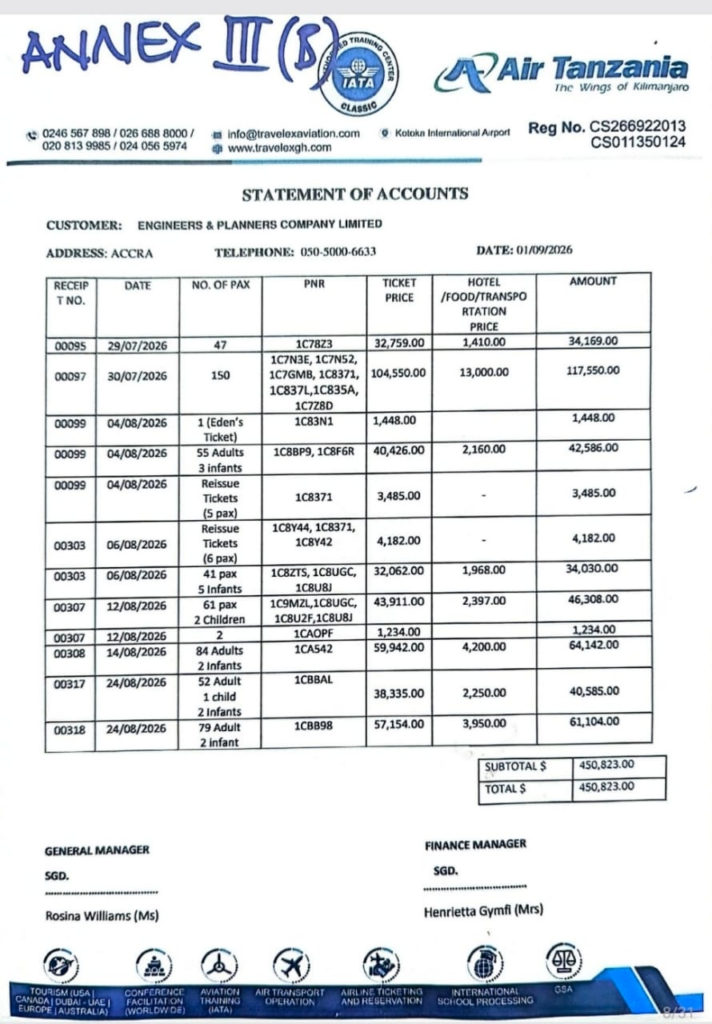
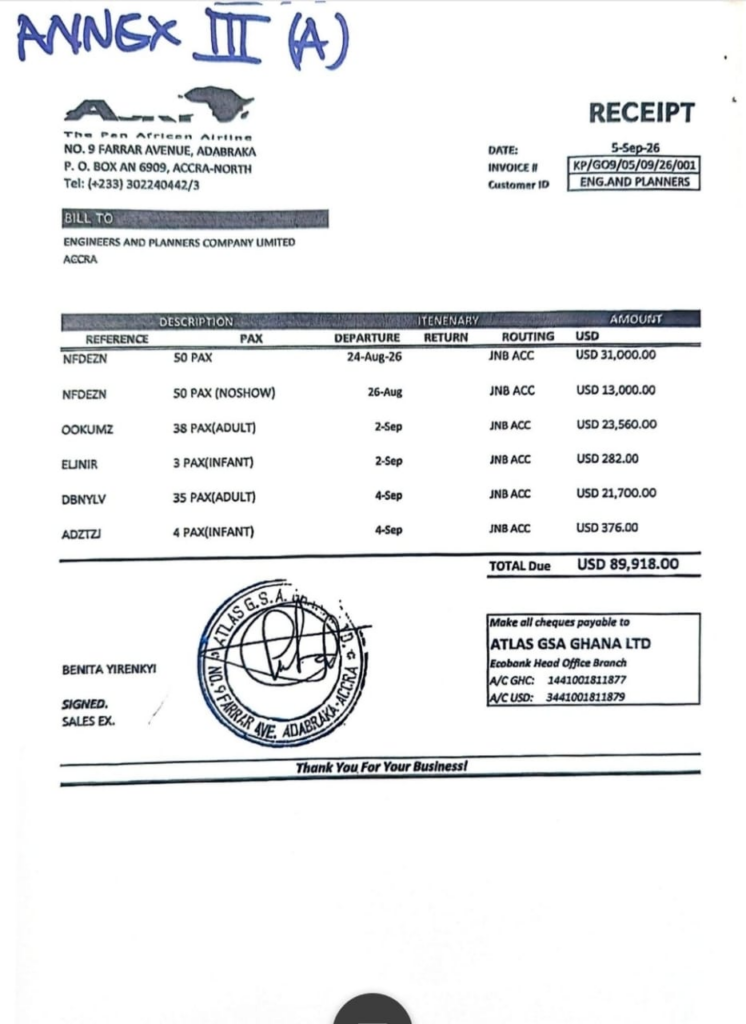
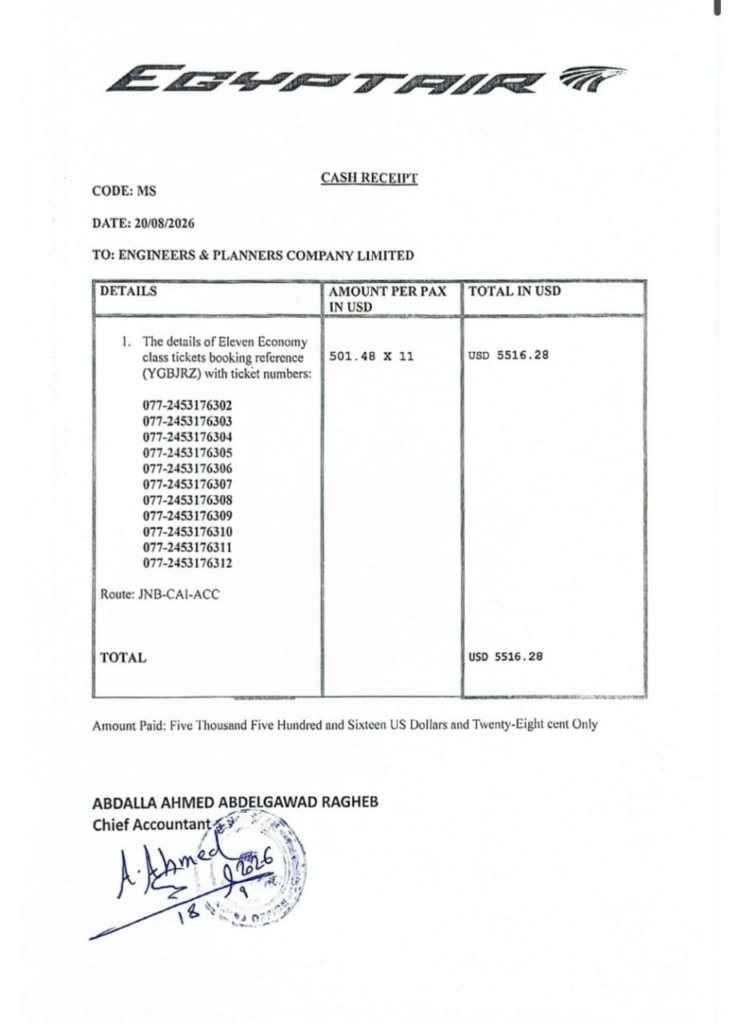
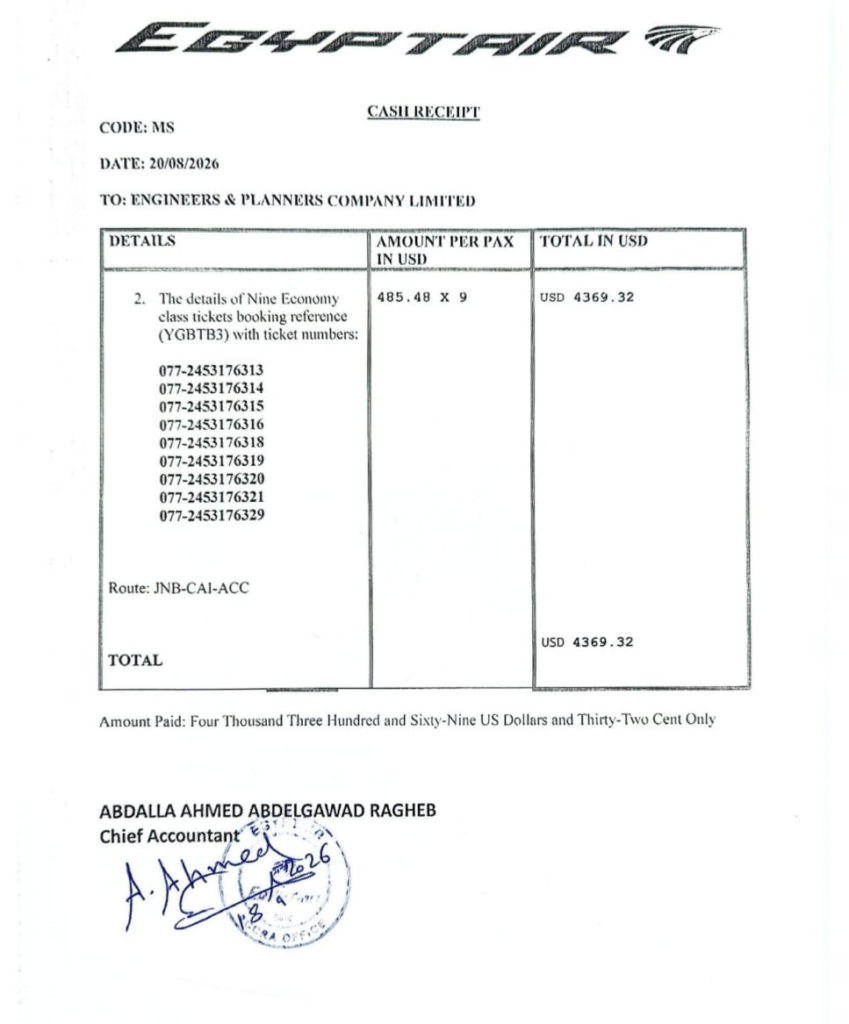
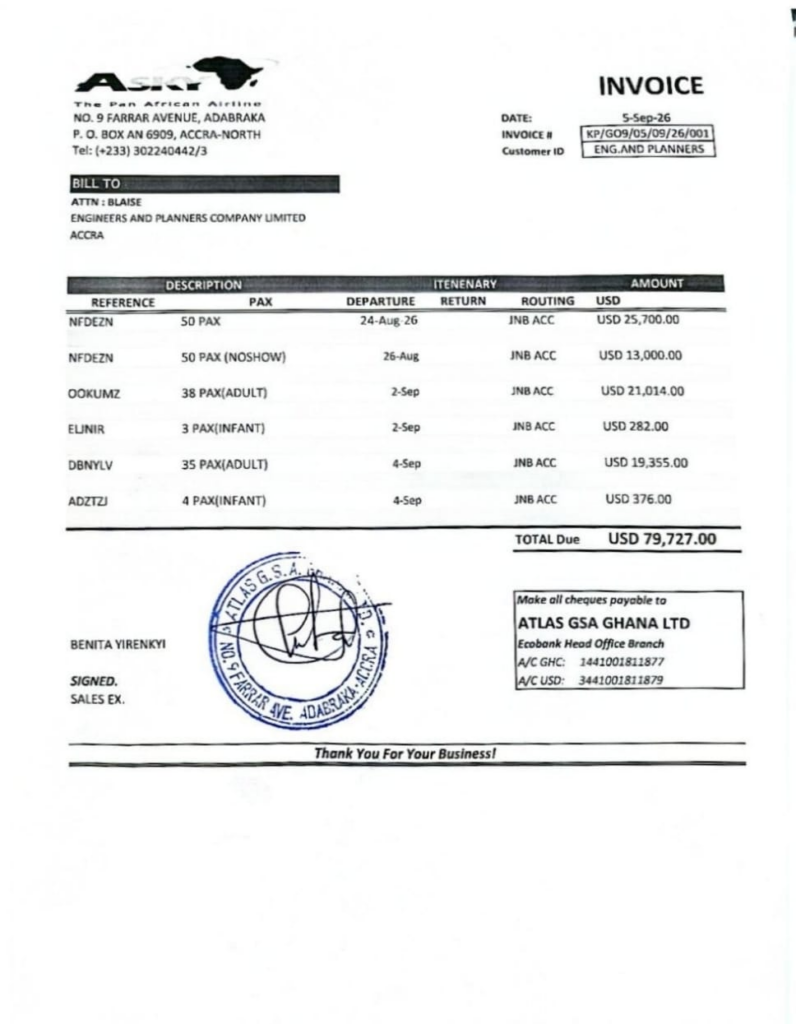
An additional GH¢9,420,463.68 went towards commercial airline tickets and layover expenses, bringing the amount spent directly on air transportation to more than GH¢36.6 million.
The remaining expenditure covered emergency assistance and logistics required to complete the operation.
In this report, Myjoyonline explained how every cedi was spent during the exercise.
Ground transportation, food and accommodation
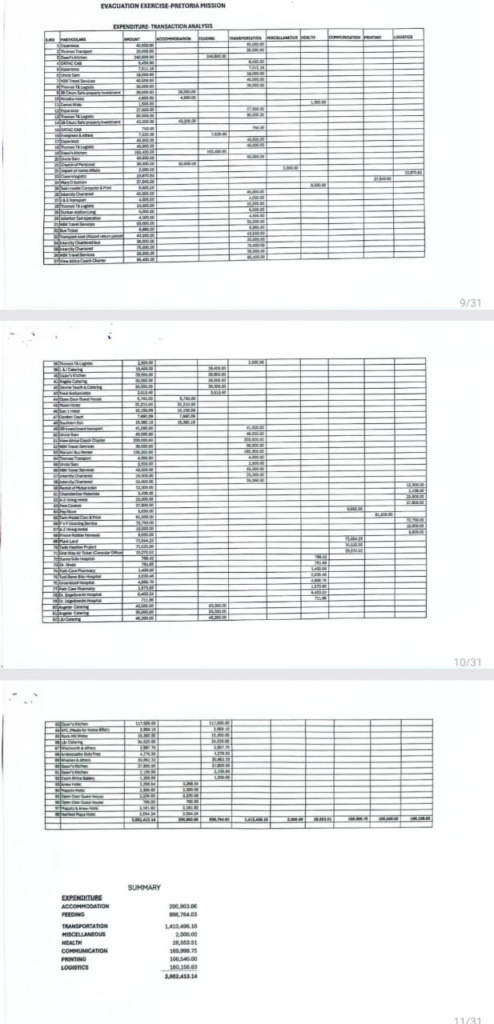
According to the breakdown, GH¢997,644 was spent on ground transportation in South Africa, while food cost GH¢634,349.99.
Hotel accommodation accounted for GH¢141,797.86, with GH¢20,148 spent on medical services and hospitalisation.
The operation also incurred communication expenses of GH¢153,728.09. This covered airtime and internet data for community outreach, as well as the establishment of an evacuation centre to coordinate the movement of returnees to the airport.
Printing expenses totalled GH¢98,151 and covered directional signs and passport photographs required for emergency travel certificates.
Another GH¢162,917.76 was spent on logistics, including the rental of chairs and tables for screening exercises, mobile toilets, handwashing basins and luggage-weighing scales. It also covered fumigation of the Chancery, cleaning and refuse collection.
The repatriation and autopsies of two deceased Ghanaian nationals cost GH¢84,274, while GH¢22,610.84 was recorded as miscellaneous expenditure.
GH¢10.8m spent on reintegration allowances
One of the largest expenditure categories after air transportation was the GH¢10.802 million spent on reintegration and transportation allowances.
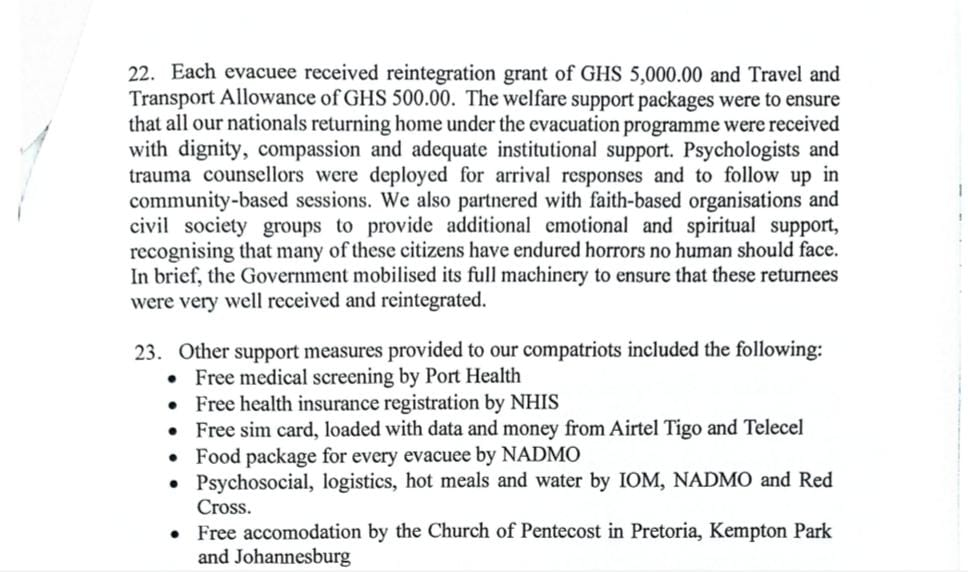
Each returnee received a GH¢5,000 reintegration grant and a GH¢500 travel and transportation allowance, amounting to GH¢5,500 per person.
The government said the payments were intended to provide immediate assistance and help the returnees resettle after their experiences in South Africa.
The official account also indicates that psychologists and trauma counsellors were deployed to provide support upon arrival and within the returnees’ communities.
The evacuees received free medical screening, National Health Insurance Scheme registration, SIM cards loaded with data and airtime, and food packages.
The International Organization for Migration, the National Disaster Management Organisation and the Ghana Red Cross Society also provided psychosocial assistance, logistics, hot meals and water.
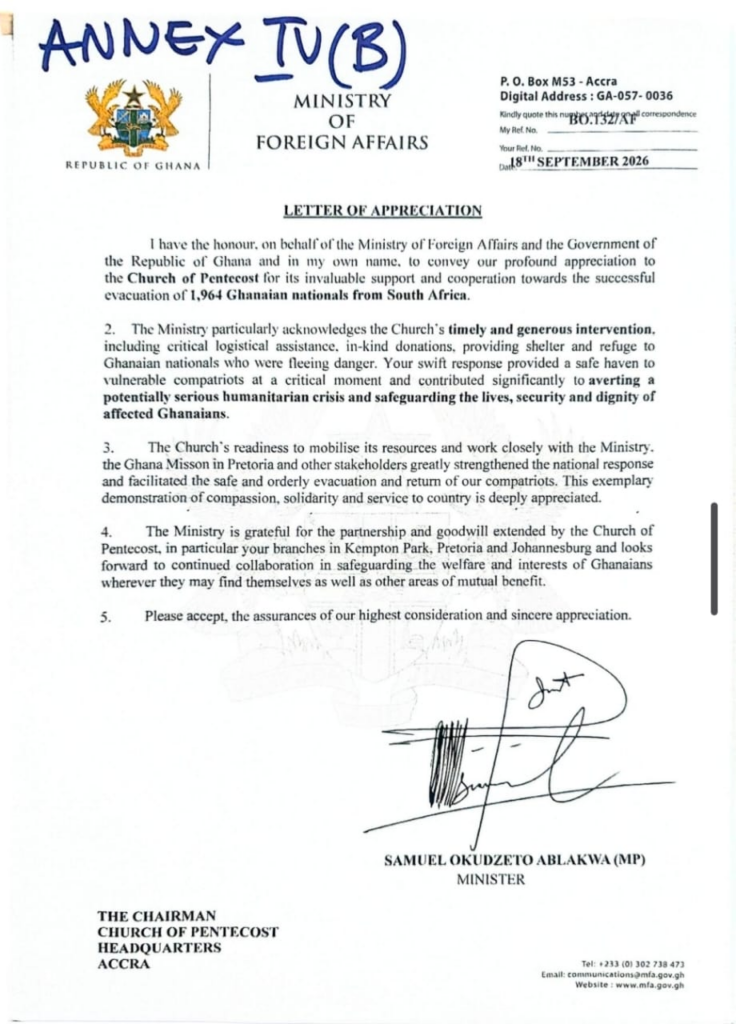
The Church of Pentecost provided accommodation for affected Ghanaians in Pretoria, Kempton Park and Johannesburg.
Government and private company financed operation
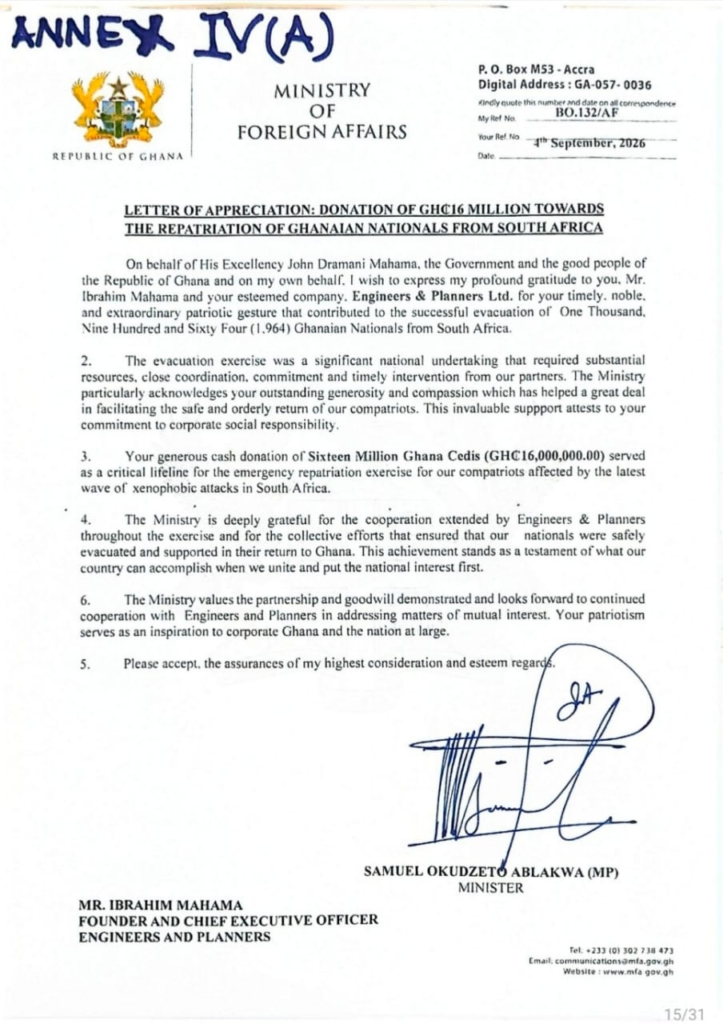
The Government of Ghana contributed GH¢33,721,786 towards the operation, while Engineers and Planners, owned by businessman Ibrahim Mahama, provided GH¢16 million.
The government said the entire evacuation bill had been settled, with no outstanding liabilities.
Four-month operation ends
The evacuation began on 27 May 2026, with the initial flights prioritising vulnerable groups, including children, older people, women and those requiring medical attention.
The final group of 41 evacuees arrived in Accra on 4 September, bringing the four-month exercise to an end.
The government described the evacuation as an emergency response to deteriorating security conditions and growing anti-foreigner sentiment in parts of South Africa.
The expenditure breakdown comes as the Minority seeks documentary evidence supporting the government’s financial account.
The Foreign Affairs Ministry has also requested a special audit of government-funded evacuation exercises undertaken since 2017, including the COVID-19, Ukraine, Sudan and South Africa operations.
The latest disclosure provides the most comprehensive account yet of how the GH¢49.72 million spent on the South Africa evacuation was allocated.
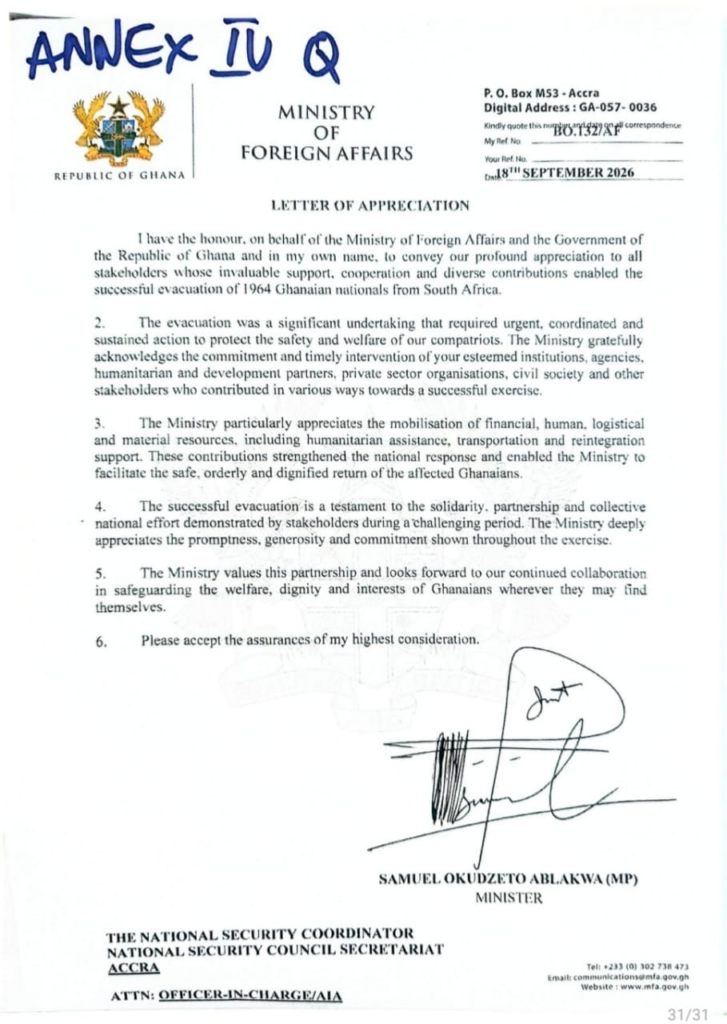
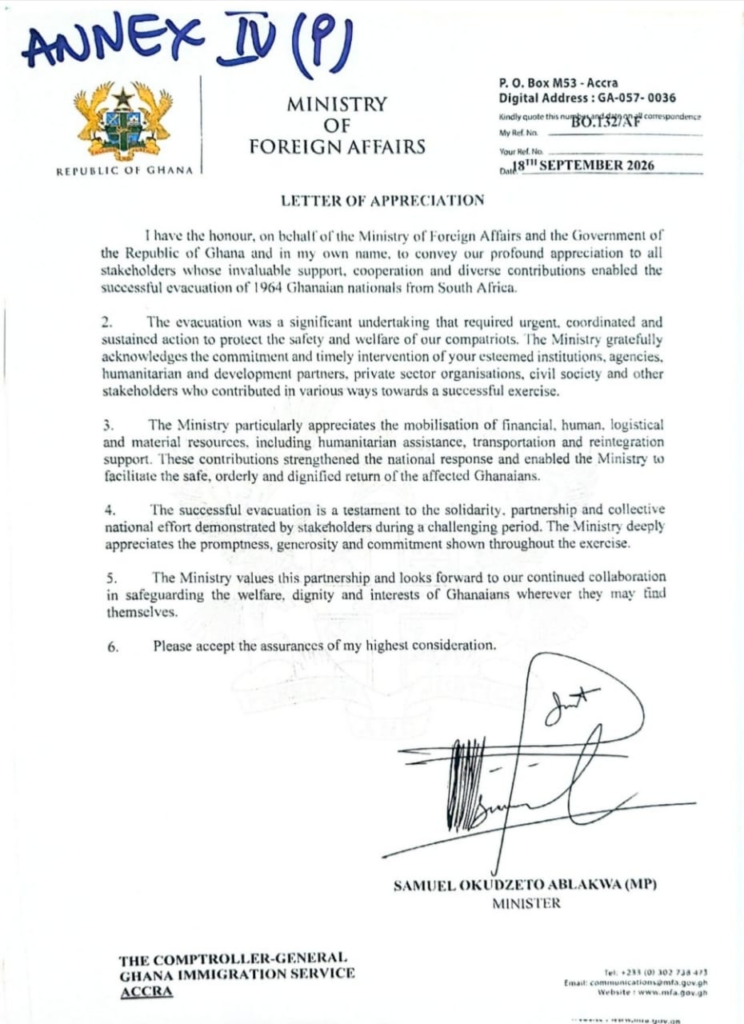
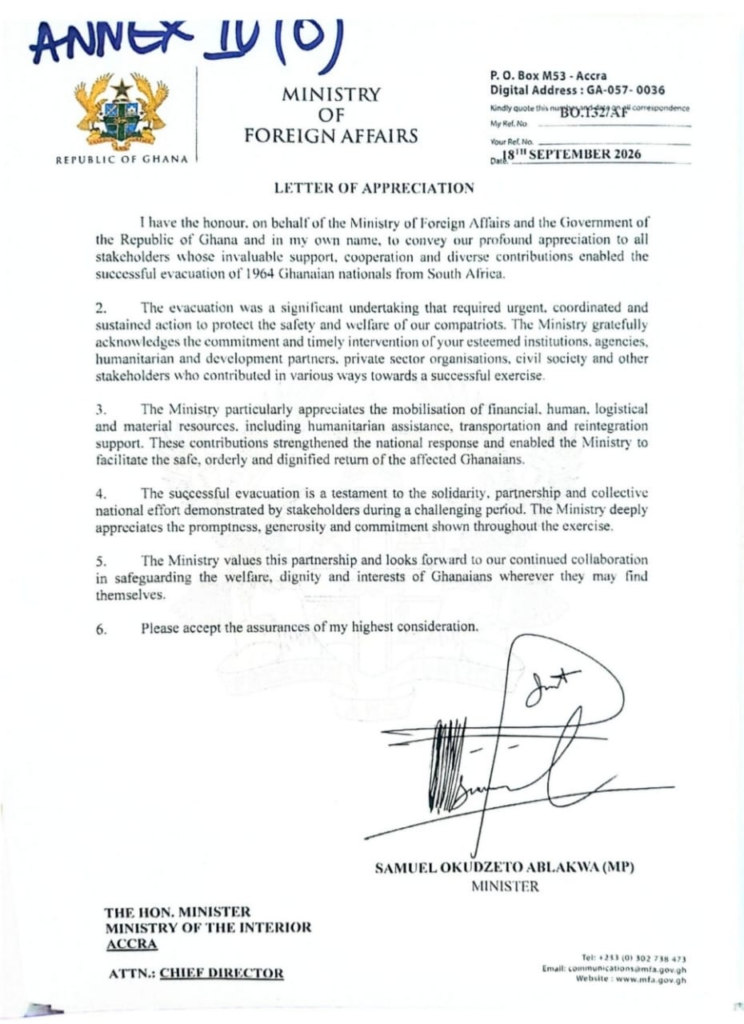
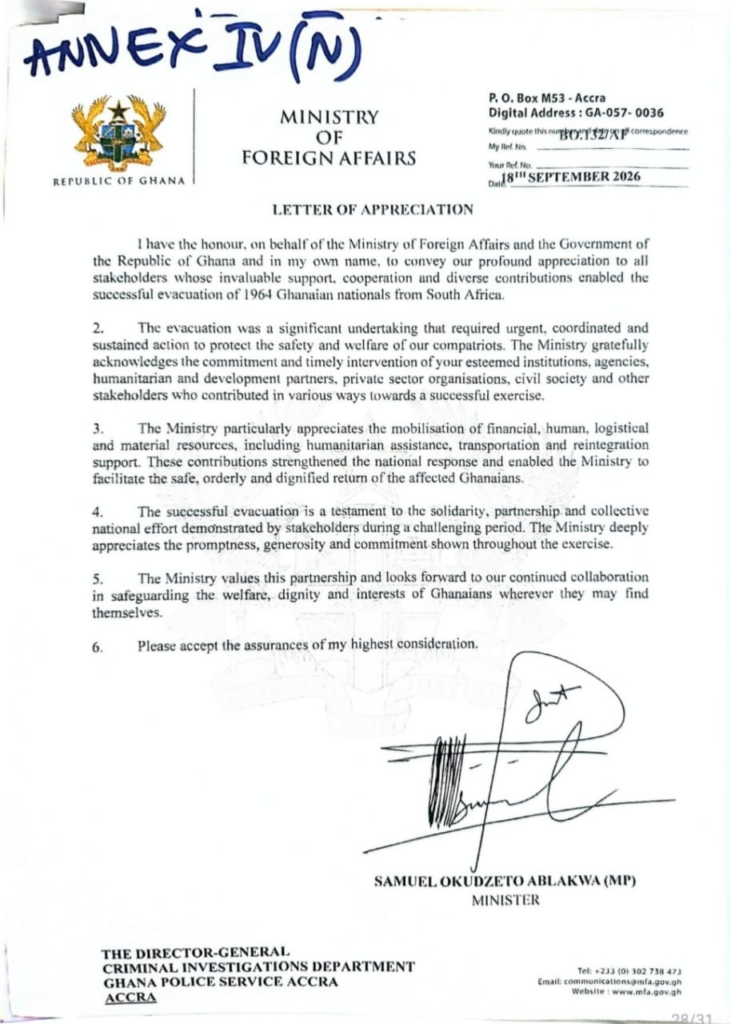
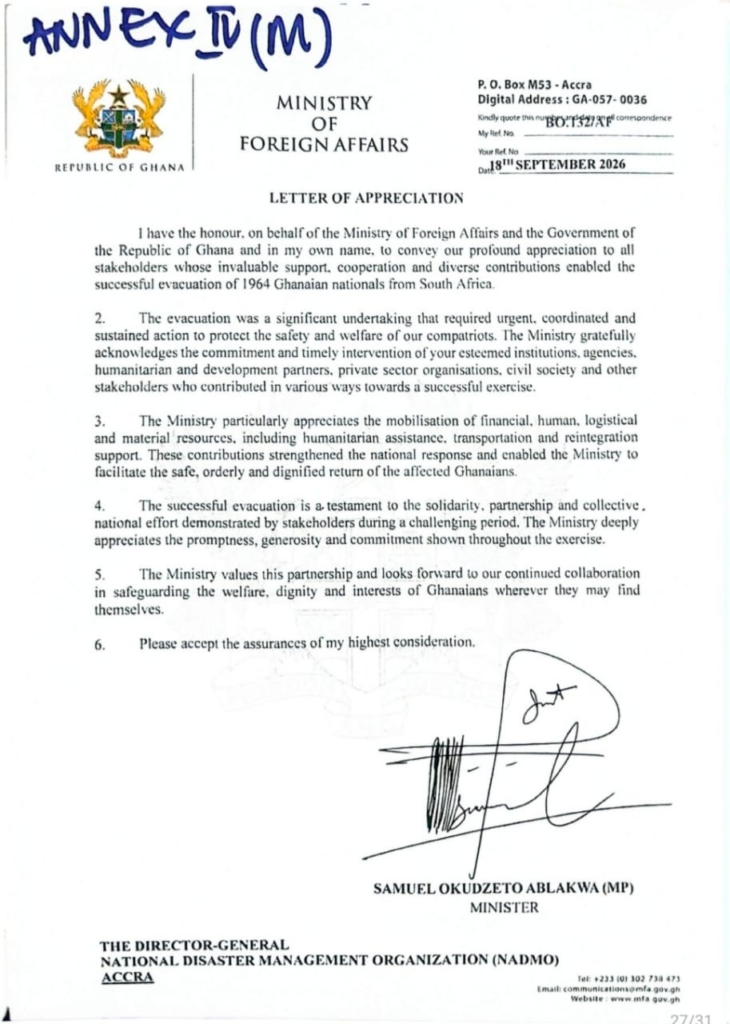
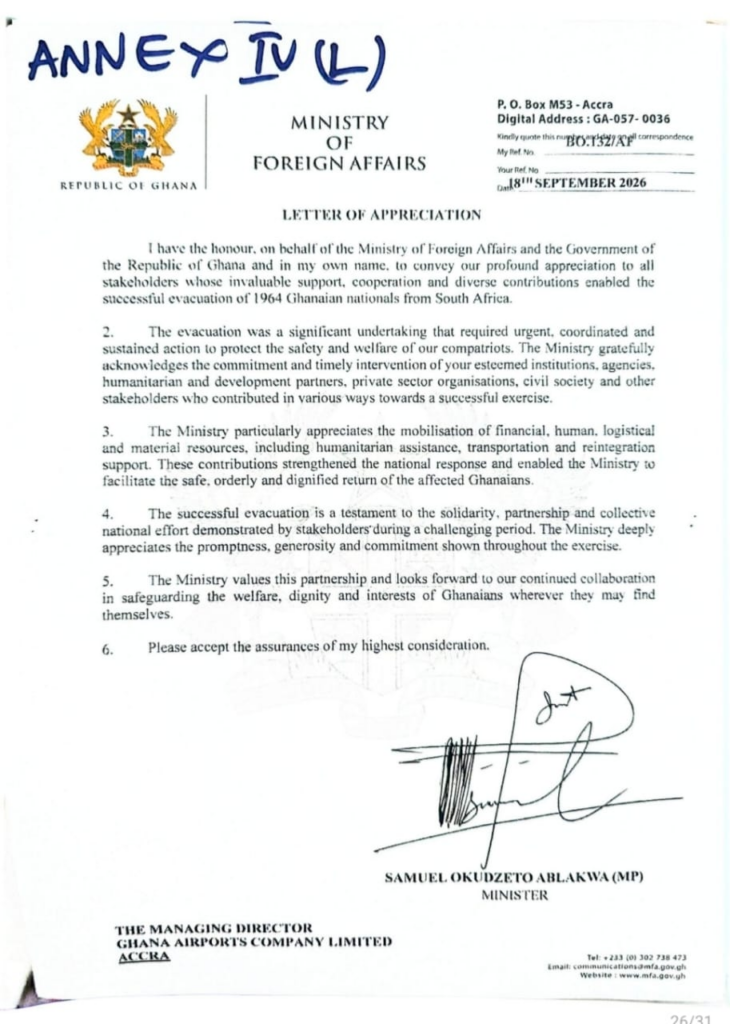
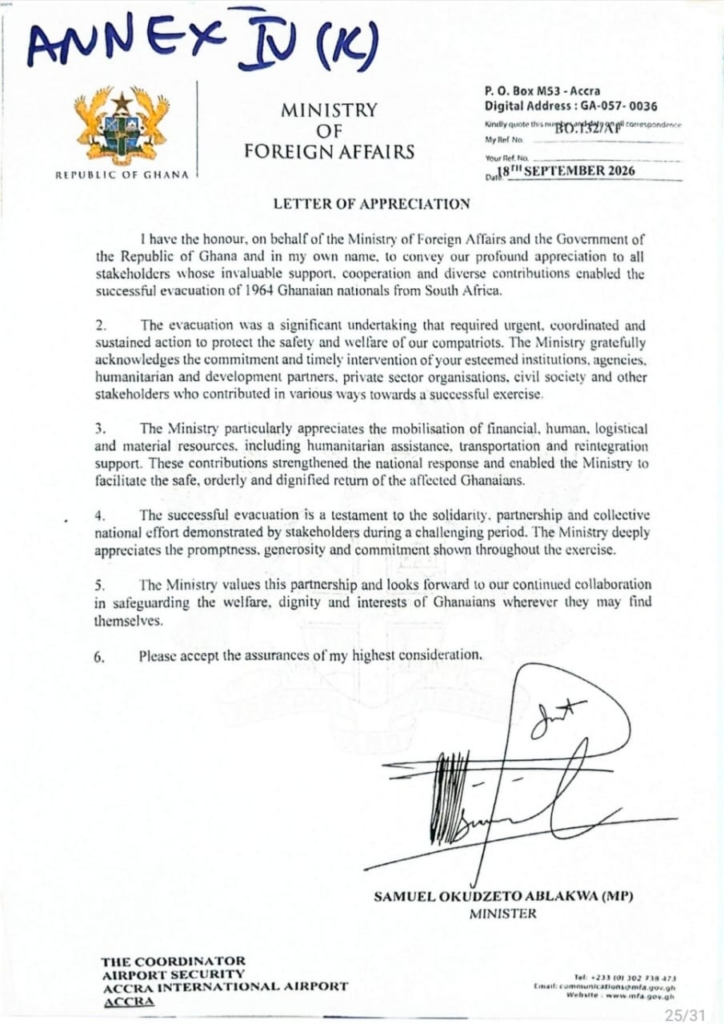
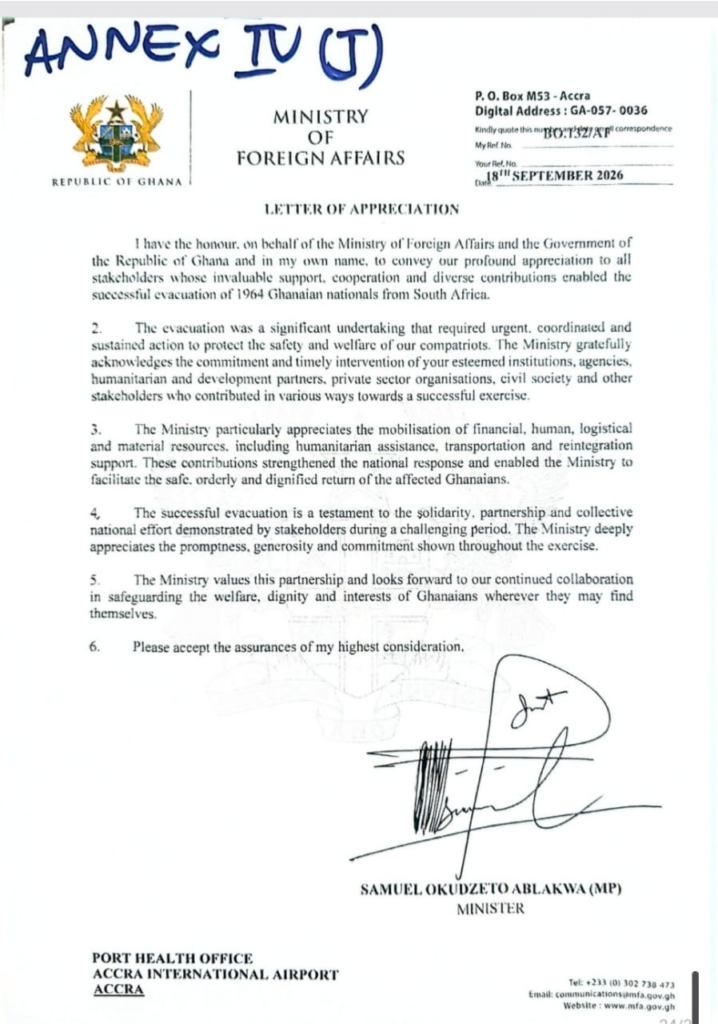
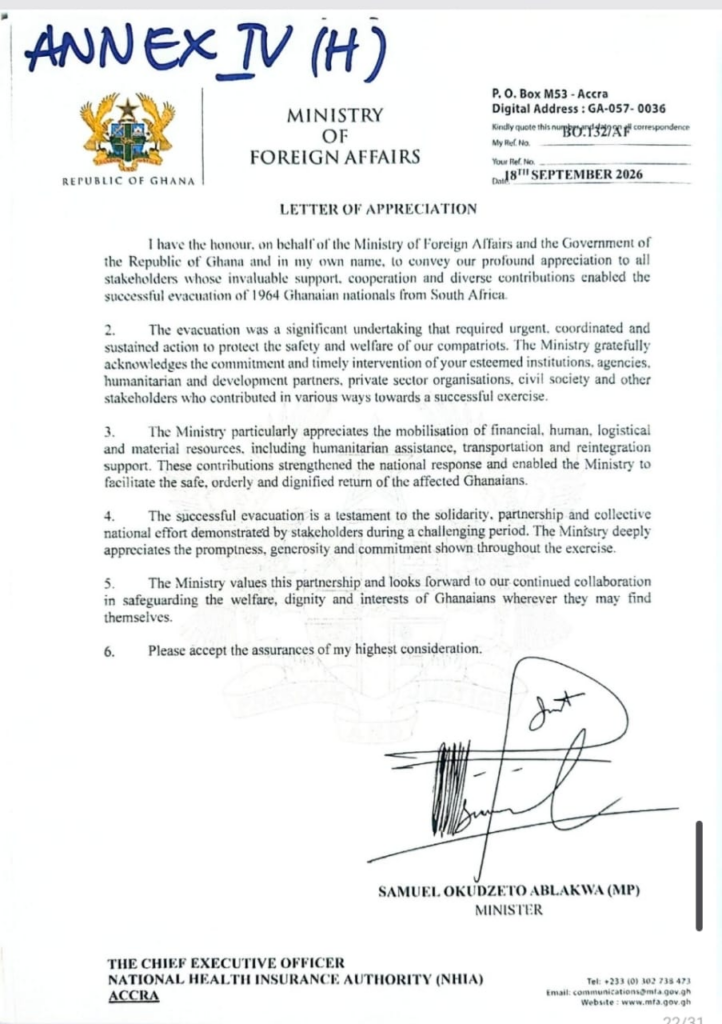
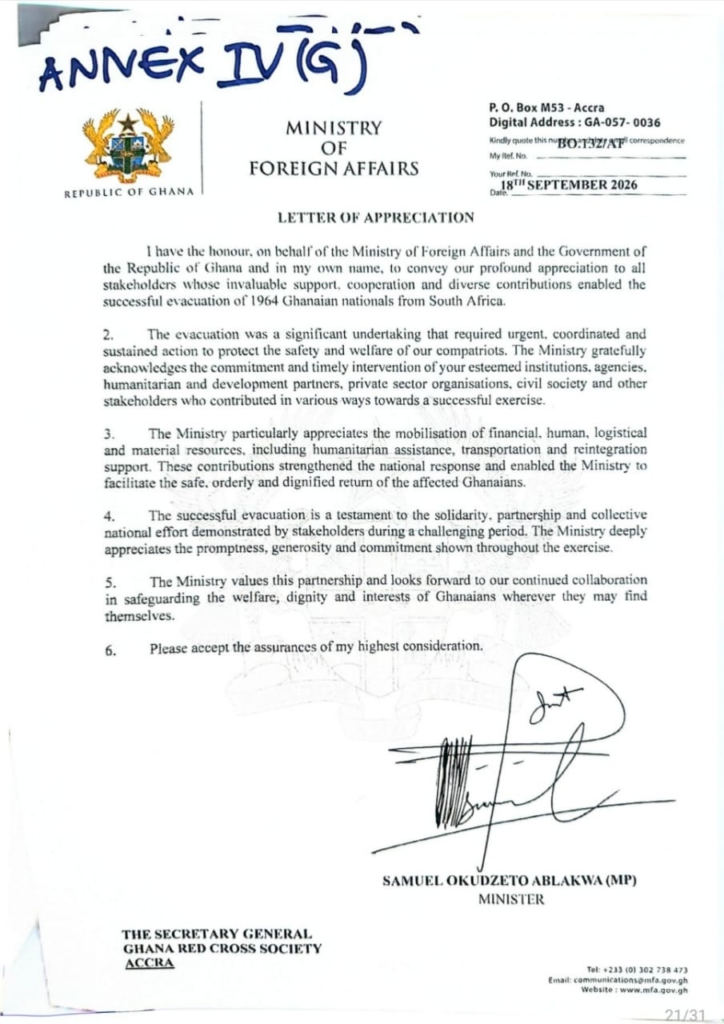
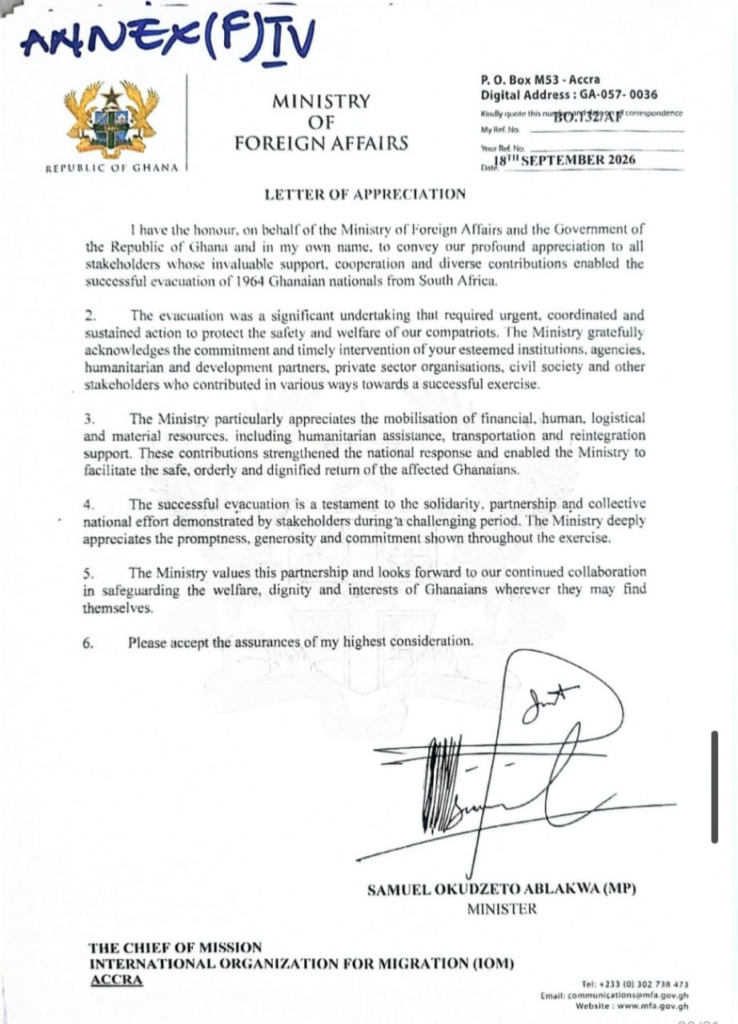
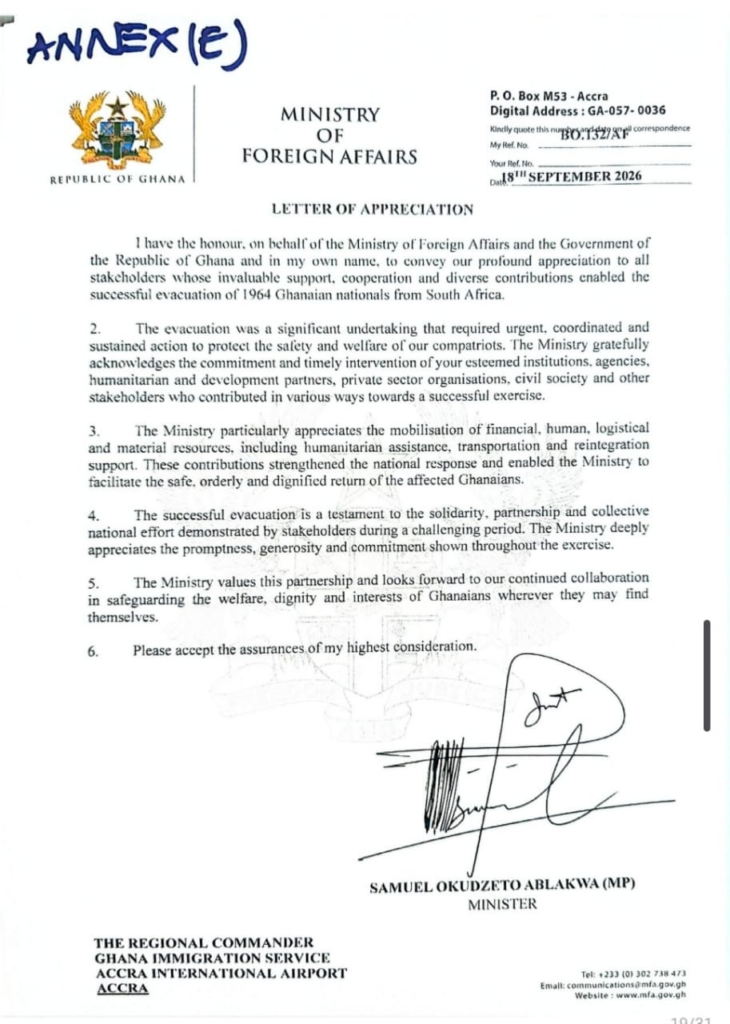
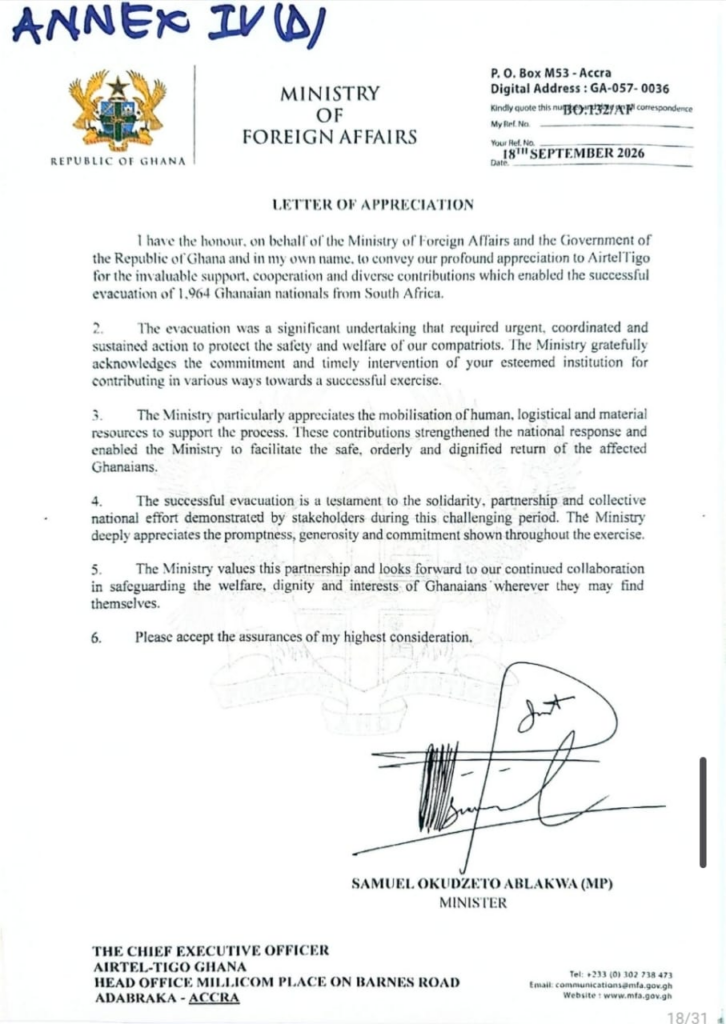
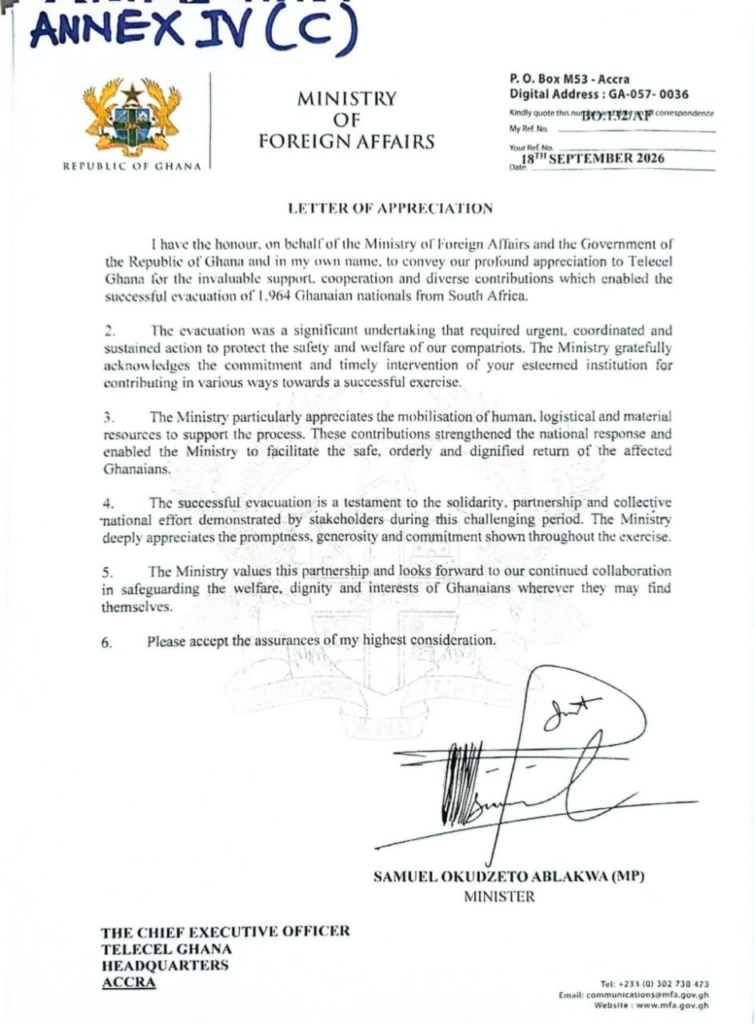
Other important documents are below.
Latest Stories
-
‘Insult culture has become increasingly attractive’ – Rev. Ntim Fordjour
12 minutes -
Samson’s Take: Mr President, let the court speak before the bulldozer
17 minutes -
Inconsistency in applying laws on false publication problematic – Barker-Vormawor
21 minutes -
Ghana Jollof: If police have established other people are involved, why haven’t they arrested them? – Barker-Vormawor
30 minutes -
Commissioner-General calls for stronger tax cooperation to boost regional revenue mobilisation
31 minutes -
Ghana Jollof: Police must distinguish criminal speech from unpleasant content – Barker-Vormawor
38 minutes -
If it was wrong under NPP, it cannot be right under NDC – Barker-Vormawor
40 minutes -
Don’t turn away students over trunks and chop boxes – GES directs SHSs
54 minutes -
Foreign Affairs Ministry requests special audit of evacuation spending since 2017 to date
1 hour -
Livestream: Newsfile discusses Ghana Jollof case, cocaine shipment, COVID audit, constitutional reforms
2 hours -
SA Evacuation Exercise: Detailed breakdown of the GH¢27.18m spent on chartered flights
2 hours -
Foreign Affairs Ministry submits 200-page report to Minority on GH¢49.7m South Africa evacuation
2 hours -
US and Denmark reach deal over Greenland after Trump annexation threats
2 hours -
Ghanaian nurses set for US opportunities as GEA brokers Columbus partnership
2 hours -
Time to list Uncle Ebo Whyte in Guinness Book
3 hours