

Audio By Carbonatix
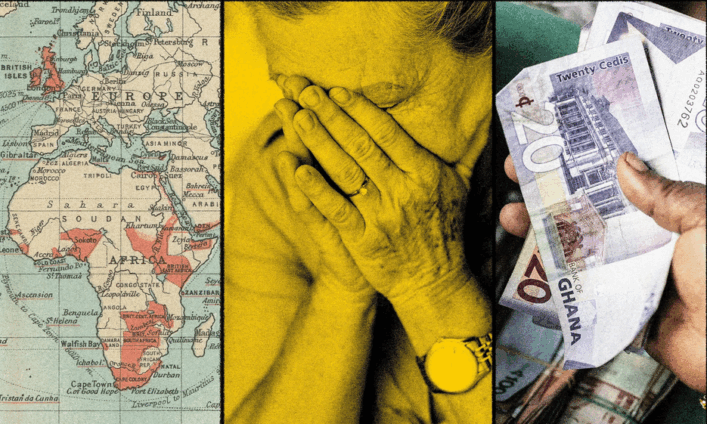
Fraudsters in Ghana are deliberately targeting British women in online scams as retribution for colonialism, a report has claimed.
Accra, Ghana’s capital, is a hub for gangs of cyber criminals, known as Sakawa Boys, who pose as white men on Facebook to manipulate affluent Western women into entering a relationship.
Over months, the criminals dupe their victims with sob stories claiming medical emergencies or personal trauma, and convince them to part with up to hundreds of thousands of pounds.
Those caught by police feel little remorse for the financial destruction they have wrought and some even claim it is “retributive justice” for gold and slaves seized by the British Empire, according to a research article based on a series of interviews with 13 Ghanaian fraudsters and five police officers.
“A popular saying among Sakawa Boys is that ‘they [white men] exploited our ancestors with mirrors and gunpowder; we will reclaim our resources with computers and brains’,” Dr Suleman Lazarus, a criminologist from the London School of Economics and author of the article, told The Telegraph.
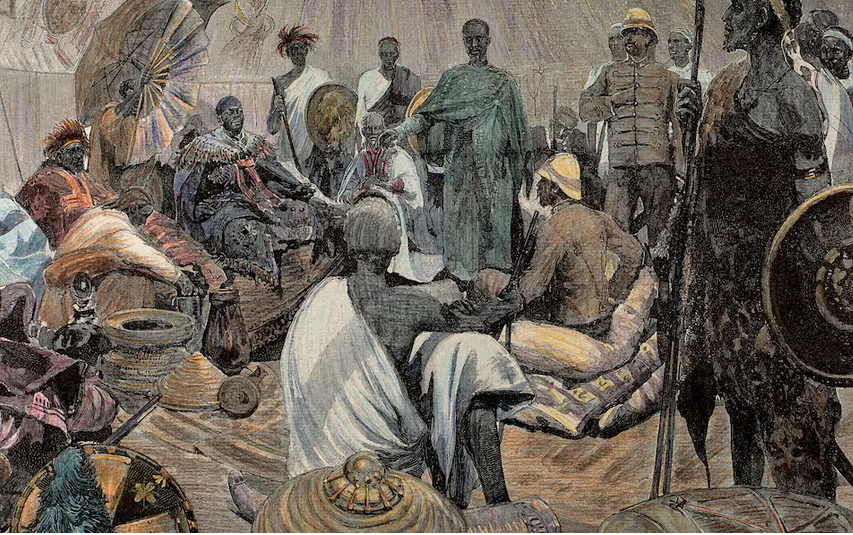
Ghana was colonised by the British in 1874 and plundered for its large gold reserves, earning it the name the Gold Coast, and became one of the main sources for the Atlantic slave trade.
The country became independent in 1957 and as of last year was the 13th-worst country in the world for cyber crime, according to an index published by the University of Oxford.
Earlier this year, Interpol marked West Africa as a new regional hub for “online scam centres”, where people are tricked into working as digital scammers through fake job advertisements, pushed into debt bondage and held in a compound against their will.
On Friday, more than 1,200 scammers accused of targeting nearly 88,000 people were arrested in a sweeping crackdown across Africa. The Interpol operation, involving investigators from the UK and 18 African nations, led to £73m being recovered from the raids.
In Ghana, criminals describe their training centres for aspiring scammers as “hustle kingdoms”, where people are taught how to carry out online romance fraud and other scams.
British and American women targeted
British and American women, often those who are vulnerable and seeking romance, are targeted on Facebook by scammers pretending to be white men of good social standing, such as government officials, bankers or soldiers.
Dr Lazarus said that not only do the scammers justify their crimes because of Ghana’s colonial history, but also that even some of the police officers sympathised with the criminals’ point of view.
Kojo, a scammer quoted in the paper, says: “We thank God for business today! We are finally making it at last. You see there was a time… a time not too long ago… when our ancestors were stripped of their dignity and freedom.
“Back then, the white colonialists came with promises of trade and progress, but what did they deliver? Chains. Enslavement. Humiliation. But today here we are, smarter… Now we carry the codes, the format and the skills. We are the architects of a new era, an era where we turn the tables and reclaim what was taken by the white people.”
Justice, another scammer, added: “They took more than just the gold, cocoa and the riches of our land. They took our people, bound them and shipped them across oceans. Now, we are bringing back dollars from overseas.”
The Telegraph was told how one middle-class British woman parted with huge sums of money over the course of a year to a Ghanaian fraudster posing as a US soldier.
The woman is understood to have travelled to Ghana to meet him, only to have found a much younger man with no military background.
‘Vulnerability exploited’
She had been manipulated into such a strong sense of attachment that, even after the scam was exposed, she maintained he “needed the money more” and was reluctant to press charges.
“The psychological and financial toll on her was immense,” said Dr Lazarus. “These women are often seeking companionship online, and scammers exploit emotional vulnerability.
“These women are also targeted in line with Sakawa Boys’ moral interpretations of their activities. They believe their actions carry moral repercussions and that middle-aged women are more forgiving, and therefore more likely to pardon them.
“A striking feature of my interviews was how offenders framed their scams through the lens of history. Many explicitly drew on colonial exploitation, arguing that what they do is a form of digital reparations. This rationalisation allows them to recast fraud as resistance rather than crime.”
The article, titled Fraud as Legitimate Retribution for Colonial Injustice: Neutralisation Techniques in Interviews with Police and Online Romance Fraud Offenders, was published in the journal Deviant Behaviour.
Latest Stories
-
Central Regional Minister urges use of religious platforms to change environmental, sanitation practices
8 minutes -
Henry Kweku Banning
9 minutes -
Execution of US murderer Christa Pike halted an hour before it was due to happen
11 minutes -
GoldBod generates US$1.87bn in FX in September, exceeds monthly target
14 minutes -
SOE comments controversy: ‘We must never abandon our humanity because of judicial office’ – CJ
24 minutes -
Samuel Kojo Brace declares intention to contest NPP parliamentary primary in Ahanta West
25 minutes -
Dr Apaak calls for evidence-based education response to emergencies
29 minutes -
Pilot may have sought to crash Israel-bound flight after stabbing other pilot, Netanyahu says
33 minutes -
Report flags potential money laundering, terrorist financing risks among Ghana’s NGOs
33 minutes -
Breast Cancer Awareness Month launched: 2,695 women die from breast cancer annually — Dr Ann-Dadzie
41 minutes -
Mahama’s proposed airline looks to South America, Caribbean as Ghana confronts mounting drug trafficking cases
56 minutes -
5% progress on Suame Interchange Phase One inadequate – Roads Minister tasks contractor to speed up work
59 minutes -
Photos: Vice President joins GAAS Awards to celebrate outstanding women leaders
1 hour -
OSP vs Ken Ofori-Atta, SML and others: Court gives OSP four more weeks to serve Ofori-Atta with summons
1 hour -
High Commission sends caution to Ghanaians in South Africa ahead of planned protests
1 hour