

Audio By Carbonatix
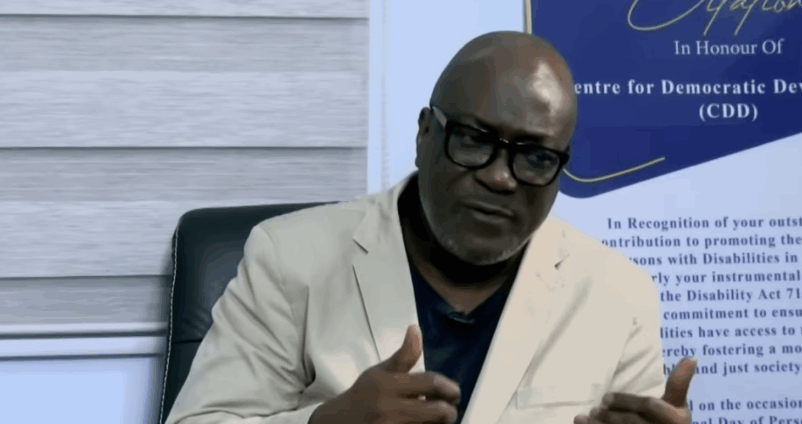
Chairman of the Constitution Review Committee, Prof Henry Kwasi Prempeh, says selective justice has eroded public trust in Ghana’s anti-corruption system and weakened the credibility of key state institutions.
Speaking on Joy News on December 25, he questioned why Ghana’s current approach has failed to deliver consistent results. “It’s obvious that if it was going to work, why hasn’t it worked?” he asked.
He said Ghana has experimented with different models, including career attorneys general, yet the current structure remains deeply flawed.
“Our current attorney general setup is not a career attorney general setup. It is a politician, Attorney General, setup,” he said.
Prof Prempeh stressed that constitutions are designed for real people, not ideal actors. “We are human beings. Constitutions are made for human beings, right?” he said.
He said it is unrealistic to ignore the office's political nature. “This is going to be run by a human being. He is a politician,” he said.
According to him, the conflict is even more pronounced when the Attorney General is an active politician. “In this case, he even contested, and he is an MP too. So he’s a real politician, an active politician,” he said.
Prof Prempeh said the contradiction is obvious. “He’s a member of a political party, a member of a government, and you’ve given him power to fight corruption,” he said.
He questioned the outcomes of that arrangement. “Corruption doesn’t have a party label. Corruption is corruption,” he said.
He said it should surprise no one that prosecutions rarely touch those in power. “How is it any surprise that we have had so few corruption cases against incumbents?” he asked.
Responding to suggestions that justice balances out when power changes hands, Prof Prempeh dismissed the logic. He said governments often avoid prosecuting their own while in office. “You come during your term, you don’t prosecute any of your people,” he said.
He said there is no guarantee the next government will act differently. “What if they don’t come?” he asked. “Nothing is saying that the other side will actually come or also stay on for much longer.”
Prof Prempeh said the damage goes beyond prosecutions. “Even the perception, the people don’t even trust the credibility of the process,” he said.
He explained that motives are always questioned. “If you came and said, look, I’m going after this target genuinely, because evidence is leading me this way, Ghanaians will doubt you,” he said.
He said political labels overshadow facts. “Oh, you are going after this person because you are NDC and he’s NPP,” he said.
According to him, no explanation can fix that mistrust. “No matter what you do, you cannot persuade people that that is what is happening,” he said.
Prof Prempeh said legitimacy depends on fairness. “You have to carry the public with you,” he said. “People think you’re being fair.”
He warned that selective decisions destroy institutions. “If you keep doing that, you are destroying trust in the institution,” he said.
He said the cycle of pardons only worsens the problem. “The other side will come and pardon another person,” he said.
Prof Prempeh said Ghana must confront uncomfortable truths. “We’ve gotten to a point where, look, certain things are not working,” he said.
He pointed to alternative models elsewhere. “There are countries that have independent anti-corruption agencies where the Attorney General does no prosecution,” he said.
He cited Kenya’s example. “In Kenya, in the constitution, the Attorney General does no prosecution at all, zero,” he said.
He said those systems were shaped by experience. “They’ve concluded that this attorney general is not doing the prosecution matters well,” he said.
Prof Prempeh said Ghana’s evidence points in the same direction. “When you give prosecutorial power to a politician, Attorney General, this is how it works,” he said.
He acknowledged exceptions but said culture matters. “The only other place I know where it has worked before is the US,” he said.
He said the difference lies in institutions, not titles. “They’ve built a convention around that power,” he said.
Prof Prempeh said Ghana must design reforms that reflect its own realities. “We were supposed to do things that fit the Ghanaian condition,” he said.
Latest Stories
-
BoG proposes new rules to ensure banks can always pay customers when they need their Money
1 hour -
Hotline Documentary: ‘Silent Football’ to air on JoyPrime and JoyNews today
2 hours -
NDPC examines how evidence shapes Ghana’s development planning and policy decisions
2 hours -
Education Ministry calls urgent talks to break GAUA strike deadlock
2 hours -
NCCE engages women in North East Gonja on rule of law, anti-corruption
2 hours -
NDPC reviews 2004 planning guidelines to reflect changes in decentralised system
2 hours -
Trade Ministry commends Prisons Service for using art to drive inmate rehabilitation
2 hours -
Books, brushes and second chances: Dr Abena Asomaning launches three titles to support prison outreach
2 hours -
Treasury bill auction oversubscribed by 53.5% as yields fall across maturities
2 hours -
NPP warns aspirants premature campaigning could jeopardise eligibility for primaries
2 hours -
Ghana courts investors in Bangkok after exit from $3bn IMF bailout
2 hours -
8 arrested over alleged internet fraud initiation assault in Bono Region
3 hours -
SSNIT says Labadi Beach Redevelopment will create local economic opportunities
3 hours -
BoG proposes 30-day liquidity buffer requirement for banks
3 hours -
BoG plans reviews of banks’ cybersecurity compliance
3 hours