

Audio By Carbonatix
British multinational Shell continued operating a major oil pipeline in Nigeria for years even though it knew it was causing widespread pollution - despite a warning from its own staff and its own technical standards, internal documents obtained by the BBC show.
The files, including emails and presentations, reveal that a senior Shell executive cautioned as early as 2008 about the risks of continuing to pump millions of barrels of unrefined fuel through one of the company's main pipelines in Africa's biggest oil producer while it was subject to massive and destructive uncontrolled theft and infrastructure failures.
Across Nigeria's oil-rich southern Niger Delta, decades of oil spills have left a landscape deeply scarred, with wetlands increasingly coated in crude and contaminated sediment.
The BBC obtained the internal documents after Shell disclosed them as part of ongoing legal proceedings in the UK brought by communities living around the creeks and mangroves of the Niger Delta, who want Shell to be liable for the pollution caused by more than 100 leaks stemming from theft and illegal refining of oil between 2011 and 2013 that have damaged their health, environment and livelihoods.
The 60-mile (96.5km) Nembe Creek Trunk Line runs near the riverine community of Bille, which comprises 45 islands, from inland oilfields to a coastal export processing site.
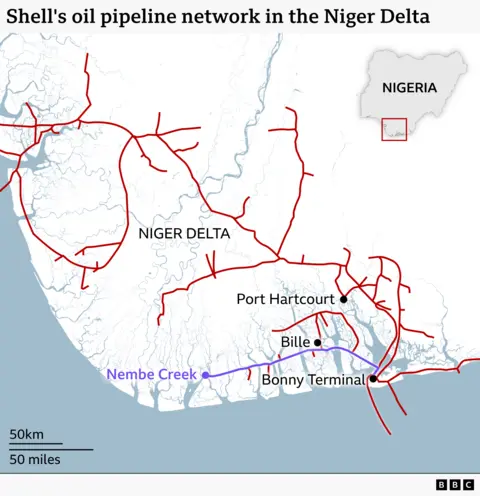
The pipeline, which Shell sold last year, was one of its biggest, most expensive and ultimately most problematic bits of infrastructure in Nigeria. It was capable of carrying up to 150,000 barrels of oil a day, but was repeatedly hit by spills and targeted by illegal oil thieves.
In court papers the oil firm argues that most of the pollution has been caused by "large-scale oil theft, sabotage" and dozens of illegal refineries, and that its Nigerian subsidiary invested heavily over many years to reduce the risk of and response to spills.
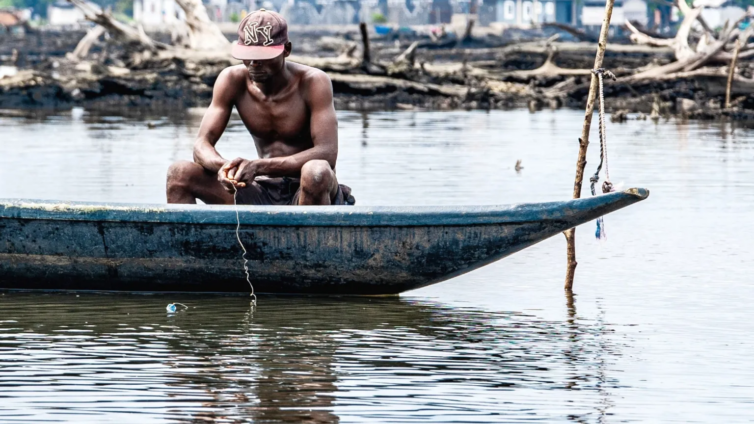
In places like Bille, which the BBC visited last week, residents describe once-rich fishing grounds that have become toxic and unusable.
"Before 2011, this was a beautiful area. People play here and go into the river," 64-year-old fisherman Balafama Augustus Bruce told the BBC.
Bruce, a claimant in the case against Shell, said before all the spills, he was able to catch a variety of fish, including sardines, catfish, tilapia and even oysters - but most are now hard to find or, if caught, appear deformed.
"We used to fish around here. But because of the damage [the spills] have caused, nobody is fishing here again.
"Because of that, I've become poor. I eat from hand to mouth."
The communities via the ongoing international lawsuit against Shell are seeking $1bn (£742m), including:
- $250m in compensation
- And $750m to clean up the environmental damage.
According to the UN, since 1958 when Shell sent its first shipment of oil from Nigeria, at least 13 million barrels - or 1.5 million tonnes - of crude oil have been spilled in at least 7,000 incidents.
Campaigners have long tried to hold multinational oil firms accountable for environmental damage there - a vocal critic of Shell was Ken Saro-Wiwa, one of Nigeria's leading writers, who was notoriously executed by the then-military government in 1995 after leading demonstrations against the pollution in his Ogoniland region of the Niger Delta.
Oil theft has also long been a problem in the Niger Delta - known as "bunkering" it usually involves criminal gangs tapping into pipelines and siphoning off crude into boats or storage tanks. Some of the stolen oil is refined in makeshift camps hidden in the creeks, while the rest is sold off illegally.
In the mid-2000s oil militancy was also a major security issue as heavily armed militants on speedboats attacked installations and kidnapped foreign workers for ransom, including a series of incidents in 2007 and 2008, as part of their demands that the impoverished region receive more benefits from oil revenues.
2008 - the first warning
An internal Shell email exchange from October 2008 reveals a disagreement between senior executives over the risks of continuing operations.
Markus Droll, the firm's then-technical vice-president, raised concerns about a decision to continue operating the Nembe Creek Trunk Line outside its usual guidelines.
"If there is another massive explosive attack tomorrow… then we could well find ourselves in the situation of simply having to close the production down," he wrote.
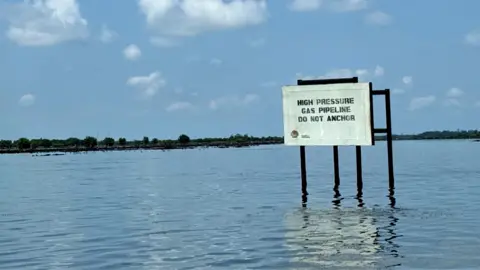
Droll also questioned whether enough safeguards were in place and flagged that other sections of the pipeline could be in a poor condition: "I don't agree that funding can be an issue.
"Sorry if I sound like a broken record on this - but the approach makes me - as your Technical VP - pretty uncomfortable."
In response, Ann Pickard, Shell's regional executive vice-president at the time, criticised him for failing to mark the email as "legally privileged" - protecting their words from being used against them in court.
"You have just exposed us significantly in your official disagreement as a technical manager without legal privilege," she said.
Pickard acknowledged it "was not an easy decision" but argued continuing operations represented the "lower risk to both people and environment".
"You are right, we may have to deal with it in the future," she added.
2012 - oil thefts flagged 'red'
One of the internal documents obtained by the BBC is a previously confidential form from 2012, at the height of the alleged Bille oil spills.
It reveals that Shell bosses recognised that its pipeline was not operating to its usual technical standards, with sections classified as "red" because of extensive illegal oil-theft connections, in which thieves drill a hole to siphon off oil.
According to the company's own definitions, that status required either an immediate shutdown or "immediate corrective action".
But the document shows that, despite raising concerns, executives argued that shutting down the system would simply lead to "a significant number of new illegal connections" being installed elsewhere.
Instead, senior officials gave the Nigerian subsidiary permission to continue pumping.
Shell told the BBC that decisions were based on a number of complex factors, including large-scale oil theft, illegal refining, and militancy in the area at that time, and that it worked with the Nigerian authorities and local communities to address them and clean up spills regardless of cause.
Local leaders in Bille accept that widespread oil theft occurred in the region, but believe Shell should still be held responsible for pollution caused by its infrastructure.
"They are not concerned about what happens to you. Their concern is to continue to make a profit," said Chief Boma Renner Dappa, the spokesperson for the Bille local leaders' council, explaining how people's livelihoods had been wiped out, and there were unknown health consequences.
"All that has happened in this environment is as a result of negligence," he told the BBC.
Other files obtained by the BBC reveal concerns that some inside Shell had at the time about scrutiny of its operations in Nigeria.
2013 - audit caution
An email chain from February 2013 shows that executives suggested conducting an audit of the company's management of oil theft and pipeline integrity between 2009 and 2012.
Vincent Holtam, who was then general manager for onshore assets for Shell's Nigerian subsidiary, replied to warn colleagues that doing so could "do more harm than good".
"I have no doubt that this [audit] will come out as UNACCEPTABLE, in which case we may be very exposed in disputing any oil loss claims from the Government or compensation claims from the community," he wrote.
The documents obtained by the BBC do not indicate whether the audit ultimately went ahead.
2013 - oil spill clean-up options
The following month, the documents show how Shell launched a "most confidential" operation, codenamed Project Madrid, to assess how to handle the spills in Nigeria.
A 36-page internal presentation prepared for executives estimated there were 100 illegal refineries operating around the pipeline, causing pollution to around 9,000 hectares (22,000 acres) of water and 9,000 hectares of land.
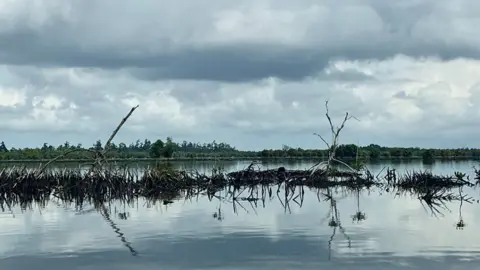
It also reported its teams were cleaning up 18 reported spills from an estimated 60 bunkering points.
Executives were presented with a menu of options ranging from temporary shutdowns for repairs while essentially tolerating ongoing oil theft, to halting production for years to fully tackle the problem.
The documents do not reveal which option Shell executives decided to take. But the pipeline resumed operations after a series of temporary shutdowns for repairs in 2013.
"The documents selected are presented without the critical context of the operating environment in the Niger Delta at the time," a Shell spokesperson has told the BBC.
"In isolation, they do not reflect the challenges of working against the backdrop of widespread organised criminality."
The company argues that it took significant steps to tackle illegal theft but that Nigeria's poor security environment made it impossible to prevent gangs from targeting its infrastructure.
Key decisions 'taken in London'
Law firm Leigh Day says the communities it is representing in the UK case "have always argued that Shell plc in London was ultimately making the key decisions in relation to its Nigerian subsidiary, which led to the destruction of their environment, and are determined to hold the company responsible for the oil pollution which still blights their lives today".
Shell told the BBC it had spoken to the three former executives named in the documents and that none wanted to respond directly. The company says members of the Bille community were among those who participated in the oil theft.
The BBC asked the Nigerian government to respond to Shell's claim that the authorities were unable to deal with organised criminality, but it has not yet received a response.
A Shell spokesperson said, "We strongly believe in the merits of our case and will vigorously defend the claims at trial next year."
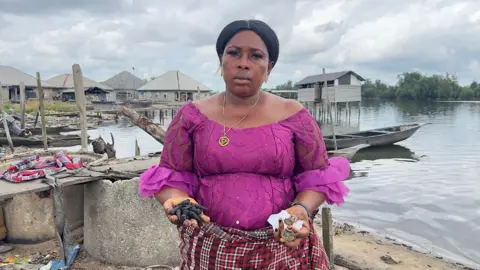
But Bille residents like Taminoibitein Philip say Shell - despite recently selling the pipeline to Renaissance Africa Energy - still has a responsibility, having benefited from collecting the oil for years.
Philip is a harvester of periwinkles, but says the sea snails - a delicacy in the Niger Delta - are hard to come by these days in the mangroves and swamps.
"When you go to the bush, you won't see periwinkle [any more]," the 49-year-old said.
"And the odour [is] killing us... Some places - crude [oil], some places - gas.
"We don't benefit. We are suffering."
She feels the community's only hope is that the court case forces Shell to clean up the waterways: "Let them come and flush the river for us."
Latest Stories
-
Bawumia urges NPP Ashanti region stakeholders to use experience to strengthen party ahead of 2028
5 minutes -
Parliament questions proliferation of unapproved containers in East Legon
2 hours -
Promotion arrears alone cannot end teachers’ strike — PRETAG
2 hours -
Ebi Bright alleges assault on driver in dispute with Tema Central MP
2 hours -
GH¢35m Darkuman 24-hour market to be completed in 16 months — MCE
2 hours -
NPP risks losing Karaga seat if Amin Adam doesn’t contest – John Boadu
2 hours -
Ghana Reference Rate falls to 10.04% in October as borrowing costs ease
2 hours -
53% of NPP delegates backed alternatives to John Boadu in chairmanship race – Mussa Dankwah
2 hours -
High taxes, water shortages push up hotel operating costs — Hotels Association
2 hours -
Catholic Bishops demand tougher action on tramadol, marijuana and other drugs
2 hours -
Government positioning Banda District to become major tourism destination hub – Housing Minister
2 hours -
Deputy Education Minister appeals to striking teachers to return to classrooms
2 hours -
Government to involve corporate Ghana in street maintenance – Ayariga
2 hours -
No contractor is untouchable because of political links — Agbodza
2 hours -
Contractors to resume work on Phase Two of Kejetia Market Project
2 hours