


Audio By Carbonatix
High Street shops that were prosecuted for selling illegal skin-whitening creams are continuing to do so, the BBC has found.
Trading Standards acknowledged "it's a really big problem" and more could be done to regulate the industry.
Substances containing hydroquinone and mercury are banned from being sold over-the-counter in the UK as they can cause liver, nerve and foetal damage.
But a lack of resources and data is making the problem hard to tackle.
A previous BBC investigation revealed the banned cosmetics were being sold across the UK.
Trading Standards is responsible for seizing the creams and prosecuting businesses that sell them. However, it appears convicted shop owners are undeterred by these fines and are continuing to sell the products.
Undercover journalists visited 17 shops across London, Leeds, Birmingham and Manchester to see how many illegal products they could purchase. Six of these shops had been previously prosecuted for selling the creams.
A total of 13 shops were found to sell products containing illegal substances.
Of the prosecuted shops, four out of the six resold banned products.\ Meg Chucks was fined £1,400 as well as £1,040 of legal costs in October 2017. She sold skin-bleaching products at her TM Cosmetics in Moston, Greater Manchester. Fifty-one products in her shop contained hydroquinone.
Before being prosecuted, Ms Chucks had been warned by Trading Standards for importing similar types of products via Manchester Airport.
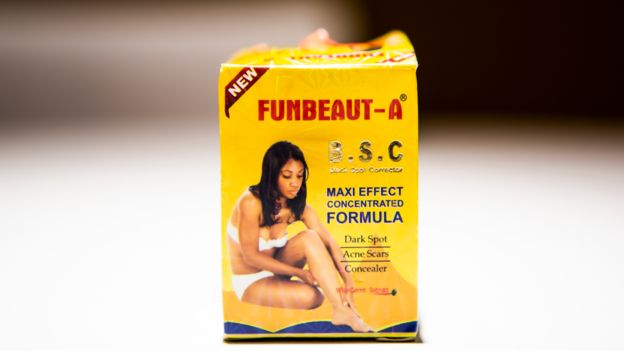
Photo: Funbeaut-A is was sold to undercover BBC reporters in a shop in Manchester. It contains hydroquinone, which cannot be sold over-the-counter in the UK
But despite warnings and fines, the BBC has undercover footage of her still selling a skin-whitening cream.
Ms Chucks admitted to an undercover researcher that she used the product herself. She claimed she did not know it was illegal, despite hydroquinone being listed as an ingredient on the box.
The Nigeria-manufactured product - Funbeaut-A - contained 3% hydroquinone, which is more than the strongest medicine containing hydroquinone licensed for prescription by UK doctors.
In Manchester, a freedom of information request (FoI) revealed Ms Chucks was the only shop owner to be prosecuted in 2017-18 for selling skin-whiteners, despite BBC researchers finding prohibited substances in other Manchester shops.
Ms Chucks refused our request for an interview.
South London YouTubers Arlene Dihoulou and Mariam Omotunde used the skin-whitening creams when they were teenagers.
They had no idea the products they were using were illegal.
Arlene started using the treatments at the age of 16 because she wanted to "fit in".
"I used to look at my skin as really ugly."
"I just wanted to be desirable".
Mariam, 22, went to a local shop to purchase the creams. She did not read the ingredients, but just picked the products based on the skin colour of the lady on the bottle, assuming they were safe to use.
Both girls stopped using the products before they had damaging health consequences, but were shocked the illegal products were sold so openly in the shops.
Mariam added: "Don't they have people who come check what you're selling? The regulations obviously aren't doing their jobs if this is so readily available."
"We have the sugar tax now, because people see obesity as a big thing. A cause of that is fizzy drinks. So now the prices are higher and the sugar is less.
"So in the same way, this is something that needs to be highly monitored and regulated, because people can die from these creams."
Despite the damaging effects of the treatments, the BBC was told there is "no central collection of data" on the number of prosecutions, seizures or accusations across the country, resulting in a lack of understanding about the scale of the issue.
Trading Standards officer Cenred Elworthy said that some traders do stop selling the products after being prosecuted, although the BBC has contrary evidence to this. He said "secondary offenders are often not selling things that are blatantly, obviously full of illegal products".
Elworthy admits "no-one has actually served jail time for selling them" despite being caught still selling the illegal products while serving a suspended sentence.
He suggested the industry could be better regulated through "on-the-spot fines" for businesses selling the skin-whitening products, and clearer sentencing guidelines.
According to Mr Elworthy, Trading Standards could do more shop visits and seizures, but it struggles to after a 40% cut in resources over the past 10 years.
He believes a team of 50 to 60 enforcers would be required in London alone to tackle the issue.
Latest Stories
-
Asylum votes show people want help, says Kemi Badenoch
21 minutes -
Badenoch welcomes expanded grooming gangs inquiry
22 minutes -
GACL MD sues Samuel Buabeng over alleged Facebook defamation
27 minutes -
Christa Pike in critical condition after surviving two lethal injections, lawyer says
31 minutes -
Kemi Badenoch backs face covering ban at protest
44 minutes -
Man City not ‘above the rules’, says No 10 after backlash to Burnham remarks
53 minutes -
Real Madrid submit ‘substantial’ dossier in Barca payments case
1 hour -
Messi completes purchase of second Spanish club
1 hour -
Government must engage horticulturists on tomato crisis – GhIH
1 hour -
King Promise’s ‘Can’t Tame Us’ becomes official Chelsea anthem
1 hour -
Afenyo-Markin demands Baffour Awuah’s release from EOCO’s custody, end to alleged political intimidation
1 hour -
Rapper Rick Ross arrested on domestic violence charges
2 hours -
Minority demands security review of Ghana-Colombia visa waiver and port deals
2 hours -
Pursue drug kingpins, not persecute political opponents – Afenyo-Markin tells EOCO
2 hours -
‘I am disappointed’ – Yaw Ampofo Ankrah breaks silence after NSA suspension
2 hours