

Audio By Carbonatix
Stakeholders in Ghana’s fisheries sector have called for more inclusive and participatory dialogue at the community level as the Canoe and Fishing Gear Owners Association of Ghana (CAFGOAG) plans to expand its Small-Scale Fisheries Academy from eight to 20 fishing communities across the country’s four coastal regions.
The initiative, established in collaboration with Mundus Maris and supported by Blue Ventures, the Ministry of Fisheries and Aquaculture and the Fisheries Commission, provides a platform for fishers and other industry players to identify challenges confronting the sector and develop practical, community-driven solutions.
General Secretary of CAFGOAG, Kenneth Arthur, said the expansion was aimed at giving fishing communities greater ownership of efforts to protect and sustain the country’s fisheries resources.
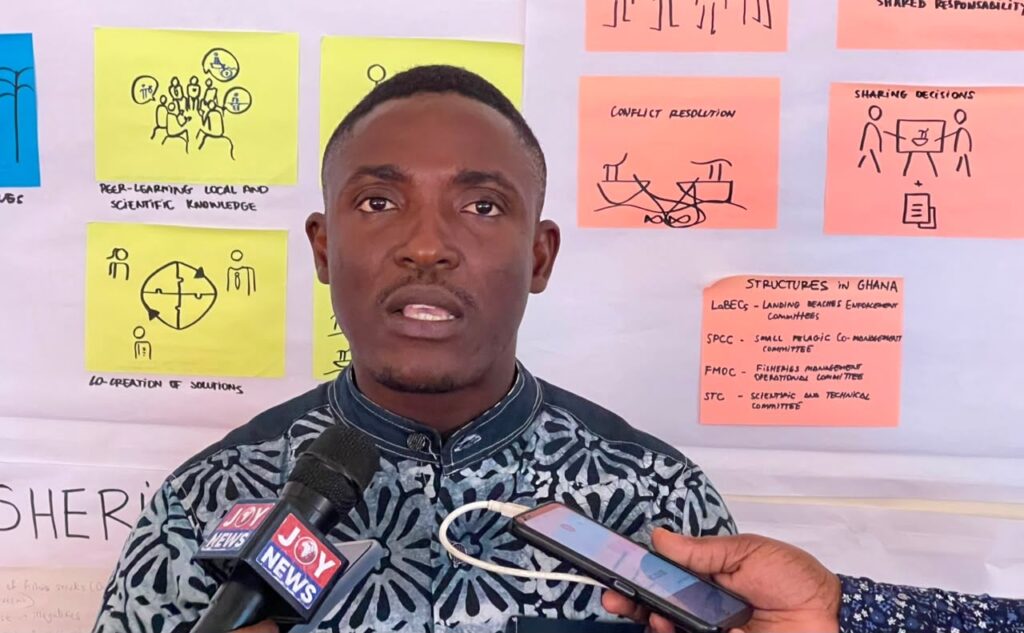
“We hope to extend it to a lot of fishing communities. Currently, we have eight fishing communities in which the Small-Scale Fisheries Academy dialogue is happening. And we hope to extend it to 20. As we move on, we will add more communities. So, we get to a situation whereby all the landing beaches in Ghana will join the concept of Small-Scale Fisheries Academy,” he stated.
He insisted that fishers must be at the centre of decisions affecting the industry, arguing that communities possess valuable knowledge and solutions to the challenges confronting them.
“As fishers, we believe that the solution is with the fishers; hence, there's a need to identify all the major stakeholders, all the major players, to come to a roundtable, dialogue and come out with solutions to these numerous problems that we are currently facing in the industry,” he said.
Mr Arthur said the approach was necessary because interventions developed by external organisations without sufficient community involvement often failed to secure the commitment needed to achieve lasting results.
He noted that, unlike previous approaches where NGOs and other external actors often proposed solutions and left, the academy was equipping fishers with the knowledge and skills to identify challenges and develop their own interventions.
He explained that facilitators were taking lessons from the academy back to the communities through regular engagements to encourage the practical application of the concepts.
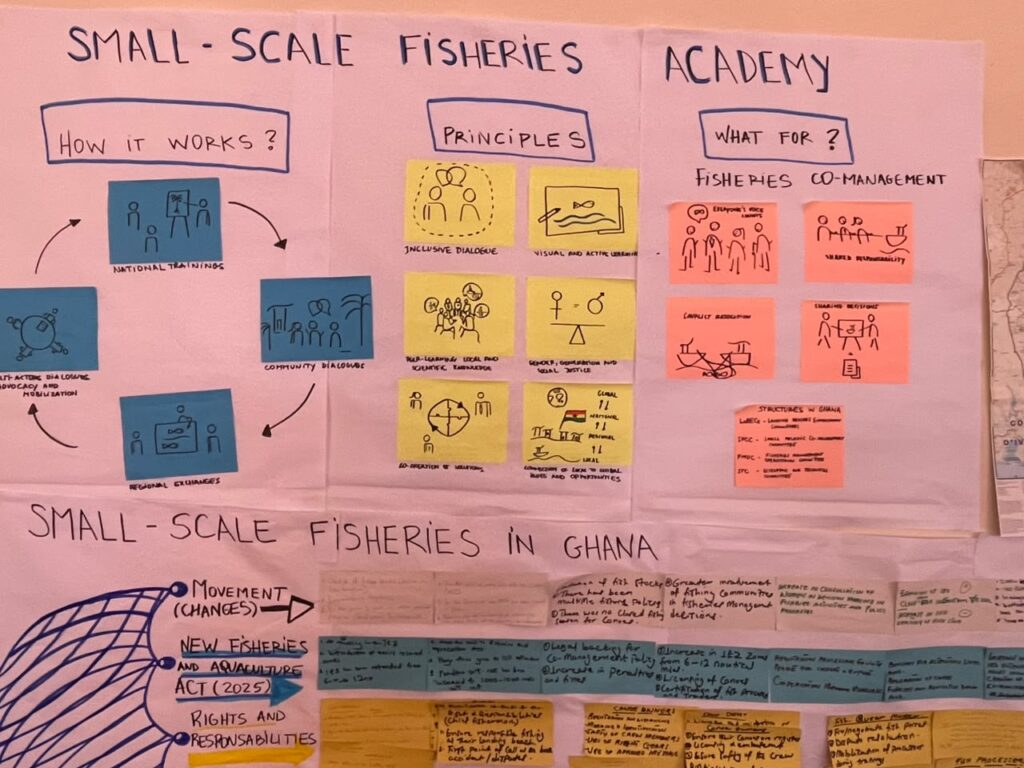
“We have now delved into the practicality of how to implement these concepts in a manner that everybody will be able to understand and comprehend. Fishers are not used to, in quotes, big English. So, this concept makes use of visuals and drawings. If you tell the canoe owner or the fish processor or the crew member that this is a canoe and it is spelt C-A-N-O-E, the person may not understand. But when you draw the canoe, the fisher will be able to identify that, yes, this is a canoe. And that is the difference this Small-Scale Fisheries Academy is bringing on board,” he added.
Building community leadership
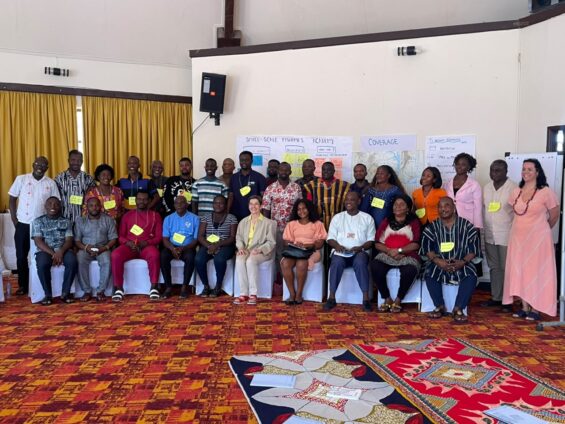
The second session of the Small-Scale Fisheries Academy in Ghana brought together 35 participants from the country's four coastal regions — Western, Central, Greater Accra and Volta — in Elmina from September 28 to October 2, 2026.
The session sought to strengthen community leadership and lay the groundwork for more effective fisheries co-management along Ghana’s coast.
Building on the inaugural academy held in Winneba in June 2026, the Elmina session strengthened participants’ skills in community facilitation, dialogue, leadership and participatory planning.
The skills are intended to help local facilitators bring together different groups within fishing communities, including chief fishermen, canoe owners, women fish processors, traders, crew members and other fisheries professionals, to discuss fisheries challenges, identify shared priorities and co-create solutions.
Mr Arthur said the academy was designed around a co-management approach that recognises fishers as critical partners in addressing the challenges confronting the industry.
He explained that the second session had moved beyond discussions to focus on practical ways of communicating fisheries management concepts to participants, using drawings and other visual materials to make the lessons easier to understand.
Regenerating Ghana’s fisheries through empowerment
President of international non-profit organisation Mundus Maris, Dr Cornelia Nauen, called for stronger support for small-scale fishing communities in Ghana, warning that overfishing and destructive practices threatened the sustainability of the country’s marine resources.
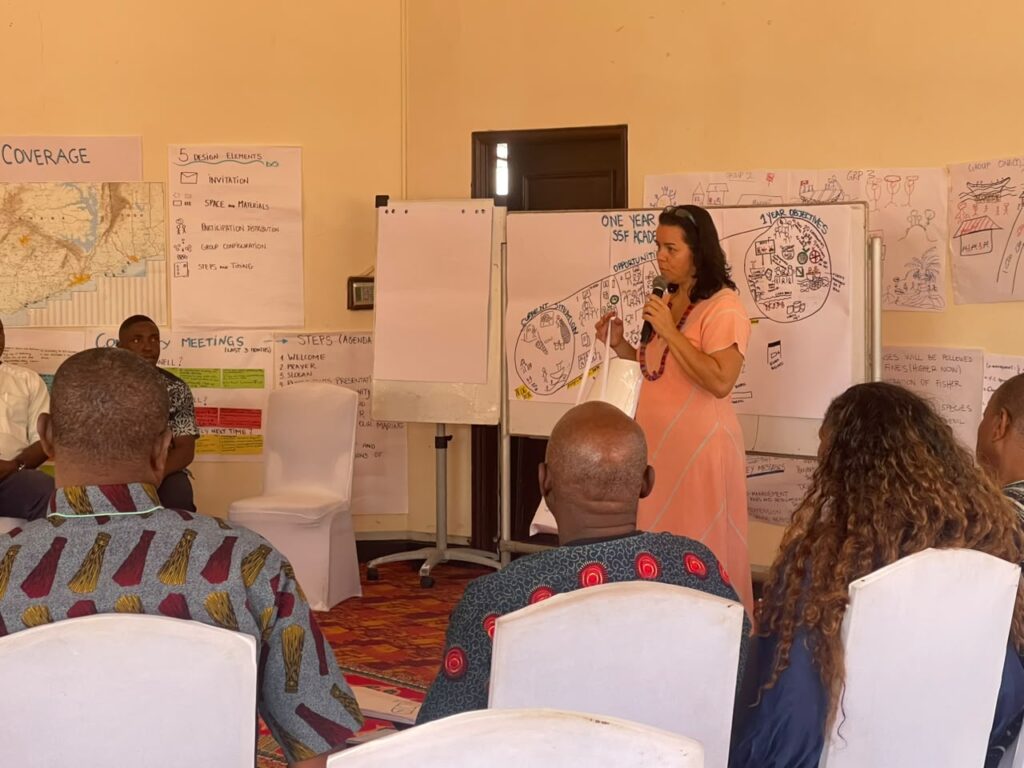
She said rebuilding fish stocks required a shift from extractive fishing practices to community-led efforts that recognised the knowledge and experience of artisanal fishers.
Speaking to JoyNews on the sidelines of the event, Dr Nauen said the expansion of industrial fishing fleets and pressure to maximise catches had contributed to the depletion of fish stocks in several parts of the world.
She cited the collapse of cod stocks off Newfoundland in Canada as a warning of what could happen when fishing exceeded the ocean’s capacity to replenish itself.
“We want to learn those lessons and regenerate the wonderful resources we have, so that the cake that can be distributed is bigger, not shrinking, and we do not fight over bread crumbs,” she said.
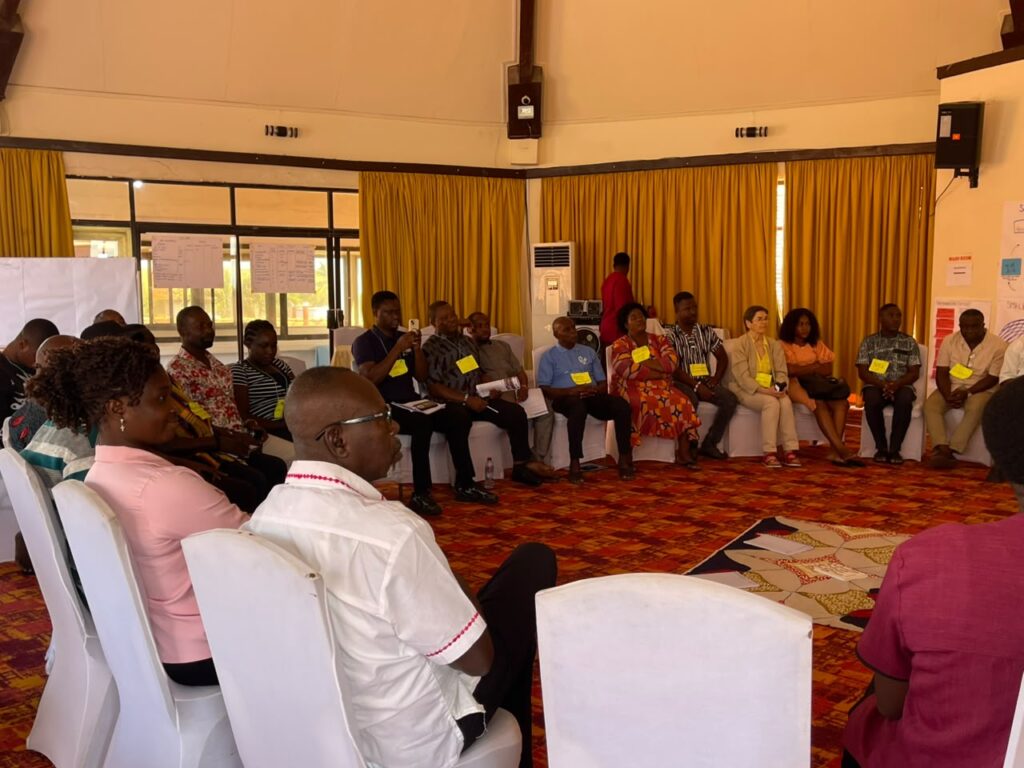
Dr Nauen said Ghana had the potential to build a more resilient fisheries sector if the knowledge of fishing communities was properly harnessed and combined with scientific and technical expertise.
She said this was the thinking behind the Small-Scale Fisheries Academy, which seeks to mobilise local knowledge, promote collaboration and help communities develop practical solutions to challenges confronting the industry.
“It is not that we need to reinvent the wheel. It is really about bringing all these different perspectives together. If I don’t know something, somebody else will know, and together we can find a solution,” she said.
Beyond protecting fish stocks, Dr Nauen said sustainable fisheries management could create wider development opportunities for coastal communities, including improved sanitation, better schools, healthcare and stronger local businesses.
Women in fisheries
Dr Nauen also emphasised the importance of women in Ghana’s fisheries sector, describing them as central to the industry’s economic survival and the wellbeing of fishing families.
She said women played a critical role in fish processing, marketing and financing fishing expeditions, while ensuring that incomes generated from the trade supported their families.
“The market is very much in the hands of the women. They are very careful in ensuring the processing, safe marketing, reinvesting and pre-financing the fishing trips. They are really the backbone,” she said.
Dr Nauen noted that providing women with the space to share their experiences and influence decisions affecting fishing communities was essential to achieving sustainable development.
She said supporting both men and women in the sector would strengthen household incomes and improve the prospects of coastal communities.
Co-management implementation
Central Regional Director of Fisheries, Emmanuel Kwame Dovlo, endorsed the Small-Scale Fisheries Academy, describing it as an important platform for strengthening community participation in the management of Ghana’s fisheries resources.
He said the initiative reflected the co-management approach advocated by the Fisheries Commission and provided for under the country’s fisheries regulatory framework, Act 1146.
Mr Dovlo said actively involving fishers and coastal communities in decisions affecting the industry would improve efforts to protect dwindling fish stocks and ensure the sustainable use of marine resources.
“We are engaging the fishers and the community in the management of the fisheries. We are seeing them as core owners and a core part of the process. In this way, we are able to engage them actively to manage their resources successfully,” he said.
He urged facilitators of the academy to sustain community-level engagements beyond the training sessions to deepen understanding and encourage local ownership of fisheries management interventions.
He also stressed the need to combine indigenous knowledge with scientific expertise, arguing that both were essential to effective fisheries management.
Sustainable fisheries advocacy
National Administrator of CAFGOAG and participant, Kwesi Benyi Randolph Johnson, said the Small-Scale Fisheries Academy was changing the approach to sustainable fisheries advocacy by empowering fishing communities to identify and address challenges within the sector.
He said the initiative was shifting fisheries interventions from approaches largely driven by external organisations to a more participatory model that placed fishers at the centre of finding solutions to declining fish stocks and other threats to the industry.
Mr Johnson, who is also a regional facilitator, said the training had challenged conventional approaches to fisheries advocacy, even for those with years of experience in the sector.
He expressed optimism that, with continued engagement and adequate resources, the initiative could deliver significant improvements in Ghana’s fisheries within the next three to four years.
“We see this as a game changer in sustainable fisheries because a lot of people from the communities are participating. You see the youth, women and men, chiefs and chief fishermen all taking part,” he said.
The expected long-term impact of the Small-Scale Fisheries Academy is twofold: improved livelihoods for fishing communities and better protection of marine resources.
According to CAFGOAG, stronger community participation in fisheries management can help promote responsible fishing practices, encourage compliance with regulations, address local conflicts and support the recovery and sustainability of fish stocks.
Latest Stories
-
‘He who pays the piper calls the tune’ – Baah-Nuakoh hits back at proposed GFA dissolution
8 minutes -
Kotoko, Hearts afraid to speak up because of relegation – Alhaji Grunsah
8 minutes -
When the street becomes the opposition: Africa’s New Democratic reality
12 minutes -
CPP warns money is turning Ghana’s politics into an ‘auction’
19 minutes -
Sparqlyn wins three big honours at 2026 Golden Stars Awards
23 minutes -
BoG to tighten banks’ credit risk controls as private-sector lending surges 35.5%
26 minutes -
‘Vibes The Movie’ lands on Amazon Prime Video in US, UK
27 minutes -
ESPA cautions against five-kilometre spacing for waste transfer stations
27 minutes -
Amangoase residents raise GH¢100,000 to bring electricity to their community
29 minutes -
Rex Omar takes Black Star Experience to World Music and Tourism Festival in Kinshasa
30 minutes -
Four reportedly injured in three-vehicle crash at Sofoline flyover
31 minutes -
Ashanti Region inland valley projects to add 289 hectares of irrigable land for 365 farmers
33 minutes -
Central Regional GNAT Chairman calls for 13th-month salary for teachers
38 minutes -
Mahama Ayariga wants banks, companies to adopt and brand streets across Ghana
54 minutes -
Small-Scale Fisheries Academy to expand to 20 communities as stakeholders push for greater fisher participation
58 minutes