

Audio By Carbonatix
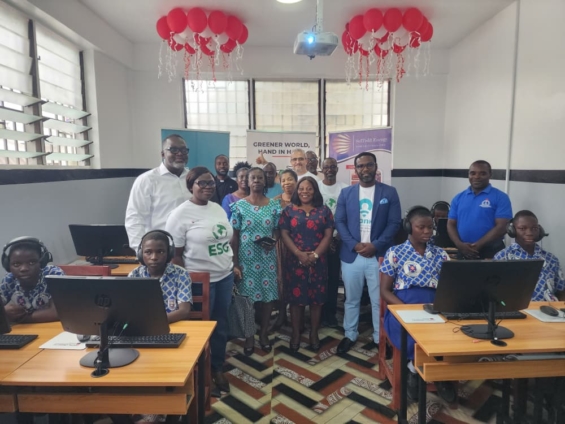
Société Générale Ghana has strengthened its commitment to education and sustainability with the donation of a fully furnished, solar-powered Digital Library to the Osu Salem Road Basic School in the Greater Accra Municipality.
The facility, designed to enhance digital literacy and access to modern learning tools, was delivered in partnership with TechAide and Sol Tedd Energy. The initiative is part of the bank’s broader corporate social responsibility agenda, which prioritizes sustainable, impact-driven projects in education, energy, and community development.
Managing Director of Société Générale Ghana, Hakim Ouzzani, underscored the importance of combining education with sustainability.
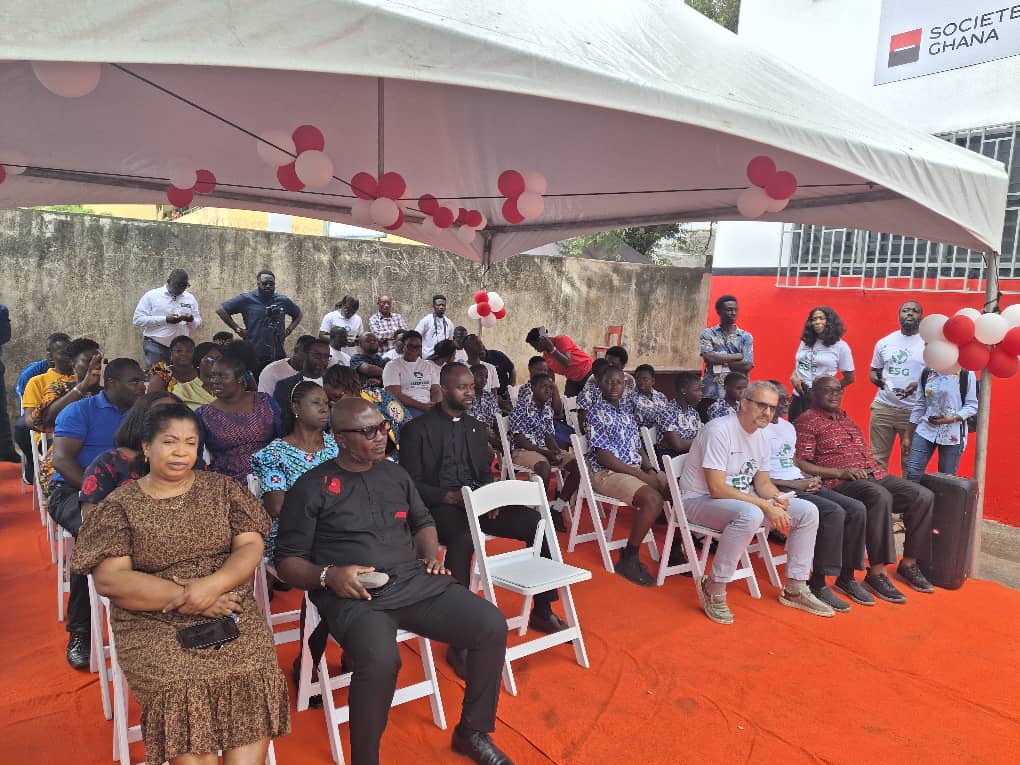
“This initiative is really at the heart of what we do in terms of corporate social responsibility. As a bank, our main activity is to support and finance the economy, but beyond that, we are committed to promoting projects that align with sustainable development goals. Supporting green initiatives, power efficiency, and education ensures we build the future of Ghana and the planet,” Ouzzani said.
Head of Operations at TechAide, Thomas Hagin Akuban, explained the sustainable energy infrastructure behind the library.
“It is very sustainable in terms of moving off the national grid. Ghana’s power supply has not always been stable, and that destroys appliances. Our focus was to ensure the library runs independently, so we installed a three-kilowatt peak solar system, a six-kilowatt hybrid inverter, and a lithium-ion battery. This means the school will not pay electricity bills, and even during outages, the library will still run sustainably. We are grateful to have partnered with SG Ghana on this,” Akuban said.
Chief Executive of Sol Tedd Energy, Teddy Opoku Agyeman, highlighted the role of technology in improving learning outcomes.
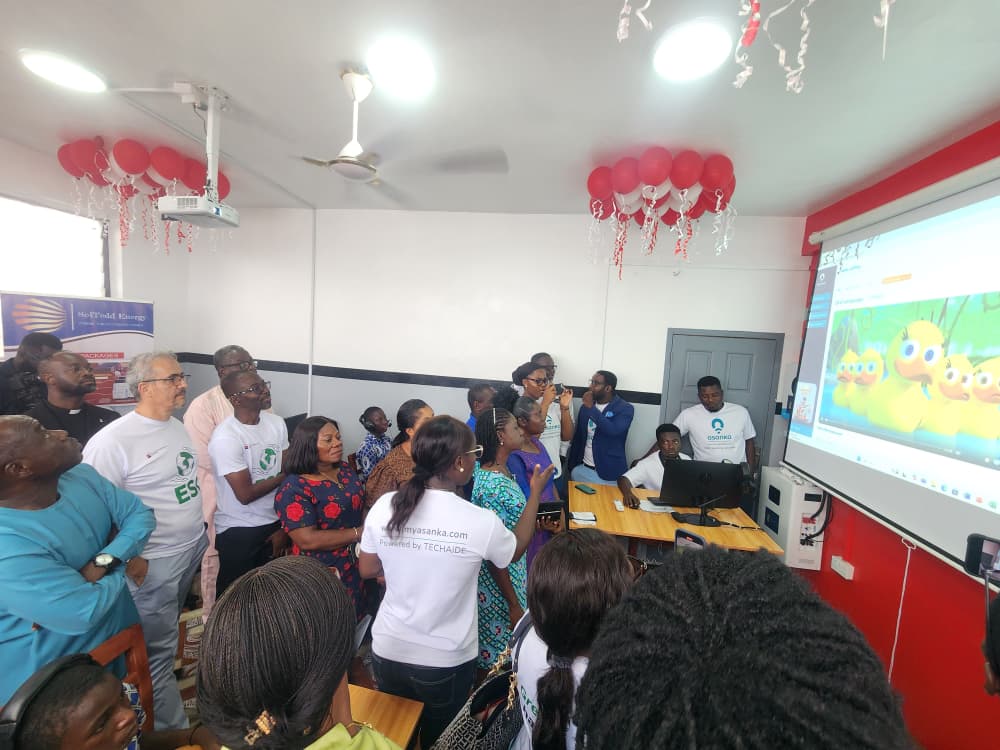
“With the Asanka device, there is boundless learning for students and seamless teaching for teachers. It provides data for teachers to offer remediation for struggling learners. Everything on the device is strictly offline, with no internet or data costs. The system is designed to align with the national curriculum, enabling students to learn independently or with minimal support, and ultimately prepare effectively for the BECE,” Agyeman explained.
The project is expected to serve as a model for integrating renewable energy into educational infrastructure while addressing challenges such as limited access to technology and unreliable electricity supply in schools.
Latest Stories
-
Mr President, Ghana was mentioned at the UN; why aren’t we talking about it?
45 minutes -
Accra to convene Africa’s regulators and markets on tokenisation at AVAS 2026
47 minutes -
The Paradox of Plenty — When every smartphone becomes a newsroom
1 hour -
GTA sensitises taxi drivers in ‘Know Ghana’ tourism campaign
3 hours -
Archbishop Agyinasare calls for responsible speech amid growing social media abuse
3 hours -
‘It will be inexcusable for gov’t not to honour payment of teachers’ arrears by 30th October’ – Haruna Iddrisu
3 hours -
Forbes’ World’s Best Employers 2026: No Ghanaian firm ranked among 900 companies
3 hours -
Electronic processing of teachers’ data: ‘The decision is the Controller’s’ – GES boss
3 hours -
Teachers’ Strike: Haruna Iddrisu questions paper-based processing of promoted teachers’ data
3 hours -
Savannah Region: Kunfusi bridge collapses again, leaving nearly 4,000 residents cut off
3 hours -
Teachers’ strike: GES targets Monday deadline to submit promotion data to Controller
3 hours -
Inflation to average 11.3% in 2027 – Fitch Solutions
4 hours -
‘I didn’t campaign for NDC to come and do this nonsense’ – Kpebu on EOCO’s conduct
4 hours -
Fitch Solutions maintains policy rate forecast of 14% by December 2026
4 hours -
Diaspora Nasara Caucus congratulates Mohammed Ali Suraj, new NPP executives
5 hours