

Audio By Carbonatix
Speakers at the Fourth African Inter-Parliamentary Conference on Family, Sovereignty and Values in Accra have called on President John Mahama to assent to Ghana's Human Sexual Rights and Family Values Bill when it is presented to him.
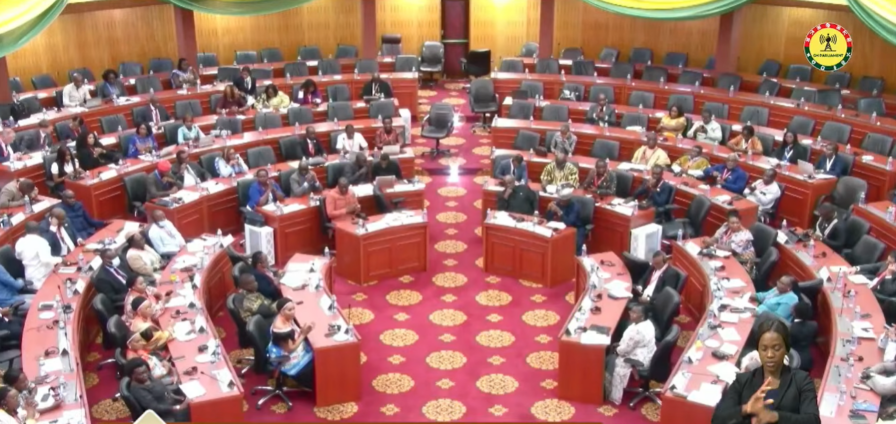
The conference, which has brought together lawmakers, parliamentary leaders, religious figures, and policy advocates from across Africa, is focused on issues of family, national sovereignty, and cultural values.
Participants have repeatedly said that African countries should be free to determine their own social and family policies without external influence.
The issue of Ghana's controversial Human Sexual Rights and Family Values Bill featured prominently during discussions on the second day of the conference.
Addressing delegates, Kenyan Senior Consultant Obstetrician and Gynaecologist, Dr Wahome Ngare, praised Ghana's Parliament for passing the bill and urged authorities to ensure it becomes law.
"I would like to congratulate this august House on the fact that you passed your bill on the Human Sexuality Rights and Family Values," he said.
Dr Ngare said that the legislation is often mischaracterised by critics.
"People are calling it an anti-homosexuality bill. They need to read and see that the title is different," he told delegates.
He further expressed support for efforts to address any legal concerns that could affect the bill's implementation.
"The other thing that is important is if there is a challenge, I would be happy to work with this House. I would be happy to work with His Excellency, President John Mahama, to tidy up the bill so that it is not thrown out," he said.
"It is very important that that bill sees the light of day."
Dr Ngare also touched on broader health and social policy issues during his address, including debates surrounding abortion and reproductive health.
The conference has largely centred on what participants describe as the need for African nations to protect family values, cultural identity, and legislative independence in the face of growing international pressure.
Several speakers said that African governments should have the authority to make decisions on social issues based on their own traditions, beliefs, and constitutional processes.
The discussions also extended to health sovereignty and the need for African countries to reduce dependence on external actors in shaping healthcare priorities.
Board Chairman of the Korle Bu Teaching Hospital and Member of Parliament for Lambussie, Titus Beyuo, called for greater self-reliance in healthcare policy and service delivery across the continent.
"Let us reaffirm our commitment to health sovereignty as a foundation for healthier nations and a more just Africa," he said.
According to him, African countries must work together to strengthen their health systems while remaining guided by their own priorities and values.
"Guided by our values, united in purpose and steadfast in negotiations, we can secure a future where every African enjoys the highest attainable standards of health," he stated.
"Let us act with wisdom, with courage, and with solidarity to shape global health governance in a way that truly serves our continent."
Mr Beyuo highlighted Ghana's efforts to promote greater healthcare independence through the African Health Sovereignty Summit convened by President Mahama.
"Our President, His Excellency John Dramani Mahama, convened the African Health Sovereignty Summit," he said.
"The outcome of that summit was the Accra Reset, and that we should shift from dependency to self-determining healthcare."
He urged African governments to take greater responsibility for the well-being of their citizens rather than relying heavily on external support.
"Let us all see what we can do as individual countries and be proud to say that we are taking care of our own people," he said.
Mr Beyuo also cautioned against situations where external partners influence national priorities through funding and assistance.
"We should not be dependent on someone who comes to us and shows something to us and in return takes all your data and determines what priorities we should have for our nation," he added.
Latest Stories
-
Ibrahim Mahama urges Ghanaians to overcome fear and venture into business
10 minutes -
2026 U-17 WWC: Black Maidens lose to China in pre-tournament friendly
14 minutes -
Who gave Gbande the EOCO remote control?
34 minutes -
Ghana begins review of 1999 National Land Policy, targets new framework by 2027
1 hour -
Tiptoe Lane’s tech takeover: The story behind Ghana’s booming informal phone market
3 hours -
Abanga vows to use social media to counter NDC messaging ahead of 2028 elections
3 hours -
Okai Mintah seeks Sabah Zita Benson’s support for NDC National Youth Organiser bid
3 hours -
Okai Mintah vows to strengthen NDC campaign machinery ahead of 2028
3 hours -
Mother of four and Jasikan teacher among new Telecel M’ahitti Promo winners
3 hours -
International Youth Shakers Conclave 2026 set to bring global young leaders to London
3 hours -
Gov’t is committed to addressing teachers’ conditions of service, deprived-area allowance – Education Minister
3 hours -
GoldBod’s structure encouraging galamsey – Afenyo-Markin
3 hours -
Tullow starts selling Jubilee, TEN crude to Ghanaian refineries
3 hours -
Local Government Service authorises rationalisation, redistribution of staff
3 hours -
PURC assures consumers of working to ensure quality services in Northern Region
3 hours