

Audio By Carbonatix
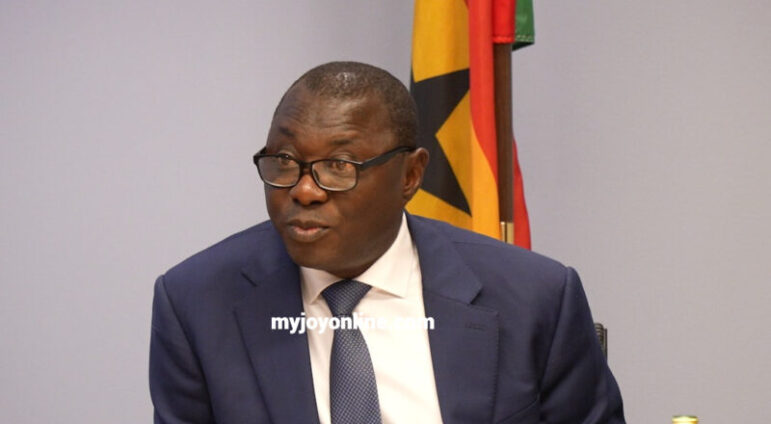
The Finance Minister has criticised Sunon Asogli Power for what he described as “bad faith” in the company’s decision to halt operations over a $259 million debt owed by the Electricity Company of Ghana (ECG).
Dr Mohammed Amin Adam explained that government was in the process of negotiating an agreement to clear the debts when Sunon Asogli changed its stance on the payment terms, complicating the process.
“We were working on an agreement to address the debt, but Sunon Asogli later revised their demands on payment terms, making it difficult for us to proceed,” the Finance Minister stated.
Difficult Negotiations with Sunon Asogli
Dr Mohammed Amin Adam shared that during an initial payment round to independent power producers, the Ministry of Finance allocated $30 million to Sunon Asogli.
Later, the company requested an additional $30 million, but the ministry did not agree to this request at the time.
During further negotiations, ECG proposed adding the additional $30 million as part of the settlement, but Sunon Asogli refused to sign the agreement until payment was made.
“They insisted we pay first before they would sign,” Dr. Amin explained.
“Later, they demanded $60 million, threatening to shut down if this amount wasn’t paid.”
The Finance Minister described the move as unfair and urged caution, stating, “We shouldn’t feel pressured just because it’s an election year.
"People sometimes act as if Ghana doesn’t know its rights, especially as we approach elections.”
Debt Restructuring for Independent Power Producers
The Finance Minister announced that Sunon Asogli Power has now agreed to sign a settlement agreement concerning debt restructuring for independent power producers (IPPs). He highlighted the government’s significant progress in restructuring debts owed to IPPs, including Karpower, CENIT Energy, Sunon Asogli, and Aksa, adding that two IPPs—CENIT and Aksa—have already reached agreements on debt restructuring.
Background on Sunon Asogli’s Shutdown
On October 16, Sunon Asogli Power announced a shutdown due to ECG’s outstanding debt of $259 million. The company stated that it had not invoiced ECG for idle capacity charges like other IPPs, but its debt had grown by 23% between January and September 2024, with only 22.6% of invoices paid during this period.
Impact on Ghana’s Power Supply
The Finance Minister assured the public that the shutdown did not impact Ghana’s power supply due to the country’s strong reserve position.
“Ghana has multiple power plants generating electricity, and despite the shutdown, we didn’t face a crisis,” Dr Amin noted, adding that the country maintains a surplus in power supply.
Latest Stories
-
Central Regional Minister urges use of religious platforms to change environmental, sanitation practices
5 minutes -
Henry Kweku Banning
6 minutes -
Execution of US murderer Christa Pike halted an hour before it was due to happen
8 minutes -
GoldBod generates US$1.87bn in FX in September, exceeds monthly target
11 minutes -
SOE comments controversy: ‘We must never abandon our humanity because of judicial office’ – CJ
21 minutes -
Samuel Kojo Brace declares intention to contest NPP parliamentary primary in Ahanta West
22 minutes -
Dr Apaak calls for evidence-based education response to emergencies
26 minutes -
Pilot may have sought to crash Israel-bound flight after stabbing other pilot, Netanyahu says
30 minutes -
Report flags potential money laundering, terrorist financing risks among Ghana’s NGOs
31 minutes -
Breast Cancer Awareness Month launched: 2,695 women die from breast cancer annually — Dr Ann-Dadzie
38 minutes -
Mahama’s proposed airline looks to South America, Caribbean as Ghana confronts mounting drug trafficking cases
54 minutes -
5% progress on Suame Interchange Phase One inadequate – Roads Minister tasks contractor to speed up work
56 minutes -
Photos: Vice President joins GAAS Awards to celebrate outstanding women leaders
57 minutes -
OSP vs Ken Ofori-Atta, SML and others: Court gives OSP four more weeks to serve Ofori-Atta with summons
59 minutes -
High Commission sends caution to Ghanaians in South Africa ahead of planned protests
1 hour