

Audio By Carbonatix
The World Health Organisation (WHO) has asked all nations to make it an urgent responsibility to suppress transmission of the coronavirus and save lives, as research into vaccines and therapeutic treatment continues.
It said the number of Coronavirus cases was expected to reach 10 million within the next week as more than 9.1 million cases with about 470,000 deaths have been reported to the WHO presently.
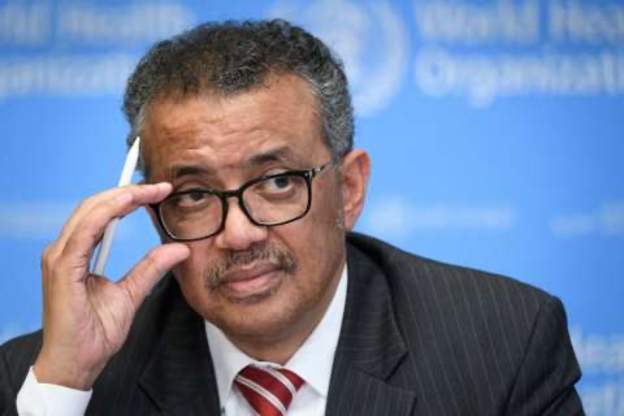
Dr Tedros Adhanom Ghebreyesus, the WHO Director General, said at a media briefing that the most effective way of saving lives was to provide oxygen to patients who needed it.
He said several news reports highlighted the vital role of oxygen in treating patients with severe and critical COVID-19.
Those patients could not get enough oxygen into their blood by breathing normally and needed higher concentrations of oxygen and support to get it into their lungs, he said.
The WHO Director General said when left untreated, severe COVID-19 deprived the human cells and organs of the needed oxygen, which ultimately led to organ failure and death.
"WHO estimates that at the current rate of about one million new cases a week, the world needs about 620,000 cubic meters of oxygen a day, which is about 88,000 large cylinders, but many countries are now experiencing difficulties in obtaining oxygen concentrators," he noted.
Dr Ghebreyesus said WHO and its United Nations partners were working with manufacturers across the world through a variety of private sector networks to buy oxygen concentrators for countries that needed them the most.
Through such networks in recent weeks, the WHO had succeeded in buying 14,000 oxygen concentrators to be sent to 120 countries in the coming weeks.
It had also identified a further 170,000 concentrators that could be available over the next six months, with a value of US$100 million dollars and has bought 9,800 pulse oximeters, a simple device used to monitor oxygen in a patient’s blood, which are being prepared for shipment.
Dr Ghebreyesus said another challenge was that many patients with critical disease needed a higher flow rate of oxygen than was produced by most commercially available concentrators.
"WHO is supporting several countries to buy equipment that will enable them to generate their own concentrated oxygen in larger amounts. This is a sustainable solution for COVID-19 and beyond, but requires technical expertise for maintenance."
In a related development, the Government of the Democratic Republic of Congo is planning to announce the end of the Ebola outbreak in the east of the country, after almost two years of struggle.
In total there have been almost 3,500 cases, with about 2,300 deaths and 1,200 survivors.
Dr Ghebreyesus said the WHO was proud to have worked under the leadership of the Government of the DRC to bring the outbreak under control.
"This has been possible, thanks to the service and sacrifice of thousands of Congolese health workers, working side by side with colleagues from WHO and many other partners."
The Director General observed that many of the public health measures successful in stopping Ebola were the same measures now essential for suppressing COVID-19, thus finding, isolating, testing and caring for every case and relentless contact tracing.
These were the measures that must remain the backbone of the response in every country as there were no short-cuts, he said.
Latest Stories
-
David Selassie Anthony declares bid for NDC Deputy National Organiser
10 minutes -
Amin Adam proposes 13 measures to strengthen Ghana’s debt transparency and market confidence
31 minutes -
Mahama announces $2bn annual investment to accelerate industrialisation
36 minutes -
Amin Adam urges monthly disclosure of Sinking Fund as Ghana prepares for DDEP repayments
46 minutes -
Stronger banks will fuel business growth and jobs – ADB MD
48 minutes -
Galamsey: ‘Rivers that fed our grandparents now run the colour of chocolate milk’ – Sam Jonah
49 minutes -
We have been scammed by NDC, government is only doing PR – Abanga Fuseini
50 minutes -
Republic Bank–JoyNews Habitat Fair opens in Ho today
51 minutes -
BoG pledges stability to attract investment, urges stronger Africa–Asia partnerships
55 minutes -
Amin Adam warns treasury bill dependence could expose Ghana to refinancing risks
55 minutes -
Ghana better placed to withstand commodity price shocks – IMF
58 minutes -
GAPTE intensifies efforts to increase bus availability for Aayalolo contra-flow
1 hour -
Amin Adam warns cedi depreciation could reverse Ghana’s debt relief gains
1 hour -
Fiscal discipline crucial for pension fund investments – Finance Minister
1 hour -
BoG Governor rallies IMF to back Africa’s digital sovereignty
1 hour