

Audio By Carbonatix
Eighty-year-old Steven Awuah has farmed cocoa all his life in the small town of Adepena in the Bia West District of the Western North Region.
Before his farm was affected by the Cocoa Swollen Shoot Virus, he was harvesting over 300 bags every season.
"I have lost almost everything I have worked for all these years due to this disease but for my two wives I would have died by now," he said.
Initially, when it started I was not sure of what the problem was, in fact, myself and other farmers were very confused, at a point we thought our land has been curse he said.
"Even officers from the agriculture extension office couldn't tell us the course, very surprising," he lamented.
A few years ago, Adepena was a cocoa boomtown, recording 1,000 tons of cocoa every year.
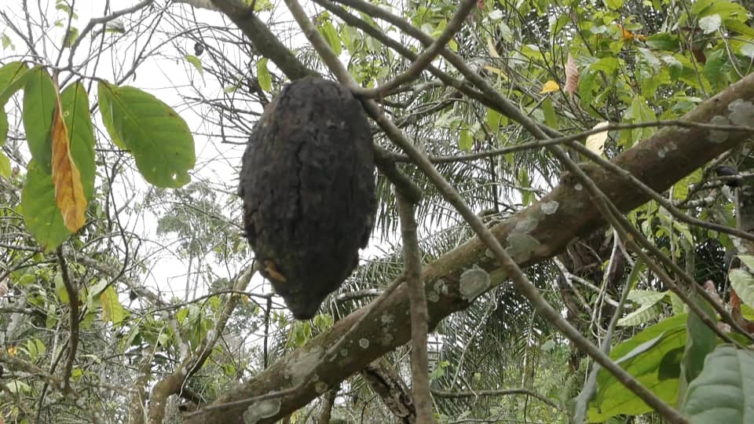
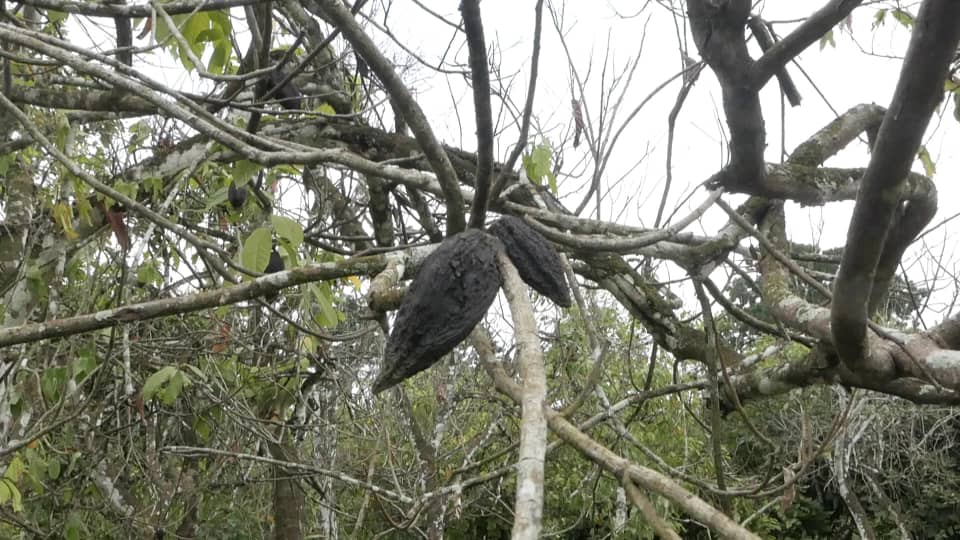
Now, the trees are doomed and infected by the deadly swollen shoot disease even a distance away.
Two years ago, I was in this village. Today, as I travel through the swathes of cocoa farmlands, the trees are withered and covered with weeds. It was not like this when I first came here.
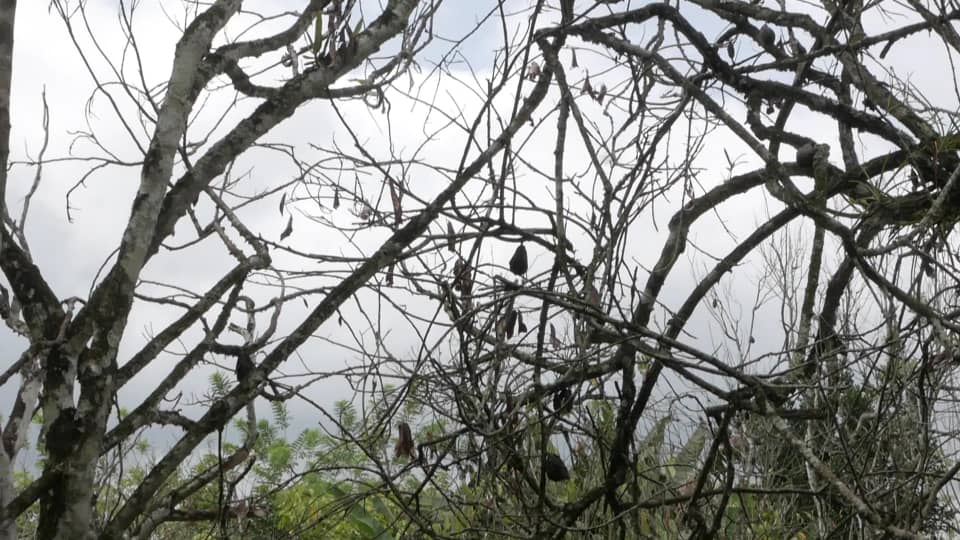
A 2018 survey by Cocobod on 256 thousand hectares of farms in the Western North Region showed 69 per cent have been affected by the Cocoa Swollen Shoot Virus Disease.
In 2018, farmers produced 64 thousand bags of cocoa last year, they only had 30.
Confirming the statistics a Farmer said he uses to harvest 10 bags of cocoa from every acre of land but today he cant boost of a single bag from the same land.
Regional Manager of Cocoa Health and Extension Division, Kwame Owusu Ansah explains the disease is spreading rapidly.
"The situation is not too good, very alarming and as a country, we need to stand up and find a solution to this menace," he said.
From one community to the other, in this area, farmers say the battle against this disease is slipping through their fingers.
"Most of my colleague farmers have fled away because they have lost everything life gave them, I can show you hundreds of empty cottages on the stretch," he narrated.
There is no chemical to control the Cocoa Swollen Shoot Virus. The only option is to cut down the cocoa tree and replant.
In a bid to ensure that the disease is controlled Cocobod has introduced the Cocoa Rehabilitation Program
According to a Principal Public Affairs officer at Cocobod, Benjamin Teye Larweh, though the Rehabilitation is a national program, Cocobod has begun in the Western-North and Eastern Regions due to the magnitude of destruction on the farmlands.
Ghana is still hoping to make cocoa production levels back to the 2011 highs of a million tonnes per year.
Latest Stories
-
Ghana at the heart of global PR excellence
2 minutes -
Ghana Institute of Architects clarifies position on ARC-ASG dispute amid ongoing case
3 minutes -
NDC supporters storm Fomena constituency office over alleged disqualification of chairman aspirant
6 minutes -
NPA CEO assures tanker drivers of action on welfare concerns
7 minutes -
Karpowership seeks contract extension as Ghana’s power demand grows
10 minutes -
Gender Ministry inaugurates committee to drive early childhood development
12 minutes -
Four Schools, One Crown: Prempeh, Corpus Christi, Mfantsipim and St Augustine’s battle for NIQ trophy
12 minutes -
HIV status cannot be used to deny employment under Ghana law – Ghana AIDS Commission
13 minutes -
Buffer Stock calls for expansion of national storage capacity as it falls below 50,000 metric tonnes
14 minutes -
Central Regional Minister urges use of religious platforms to change environmental, sanitation practices
37 minutes -
Henry Kweku Banning
37 minutes -
Execution of US murderer Christa Pike halted an hour before it was due to happen
39 minutes -
GoldBod generates US$1.87bn in FX in September, exceeds monthly target
43 minutes -
SOE comments controversy: ‘We must never abandon our humanity because of judicial office’ – CJ
53 minutes -
Samuel Kojo Brace declares intention to contest NPP parliamentary primary in Ahanta West
54 minutes