

Audio By Carbonatix
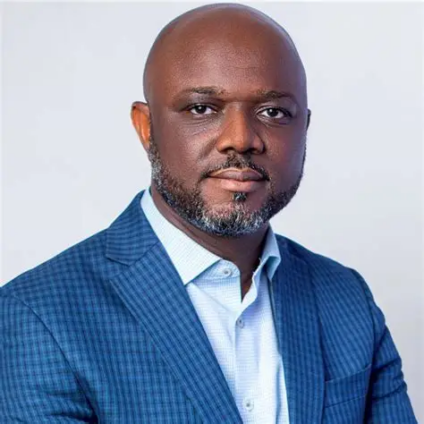
The Executive Director of the Africa Centre for Energy Policy (ACEP), Benjamin Boakye, has attributed recent failures within Ghana’s power infrastructure to deep-seated institutional negligence, warning that recurring incidents point to systemic shortcomings rather than isolated mistakes.
Speaking on Joy FM’s Top Story on Monday, April 27, Mr Boakye argued that recent incidents, including a major fire at a critical power substation, expose long-standing weaknesses in institutional culture, planning and accountability.
According to him, the scale of the incident raises serious questions about engineering oversight and risk preparedness.
He expressed disbelief that a facility capable of delivering over 1,000 megawatts of power to consumers could be destroyed by fire, particularly given its proximity to one of Africa’s largest hydroelectric dams.
“It doesn’t take much to build systems that avert such incidents,” he said, stressing that basic fire prevention mechanisms—such as detectors, water suppression systems and surveillance technology—should have been standard in such critical infrastructure.
Mr Boakye emphasised that engineers, managers and technicians operating in high-risk environments must anticipate potential hazards, including fires, and proactively implement safeguards.
He described the failure to do so as evidence of “deep systemic negligence” embedded within public institutions.
He further called for a thorough and transparent investigation into the incident, urging authorities to go beyond surface-level findings and hold accountable those whose inaction or oversight may have contributed to the disaster.
“We cannot allow these incidents to become routine headlines that we soon forget,” he cautioned.
The energy policy expert also criticised what he described as misplaced investment priorities within the sector.
Citing developments in Kumasi, he argued that billions of dollars have been spent on pipelines and power plants that have failed to resolve persistent electricity supply challenges.
Instead, he advocated for a more strategic approach focused on addressing core structural issues within the national grid.
He pointed to the need for a robust transmission backbone—specifically a 330kV line from Pokuase to Anwomaso—as a more effective solution to stabilise power supply in key regions.
Mr Boakye lamented that such recommendations had previously been overlooked in favour of large-scale projects that, in his view, have delivered limited value to consumers.
“We keep pumping billions into the power sector without delivering optimal solutions,” he said.
He also questioned the credibility of some public claims regarding infrastructure upgrades, noting that even the Public Utilities Regulatory Commission (PURC) had, at one point, cast doubt on reported installations by the Electricity Company of Ghana (ECG).
The broader consequence, he argued, is a cycle of inefficiency that leaves consumers grappling with unreliable power supply—commonly referred to as “dumsor”—despite substantial financial investments in the sector.
“For the average Ghanaian, all they want is to switch on the light and have it work,” he noted. “But for over a decade, we’ve been having the same conversations about when power will stabilise.”
Mr Boakye called for a fundamental reset in how Ghana approaches energy sector planning and investment.
He urged policymakers to identify and prioritise critical infrastructure needs, ensure accountability at all levels, and adopt practical, common-sense solutions to prevent future failures.
Latest Stories
-
Mahama Ayariga urges banks to take responsibility for beautifying public spaces
17 minutes -
Gold edges lower with focus on Fed minutes, rate path clues
1 hour -
Oil prices rise as storms and air strikes threaten supply
1 hour -
Nigeria nears 2,000 repatriations from South Africa after latest evacuation flight
2 hours -
‘4 million is possible’ – Abanga unveils NPP’s youth-vote battle plan
2 hours -
‘I never gave up’ – Abanga Fusani reflects on journey to NPP Youth Organiser victory
2 hours -
World Bank maintains Ghana’s growth rate forecast at 4.8% in 2026
2 hours -
Cedi was worst African currency in quarter 2, 2026 – World Bank
3 hours -
US death row inmate Christa Pike awake and speaking after failed execution, lawyers say
3 hours -
AI gains can lift three times as many people out of poverty in Ghana – World Bank
3 hours -
Scammers target ECG customers with fake meter sales and MoMo payment calls
4 hours -
Abanga Fusani credits hard work and consistency for NPP Youth Organiser victory
5 hours -
We did not take security issues seriously – Abanga Fusani reflects on NPP’s 2024 election loss
5 hours -
Nigeria’s Dangote refinery aims to draw more retail investors than Aramco IPO, CEO says
5 hours -
Banker in court for allegedly stealing GH¢1 million
5 hours