

Audio By Carbonatix
When Russia launched its full-scale invasion of Ukraine, the shockwaves did not stop at Europe’s borders. Thousands of miles away, in the heart of Africa, economies trembled. Ghana, like many nations across the continent, found itself ensnared in the aftershocks of a war it did not start but could not escape.
One of the most devastating consequences was the collapse of trade between Ukraine and Ghana. Once a flourishing partnership valued at $300.06 million in 2021, it plummeted to a mere $34 million by 2023. The war, waged with tanks and missiles, became a war of starvation and economic siege. The Kremlin’s blockade of Ukrainian seaports turned grain into a weapon, halting the flow of wheat and other essential exports that African nations rely on. Food prices soared. Families struggled. Inflation gripped Ghana with an iron fist, deepening economic hardship.
The world watched as Ukraine fought back—not just on the battlefield, but on the global stage. The Black Sea Grain Initiative became a lifeline, a desperate attempt to push vital food supplies past Russian blockades. Ukraine carved out new trade routes, forcing open corridors where only war and devastation had reigned. By 2024, these efforts had yielded results—trade between Ukraine and Ghana had begun to recover, rising to $49 million, a 44% increase from its lowest point.
But the scars remained. The war had revealed a terrifying truth: Russia’s regime wielded food as a geopolitical weapon, fully aware of Africa’s vulnerability. Ghana, a beacon of democracy in West Africa, found itself navigating a storm of foreign pressures. The Kremlin’s influence loomed, seeking to manipulate African alliances and fracture long-standing diplomatic ties.
Beyond trade, the war-shattered illusions of global security. It forced African leaders to confront hard questions: How could the continent shield itself from future economic shocks? How could it break its dependency on foreign grain and defence systems? The echoes of Ukraine’s resistance rang through African capitals, igniting conversations about self-sufficiency in agriculture, security, and trade.
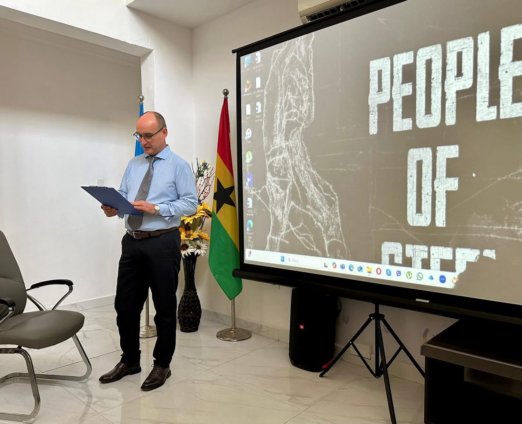
Amid this turmoil, Ukraine refused to let its African partnerships fade. With an unwavering commitment to strengthening ties, it expanded its diplomatic presence across the continent. The opening of a diplomatic mission in Accra was more than a formality—it was a declaration of resilience, a promise that Ukraine would not abandon its allies, even as it fought for survival.
The war that began in the trenches of Eastern Europe did not remain there. Its tendrils stretched across continents, ensnaring nations in crises they never anticipated. Yet amidst the darkness, new alliances were forged, and the will to defy tyranny burned brighter than ever. The battle for Ukraine’s freedom became a global reckoning, one that Africa could no longer ignore.
Latest Stories
-
Ghana to begin camping with 12 athletes after Accra Open Championships – Bawa Fuseni
1 minute -
Anthony Joshua declines showdown with Tyson Fury but admits they ‘probably’ clash next
14 minutes -
Tyson Fury dominates Makhmudov, calls out Joshua next
34 minutes -
I have supported highway authority financially to fix roads in my constituency – A Plus
2 hours -
US, Iran fail to reach peace agreement after marathon talks in Pakistan
2 hours -
ECG kicks off Phase Two of transformer upgrades at Lashibi; brief outages expected
3 hours -
Port crises loom as 11,000 drivers threaten four-day strike
3 hours -
A source of excellence across generations – Vice President Opoku-Agyemang lauds Mfantsipim
4 hours -
(Photos) Mfantsipim School launches historic 150th anniversary
5 hours -
Knights and Ladies of Marshall group backs Catholic Bishops’ stance on anti-LGBTQ+
6 hours