

Audio By Carbonatix
The transformation of Africa’s agriculture hinges on partnerships and collaboration among diverse stakeholders who can unite to tackle the challenges within the sector, according to a leading expert.
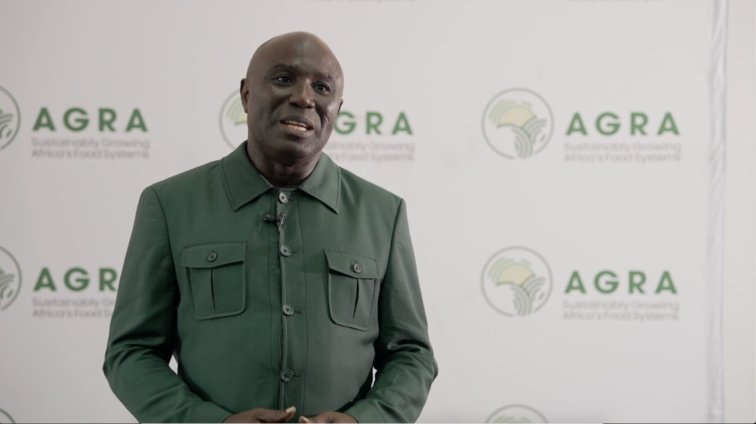
Foster Boateng of Ghana’s Tree Crop Development Authority said joint efforts from the government, private sector, farmers, and development partners hold the future of the sector which is key for sound food systems.
“You know; agriculture is very diverse, and you need many players in the system. You need government commitment, you need the private sector, the farmers themselves and the development partners as well,” Boateng said.
“So, it’s a concerted effort that requires partnerships,” he said, adding that government commitment is required to leverage private investment and improve the economy.
Mr. Boateng is attending the Africa Food Systems Forum (AGRF) 2023 which is taking place at Julius Nyerere International Convention Centre, in Daresalaam, Tanzania.
“That’s why I see AGRF and AGRA support in addressing African food systems in a more comprehensive manner and partnership as the right way to go,” he said.
He appreciated the AGRA programme known as Consortium Approach which brought smallholder farmers together and linked them to market leaders.
That way, the farmers can get inputs, and extension services as well as access markets and financing.
“For me, that’s the best way to go,” Boateng noted.
He said Ghana has also been facilitating the formation of farmers’ groups and linking them to market leaders so that they can comply with the quality standards that the markets require.
“The market does not begin with harvesting the produce but rather with the choice of crop varieties that the market is looking for,” Mr. Boateng said.
“As part of the value chain and supporting the market system, you also need to build a kind of seed system possessing the genetic traits and characteristics that the market demands,” he explained.
On addressing climate change, Mr. Boateng stated that the role of agroforestry farming which Ghana is adopting.
Ghana has been relying on cocoa for about a century now, but climate change and other human activities have degraded the environment so much that certain areas can no longer grow the produce.
The Government of Ghana is now exploring alternative value chains which will generate revenue.
In the tree crop area, Ghana is developing six crops that are projected to bring in a total of $12 billion in the next seven to 10 years.
These crops include mango, cashew, coconut, rubber, shea, and oil palm.
Agroforestry farming is also expected to enable farmers to manage shocks caused by climate change by increasing soil fertility and carbon management.
Latest Stories
-
Power restoration fault suspected in Kumasi Central Market fire
1 hour -
The 7-foot giant of Ngleshie Amanfro: Seven-foot Ghanaian Ephraim Saawa dreams of joining the national basketball team
2 hours -
Government promises support for Kumasi Central Market fire victims
2 hours -
Vibes The Movie: Big Ghun’s Ghanaian film earns five nominations at 2026 REFFA
3 hours -
MamaCare CEO warns unresolved conflicts among health workers could undermine maternal and neonatal care
3 hours -
Health professionals urged to translate medical knowledge into practice to save mothers
3 hours -
Conflicts among care providers linked to maternal, neonatal deaths – Expert
5 hours -
GIS marks 10th TIME conference, champions improved teaching practices
5 hours -
BRICS Or Balance? What Ghana’s bid really means
5 hours -
GPRTU wants full TRAFFITECH-GH implementation to start in 2027
6 hours -
Mahama announces plans to import electric wheelchairs for PWDs
6 hours -
KGL U17 Colts 2026: Western beat Prempeh Elite Academy to set up final final with Greater Accra Region
6 hours -
Late Solanke strike salvages 10-man Spurs draw at Man United
6 hours -
Gender Ministry to monitor welfare of Nana Akua Addo’s children amid domestic violence case
6 hours -
Benedict Okyere Yeboah: Ghana’s football problem goes beyond sacking a coach
6 hours