

Audio By Carbonatix
Ghana’s National Energy Transition plan is gaining momentum as the ministries of Transport and Energy commit to its implementation.
In a bid to maximize its advocacy, a joint delegation from the two ministries have been meeting with the National House of Chiefs in Kumasi.
The consultative meeting sought to solicit inputs from the traditional leaders towards the implementation of Ghana’s transitioning to GrEEn energy.
The National Energy Transition Plan seeks to transition the use and patronage of high carbon emitting sources to cleaner ones to attain a net-zero target.
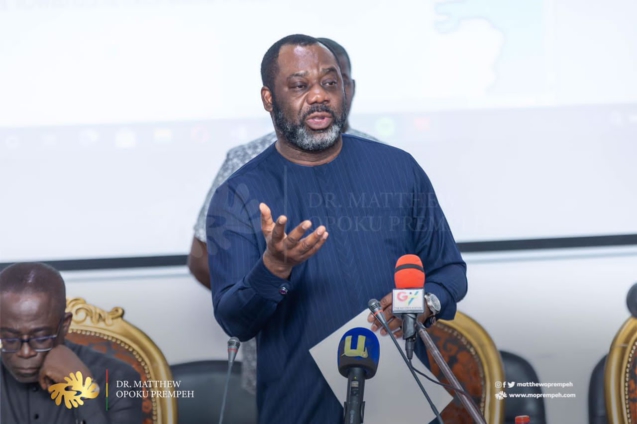
Acknowledging the deteriorating effects of fossil fuel energy, Energy Minister, Dr. Matthew Opoku Prempeh indicated the policy would mitigate the effects of global warming.
“The rainfall patterns are changing because of nothing, but global warming.
“Food security, job security and human existence or life are under threat,” he said.
In 2014, fossil fuel energy consumption in Ghana stood at 52.5% with an average annual rate of 5.83%.
Out of the 2.8 million registered vehicles in Ghana, data available at the DVLA indicates 72% use petrol with 27% and less than 1% harnessing diesel and LPG respectively.
Deputy Transport Minister, Frederick Adom, indicated that the government is introducing eco-friendly public transits and policies to avoid the impact of the 1.5°C global warming.
“As a ministry in charge of Transport, we remain resolute and committed to promote and sustain environmentally friendly, responsive transport systems. It’s perhaps one of the most urgent and critical measures that can guarantee a net-zero future.
“Our focus is on technological shift away from petrol and diesel fuels to a more fine alternative. We’re currently developing an e-mobility policy to guide the deployment and scale-up of electric vehicles in the country,” he said.
With almost a near end to the Sustainable Development Goals, Ghana’s commitment to SDG7 appears to be bleak.
Some residents have been reacting to the government’s introduction of clean and affordable energy.
Kwame, a phone accessories vendor, lauded the initiative, indicating that it would salvage the crippling economy.
“Trying to curb the impacts of carbon emission which is gradually depleting the ozone layer and causing more harm to the environment, I think this is a good idea,” he said.
They are however admonishing the government to build more electric pump stations should this policy kickstart.
“This would help reduce the unbearable atmospheric heat. The government should build more of the electric stations within a few meter intervals to power these vehicles,” Benjamin, a driver, added.
The National Energy Transition Plan is on the theme; "Moving Ghana Towards a net-zero future".
Latest Stories
-
Padel for Parkinson’s cycling event promotes awareness at University of Ghana
1 minute -
GPL 2025/26:Samuel Tetteh brace fires Nations FC past Basake Holy Stars
10 minutes -
Ghana’s oil trade position close to net neutral in near term – Fitch
31 minutes -
IMANI Africa President urges greater awareness and support for Parkinson’s Disease patients
42 minutes -
T-bills: Government records 29% undersubscription; interest rates continue to surge
44 minutes -
Perceptions of Judicial partisanship ‘unfortunate’ – Justice Adjei-Frimpong urges greater public engagement to build trust
47 minutes -
Ghana to honour Christina Hammock Koch for historic Artemis II mission
2 hours -
Supreme Court appointments require more than 15 years’ experience – Justice Adjei-Frimpong
2 hours -
Fire destroys 3-bedroom house at Bogyawe
2 hours -
Why the Supreme Court is a “policy court” – Justice Richard Adjei-Frimpong breaks it down
2 hours -
Playback: The Law discussed Supreme Court @150
4 hours -
MTN Momo staff walk to promote wellness and fitness
4 hours -
Assafuah: Sedina Attionu’s return from Nevada will test government’s commitment to accountability
4 hours -
How GRA’s Modified Taxation Scheme is boosting revenue compliance & SMEs competitiveness
4 hours -
Stonebwoy Can Do It: A call to unite behind 2026 BHIM Fest
5 hours