

Audio By Carbonatix
A Technical and Vocational Education and Training (TVET) Consultant, Dr Stephen Turkson, says TVET is a critical instrument for national development and it should not be downplayed by political actors.
He said countries that prioritized TVET concepts had made significant economic gains, which implied that vocational training must not be politicized by any country, which was eager to develop and create employment for its youth.
“We should not politicize TVET, because it is for national development, whichever party that comes into power, the focus should be there, because that is where we should go as a country”, he stated
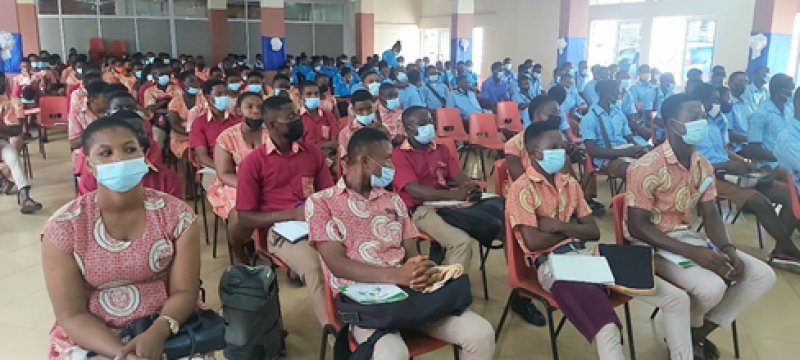
Dr Turkson was speaking at a job/career fair organized for some selected technical and vocational training institutions in the Ashanti region.
The fair was organized by Vocational Training for Females (VTF) programme, a church-based NGO dedicated to creating employment opportunities in TVET for the youth, especially females.
It was attended by students from the Kumasi Technical Institute (KTI), Community Development Technical Institute (CODTECH) at Kwamo, National Vocational and Technical Institute at Suame, Methodist Women Training Centre and Ramseyer Vocational/Technical Institute.
The World Bank, according to Dr Turkson projects that 80 percent of worldwide activities was centered on TVET which depicted that it was a powerful tool for development.
He cited the Asian countries as those that had used TVET as their national agenda, pursued it for economic growth and dominance over other parts of the world.
Dr Turkson pointed out that if Ghana had attached seriousness to TVET policy which was made way back in 2007, the country would have made headway.
He, however, commended the government for putting policies and structures in place to promote vocational education in recent times.
Dr Turkson urged parents to identify the potentials of their wards to prevent pushing children into liberal and humanities fields which might have not been their pitch of expertise.
VTF Director, Linda Agyei, said the transition from school to the labour market had become a problem due to a number of reasons, and was now worse due to the current disruptions all over the world as a result of the COVID-19 pandemic.
Aside from this, she said, there was a defective educational structure which only focused mainly on knowledge acquisition without emphasis on industrial skills.
She called on the government to be more concerned about the situation and forge ways to provide vocational and technical skills to the youth to make them self-employable
Latest Stories
-
GAEC must retain nuclear scientists for Ghana’s nuclear ambitions – Minister
15 minutes -
Man reportedly mistaken for game and shot by hunter dead in forest
17 minutes -
19-year-old mason jailed 15 years for defiling seven-year-old pupil
22 minutes -
Ghana’s banking sector assets rise 20.47% to GH¢500.2bn – BoG Governor
26 minutes -
22 injured as Sprinter bus overturns at Sege after tyre burst
27 minutes -
UN housing expert urges Ghana to strengthen Rent Control Department amid housing affordability concerns
36 minutes -
Delta-BCI partnership reaches 166,000 people with breast cancer education
45 minutes -
Power restoration fault suspected in Kumasi Central Market fire
6 hours -
The 7-foot giant of Ngleshie Amanfro: Seven-foot Ghanaian Ephraim Saawa dreams of joining the national basketball team
7 hours -
Government promises support for Kumasi Central Market fire victims
7 hours -
Vibes The Movie: Big Ghun’s Ghanaian film earns five nominations at 2026 REFFA
7 hours -
‘I’m a fulfilled man’—Justice Korbieh on missing out on Supreme Court despite two nominations
7 hours -
MamaCare CEO warns unresolved conflicts among health workers could undermine maternal and neonatal care
8 hours -
Health professionals urged to translate medical knowledge into practice to save mothers
8 hours -
Retired judge Justice Francis Korbieh charges 1,568 new lawyers to uphold integrity
9 hours