

Audio By Carbonatix
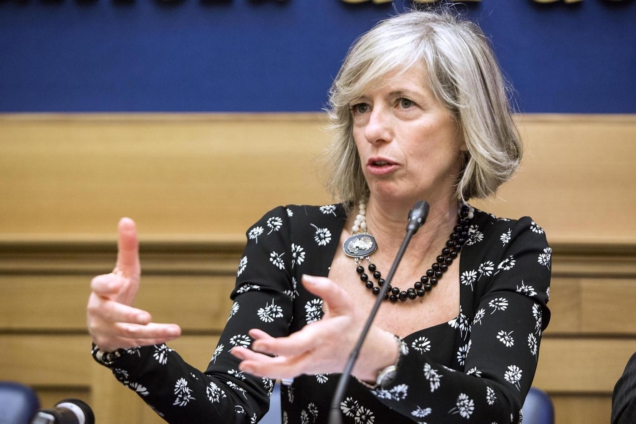
UNESCO Assistant Director-General for Education Stefania Giannini has said digital technologies, geared toward inclusion and equity, could transform the future of school systems and learning.
“Harnessing technology and changing education models is imperative,” Giannini said as she addressed a side event about the UNESCO-Huawei “Technology-enabled Open Schools for All” project at the COP27 climate change conference in Egypt.
Giannini said the partnered project “can help countries to rethink and build a new generation of schools and learners”, as young people were increasingly faced with the challenges and risks caused by climate change.
The event, dedicated to a partnership developed by the UNESCO Education sector with Huawei and the Ministries of Education of Egypt, Ethiopia and Ghana, also presented preliminary results of the open schools in the three African countries.
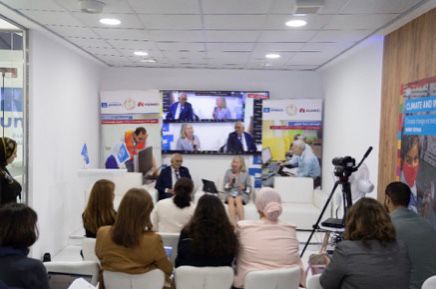
“Aiming to leave no one behind in the digital world, enabling equity and quality in education is one of four focused domains in Huawei TECH4ALL digital inclusion initiative,” said Catherine Du, Head of Huawei's TECH4ALL program.
She added, “Moreover, we believe that ICT is a key enabler for a greener world with approaches like reducing carbon emission, renewable energy, circular economy and conserving nature with technology.”
Working with more than 20 different partners, TECH4ALL’s education program has helped connect schools, promote digital skills, and support STEAM curriculum to K12 students and teachers in more than 400 schools globally as well as unemployed young people and elders.
Since 2021, the Egyptian Ministry of Education and Technical Education, in cooperation with UNESCO and Huawei, have organized several meetings to prepare and review project documents.
“I would like to emphasize the critical need for collaborative efforts among all stakeholders to ensure not only equitable access to educational resources but also to fulfil social obligations towards students,” Dr Hegazy said.
In Egypt alone, the UNESCO-Huawei joint project aims to empower 950,000 teachers, principals, and supervisors to more effectively integrate ICT into their daily practice.
Ultimately, 23 million students at the basic education level in the country are expected to benefit from an enhanced and more equitable digital learning experience.
Huawei has operated in Africa for more than 20 years, helping connect more than one billion people in more than 50 African nations, as part of the company’s overarching commitment to help bridge the digital divide and enrich people’s lives.
Latest Stories
-
NPP cannot question EC appointment after appointing own people to Commission – Kwakye Ofosu
5 minutes -
BoG deepens public trust with regional stakeholder forum in Techiman
15 minutes -
‘We have turned the tide’ – Ato Forson says Ghana is ready to take off
19 minutes -
Police arrest man captured in viral video assaulting wife in Agona Nkwanta
21 minutes -
KATH Mother and Baby Unit construction stalled for 14 months over unpaid contractor arrears
35 minutes -
Government wanted to ‘tilt the balance’ with new EC appointments – Kwakye Ofosu
42 minutes -
Angry Tema Community 25 residents threaten to sleep at GWL over water shortage
55 minutes -
BoG takes financial literacy drive to Techiman, vows to protect depositors
55 minutes -
‘Stop the distractions’ – Akosua Manu demands answers over GH¢49.7m South Africa evacuation cost
56 minutes -
Formula 1 to return to Africa with Rwanda Grand Prix in early 2030s
1 hour -
Mahama says Ghana is safer today as he commissions 85-bed ward at Police Hospital
1 hour -
LA 2028: Black Queens face Zambia in final Olympic qualifier
1 hour -
WAFU Zone B: Black Starlets seal semifinal place with 3-1 win over Benin
1 hour -
Black Queens thrash Mauritius 7-0 to advance 10-0 on aggregate in Olympic Qualifiers
2 hours -
Kaizen as a strategic pathway for micro business scale-up in Ghana
2 hours