

Audio By Carbonatix
Universities and research institutions across the country are being urged to develop intellectual property policies for their organisations and put in place deliberate strategies and action plans for implementing the policies developed.
Co-founder of the Centre for Intellectual Property Rights Awareness Ghana (CIPRAG) and an Assistant Research Fellow at the Directorate of Research, Innovation, and Consultancy at the University of Cape Coast, Isaac Nketsiah, indicated that this was the only way universities and research institutions could remain relevant and be more agile and responsive to the challenges of 21st-century higher education institutions.
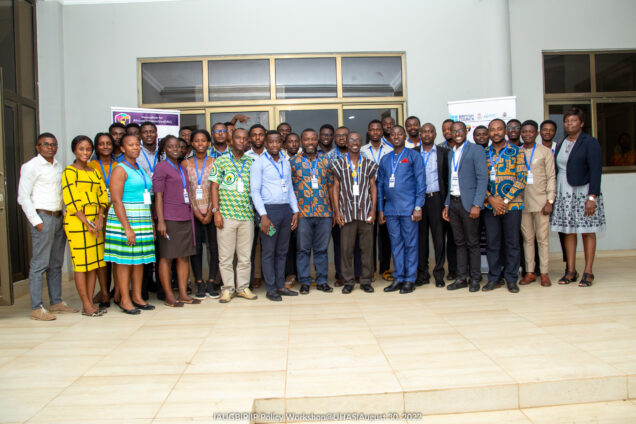
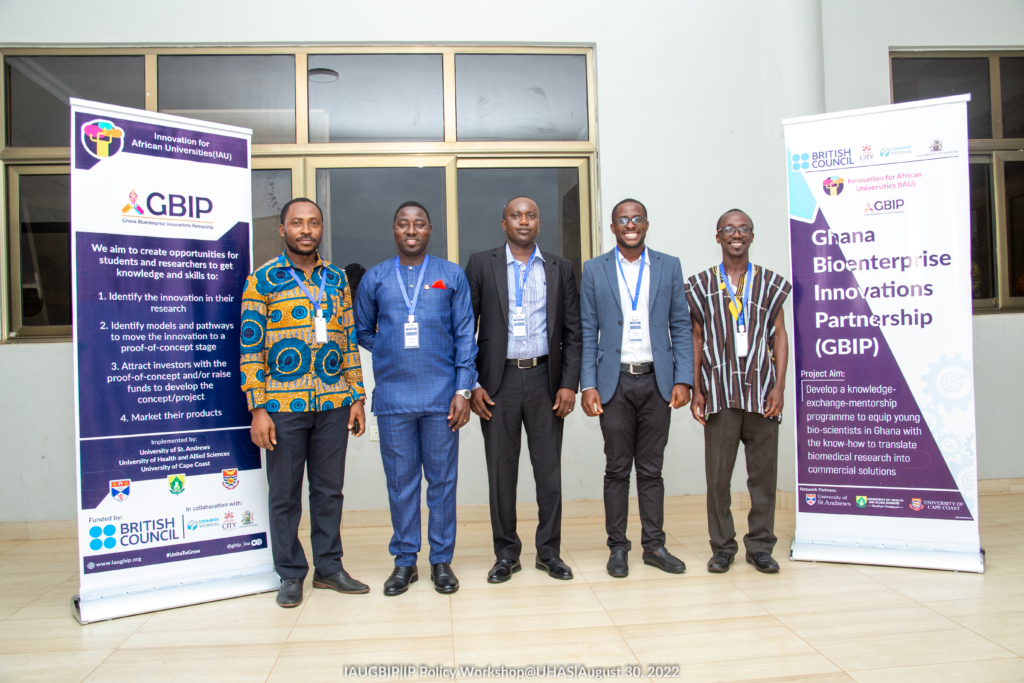
Speaking at a workshop on the emerging trends in intellectual property (IP) policy for biomedical sciences at the University of Health and Allied Sciences (UHAS), Ho, under the Ghana Bio-enterprise Innovations Partnership (GBIP) Project, Mr Nketsiah underscored the need for universities and research institutions to develop an intellectual property framework to guide their research and scholarly works to enable them to generate income from the commercialization of their works.
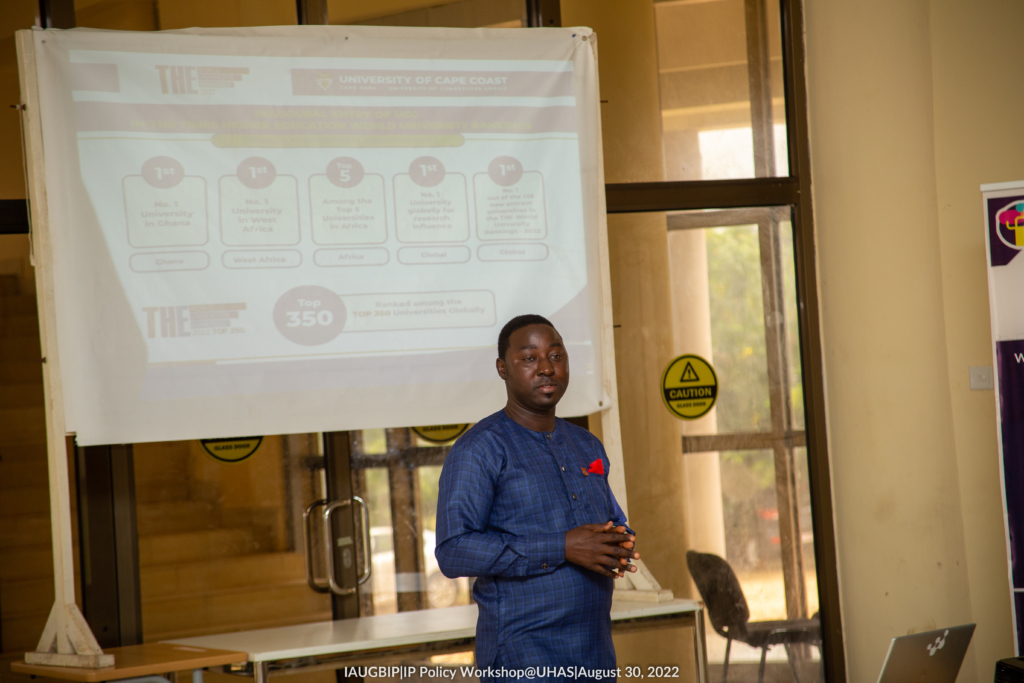
‘‘The issue is that universities and research institutions hurriedly develop policies without a clear-cut implementation roadmap."
In light of the quickly evolving trends in biomedical research and access to medical technology, he declared that "continuous awareness, creation, and deliberate efforts to identify, register, and commercialize university IP are necessary for achieving universities' mandates, particularly in the post-Covid-19 era of Africa's sustainable development."
He also expressed concern about how, in the age of technological development, the majority of universities and research institutions in Africa continue to focus on teaching and fundamental research while passing up chances to make ground-breaking discoveries and find solutions to the majority of the continent's problems.
He indicated that in this era of COVID-19, opportunities abound in the area of drug discovery and the development of rapid diagnostic test kits.
He recommended that “universities and research institutions should develop and operationalize effective institutional IP policies that provide guidelines on creation, protection, commercialization, benefit sharing mechanisms, and ownership of IP rights.”
He further stressed the need for universities and research institutions to put in place appropriate support structures, such as the establishment of Technology Transfer Offices.
(TTOs), Business Incubation Services, Industrial Parks, and University Enterprises in order to commercialize research outputs.
Present were the Director of Public Affairs, Maria B. Gwira, a Director at CIPRAG, Saviour Sobia Komla Deikumah, the Principal Investigator and Coordinator of the GBIP Project, Prof. Kwabena Deudu, and Dr. Jones Gyamfi, biomedical research scientists, among a host of others.
Latest Stories
-
Photos: Speaker Bagbin Commissions MPs constituency office under parliamentary decentralisation programme
15 minutes -
Black Stars technical advisor Winfried Schäfer sacked as GFA shakes up backroom staff
20 minutes -
Wenchi water project almost complete, critical to gov’t agenda – GWL MD
36 minutes -
Anti-LGBTQ+ bill not part of government’s legislative agenda – Inusah Fuseini
38 minutes -
Anti-LGBTQ Bill: Forget the rumour mongers, I’m a man of action, and will pass the bill – Speaker
1 hour -
Women and children among those killed in Sudanese army shelling of wedding celebration
1 hour -
President Mahama is not sincere with Ghanaians on LGBTQ bill matter – Hassan Tampuli
2 hours -
Gov’t to establish Prison Industrial Hub to equip inmates with income-generating skills – Prison Service boss
2 hours -
Alhassan Tampuli donates cement, roofing sheets to support storm victims in Gushegu
2 hours -
Alhassan Tampuli appeals for urgent support for storm victims in Gushegu
2 hours -
The hypocrisy must stop; pass Anti-LGBTQ+ Bill now – Alhassan Tampuli to Mahama
2 hours -
Imprisonment should be rehabilitative, not punitive – Ghana Prisons boss at UNGA
3 hours -
Ga Adangbe traditional priests petition Mahama over McDan aviation licence revocation
3 hours -
Anti-LGBTQ Bill: NDC’s arrogance is worrying – Hassan Tampuli
3 hours -
Let’s give OSP time to mature, not to scrap it – Hassan Tampuli
3 hours