


Audio By Carbonatix
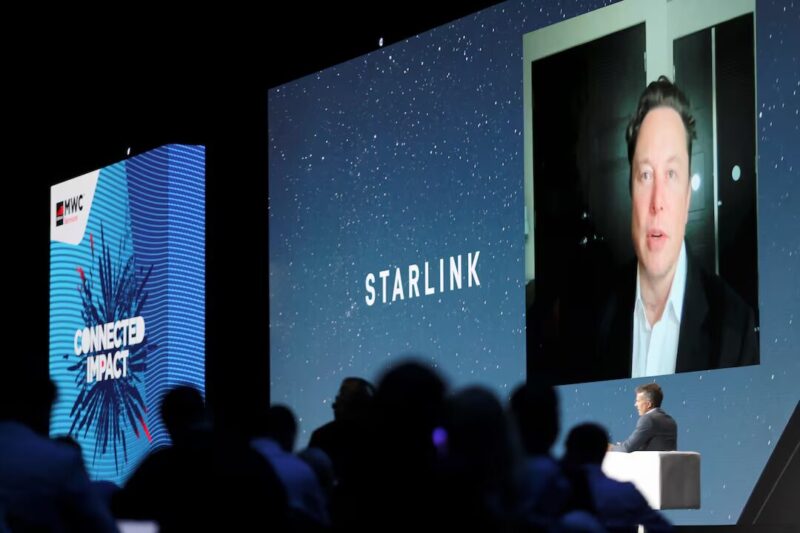
A U.S. House committee said on Monday it is investigating the Federal Communications Commission's decision to deny SpaceX satellite internet unit Starlink $885.5 million in rural broadband subsidies.
The FCC said in December reaffirming its position that the decision impacting Elon Musk's space company was based on Starlink's failure to meet basic program requirements and that Starlink could not demonstrate it could deliver promised service after SpaceX had challenged the 2022 decision.
House Oversight Committee Chair James Comer, a Republican, asked the FCC in a letter Monday to turn over documents by Oct. 21 on the decision.
The committee seeks to ensure the FCC "followed established processes and is not improperly using the regulatory process for political purposes."
The FCC said it had received the letter and would respond.
In December 2020, the FCC tentatively awarded $9.2 billion to over 300 bidders to deploy high-speed broadband with SpaceX's Starlink winning $885.5 million in a 2020 auction for rural service.
The FCC opted to deny Starlink the funding in August 2022, citing speed-test data after Starlink had agreed to provide high-speed Internet service to 642,000 rural homes and businesses in 35 states.
Musk has harshly criticized the FCC decision to deny the award he called "illegal" and asserted last week that if Starlink had received he funding "it would probably have saved lives in North Carolina" amid Hurricane Helene.
FCC Chair Jessica Rosenworcel told Congress in February that Starlink's publicly available performance data has confirmed its prior finding that "Starlink had difficulty meeting the basic uplink and downlink speed standards for the program" and added Starlink’s proposal would have required subscribers to purchase a $600 dish to start service.
The two Republican commissioners on the five-member FCC dissented from the decision saying the FCC was improperly holding SpaceX to 2025 targets early.
Last month, Rosenworcel said she wants to see more competition to Starlink, noting it controls nearly two-thirds of all active satellites and has launched about 7,000 satellites since 2018.
"Our economy doesn't benefit from monopolies. So we've got to invite many more space actors in, many more companies that can develop constellations and innovations in space," she said.
Latest Stories
-
T-bills auction: Demand improves as government exceeds target by about 76%, interest rates soften
3 seconds -
Ziope undertakes initiative to build a technologically inclined community, commissions self-help ICT lab
25 minutes -
ECG announces power outage in parts of Tema, Central Region due to network fault, maintenance
52 minutes -
When the Gospel Becomes a Weapon: The church, blackmail and the abuse of faith
1 hour -
JoyNews’ Jacqueline Ansomah Yeboah selected for UK Media Excellence for Emerging Technology Fellowship
2 hours -
Mental Health Alliance urges government to operationalise Mental Health Fund
2 hours -
Ghana–Holy See agreement heads to Parliament after Cabinet approval
2 hours -
Luv FM Corporate Games 2026: Kumasi Central Prisons, Amanfiman Bank win big amid fun
2 hours -
WAFU B U17: Ghana top Group A after win over Togo
3 hours -
Ho Central Mosque reopens amid unresolved leadership dispute that led to closure
4 hours -
Minority caucus questions GH¢16.4m in Ablakwa’s SA evacuation spending, demands independent audit
4 hours -
Gender Ministry meets Nana Akua Addo’s husband over domestic violence after hospital discharge
5 hours -
UG Vice-Chancellor urges swift operationalisation of National Research Fund
5 hours -
Pope Leo to have surgery after lump found in lung
5 hours -
Joseph Cudjoe writes: Ghana must break free from the dangerous mindset that natural resources are the foundation for wealth
6 hours