

Audio By Carbonatix
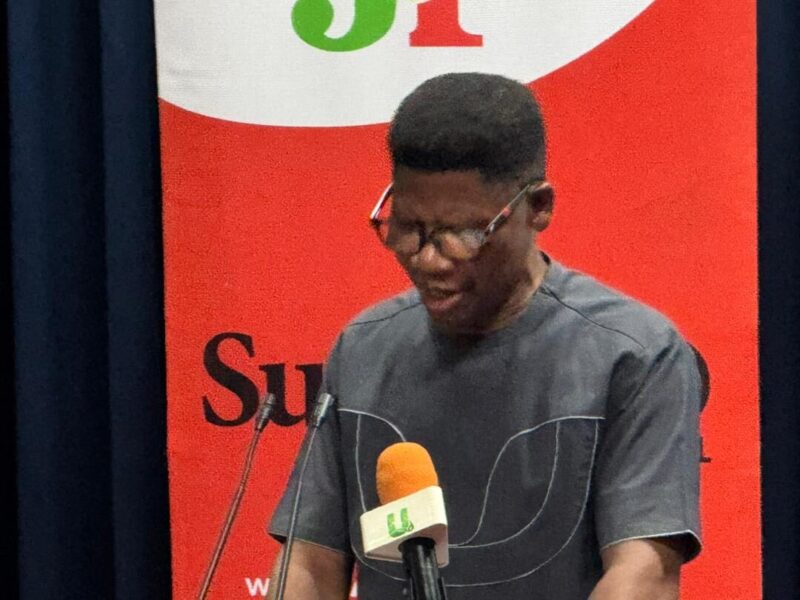
Police Planning Officer at the UN Mission Support for Justice Reform, ACP Dr Benjamin Agordzo, says Ghana can conduct peaceful elections without deploying military personnel to polling stations.
Speaking at the Peace Through Democracy forum organised by the GIMPA Law Students Association on Wednesday, he stated that strategic policing, dialogue, and trust-building are sufficient to maintain security during elections.
Reflecting on the 2016 elections, widely regarded as one of the most peaceful in Ghana’s Fourth Republic, Dr Agordzo stated, “Not even a fly was reported to have died during the 2016 elections.”
He attributed this to deliberate efforts by the National Election Security Task Force (NESTF), which he said successfully employed a systematic dialogue approach with key stakeholders.
Read also: ‘National SWAT is illegal and must be excluded from elections’ – Dr. Agordzo
“The dialogue approach was adopted alongside law enforcement because we realised that a militant posture alone could not resolve crises,” he explained.
Stakeholders such as political parties, youth groups, religious bodies, and the media were engaged in open discussions that helped build confidence and clarify expectations.
Dr Agordzo revealed that in 2016, the NESTF avoided using military personnel at polling stations, instead relying solely on police officers trained specifically for the elections.
“We trained special police officers and deployed them to the borders with UN Police jackets and helmets. No military officer. I am emphasising this to say that we can do this election peacefully without deploying any military officer,” he declared.
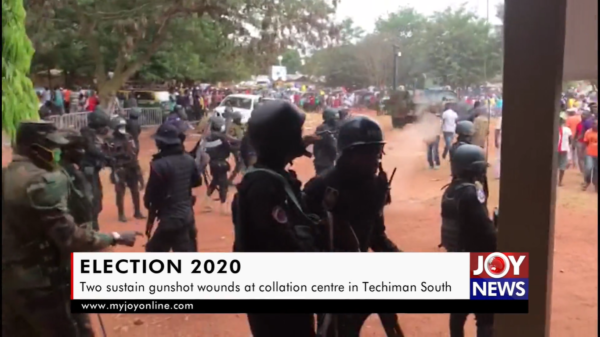
He cautioned against the use of military personnel, citing incidents like Ayawaso West Wuogon and Techiman South, which he said are “still fresh on our minds.”
According to Dr. Agordzo, such deployments could undermine public trust and provoke unnecessary tension.
In his call for peaceful elections, Dr. Agordzo emphasized the importance of planning, trust-building, and avoiding excessive force.
“Let’s trust the police to handle this election professionally. Dialogue, education, and careful coordination will ensure we achieve peaceful elections without military intervention,” he concluded.
In the 2020 election, the opposition National Democratic Congress (NDC) protested the results, describing them as “flawed” and alleging that state security forces were used to intimidate voters in their strongholds.
The National Election Security Taskforce (NESTF) reported that eight lives were lost during the general elections, with 61 recorded cases of electoral and post-electoral violence across the country, including six incidents involving gunshots.
Latest Stories
-
Beyond the Flyer: Awareness without screening is not enough
3 seconds -
Bekwai MP donates GH¢100,000 to hospital for specialist equipment
8 minutes -
Van Vicker sues Lil Win for defamation, demands GH¢10m
13 minutes -
FIFA/ FIBA agency Pep Sports moves to admit Ghana’s 7-Foot Basketball talent to its Ultra-Modern Sports campus after MyJoyOnline report
15 minutes -
GAUA strike disrupts academic plans at University of Ghana as students, parents express frustration
20 minutes -
Dad’s Army/African Polistas crowned champions of 2026 Accra Polo Club Trustees’ Cup
27 minutes -
Mahama approves Integrated Basic Education Model, with funding expected in 2027 under GETFund formula
30 minutes -
Money-driven elections fuelling corruption – Haruna Iddrisu
34 minutes -
Excessive borrowing ‘cracked’ Ghana’s economy under Akufo-Addo – Haruna Iddrisu
43 minutes -
NPP’s silence on economic indicators suggests Mahama is doing better – Haruna Iddrisu
57 minutes -
GoldBod must be more accountable to Ghanaians – Haruna Iddrisu
1 hour -
Affi Agbenyo’s EC appointment is constitutionally appropriate, but politically, people have the right to remind us – Haruna Iddrisu
1 hour -
Accra Mall brings Soulful Weekend Vibes to October with Live R&B and Jazz
2 hours -
Education is critical to Ghana’s future and development – Haruna Iddrisu
2 hours -
Who’s Emelia Affi Agbenyo, the 43-year-old newly sworn-in Deputy EC Chair?
2 hours