

Audio By Carbonatix
To address the growing health crisis of non-communicable diseases (NCDs) in West Africa, a consortium of European and African institutions launches the CAPSTONE (CAPacity Strengthening of Transdisciplinary education for nON-communicable disease care in West Africa) project in Accra, Ghana.
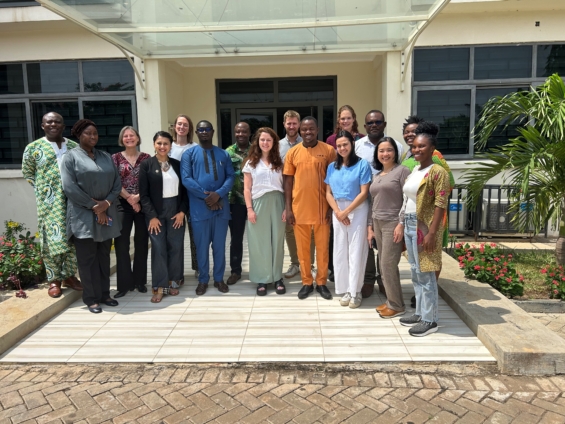
The CAPSTONE project held its first consortium meeting from June 24 to 28, bringing together health experts, educators, and policymakers and government officials.
Noncommunicable diseases, also known as chronic diseases, are long-lasting conditions resulting from a combination of genetic, physiological, environmental, and behavioral factors. The main types of NCDs include cardiovascular diseases (like heart attacks and stroke), cancers, chronic respiratory diseases (such as chronic obstructive pulmonary disease and asthma), and diabetes.
These diseases disproportionately affect people in low- and middle-income countries, where more than three-quarters of global NCD deaths (31.4 million) occur.
Dr. Daniel Boateng, a lecturer with the Department of Epidemiology and Biostatistics at the School of Public Health, KNUST and the lead for the CAPSTONE project in Ghana explained, “In recent years, developing countries have experienced a significant increase in NCDs, which now pose a major health challenge. This surge is primarily attributed to rapid demographic changes and socioeconomic development.”
“Despite this growing prevalence, there's a notable lack of resources and capability to effectively manage NCDs at the primary healthcare level in the country. This is why the CAPSTONE project is so important,” he said.
“Recently there was a lot in our headlines about issues with kidney disease and dialysis. Hypertension and diabetes are common risk factors for kidney disease,” said Professor Titus K. Beyuo, Consultant Obstetrician and Gynaecologist and co-Investigator on the project. Professor Beyuo has over the years explored research in NCDs complicating pregnancy such as hypertensive disorders of pregnancy (HDPs), diabetes and sickle cell disease.
He added, “Understanding burden of many of these non-communicable diseases including the strain on families and cost of care, as well as the importance of addressing their risk factors in our population is of major importance to this project.”
The core objective of the CAPSTONE project is to establish two newly accredited master's degrees in public health with a specific focus on NCDs. This innovative curriculum will be designed to equip a diverse range of health professionals, including doctors, nurses, and allied health workers, with the specialized knowledge and skills needed to address the complexities of NCD management.
To provide stakeholders firsthand insights into the current landscape of NCD care, a series of organized visits to local health facilities offered valuable perspectives on both the challenges and opportunities in managing non-communicable diseases in the Ghanian setting.
The weeklong launch and consortium meeting included intensive workshops and discussions, focusing on critical areas such as stakeholder engagement, competency profiles, didactical frameworks, curriculum development, and impact evaluation. These sessions laid the groundwork for the project's ambitious goals, which include the co-development and delivery of six new NCD-focused courses.
Prof. Kerstin Klipstein-Grobusch, Associate Professor and Vice-Chair Global at the Julius Center for Health Sciences and Primary Care, University Medical Center Utrecht, The Netherlands, is a principal investigator of the project in the Netherlands.
“We are glad to be setting the scene for all the work we will be doing jointly here. “We hope that every year or even more often there will be opportunities to inform the academics, the media and the public and policy makers of the progress of our activities.
Dr. Nsiah Asare, Presidential Advisor on Health, graced the project's launch ceremony, acknowledging government’s support for the initiative.
Latest Stories
-
Benedict Okyere Yeboah: Ghana’s football problem goes beyond sacking a coach
7 minutes -
GPL 2026/27: Darkwah Wiafe’s winner sees All Blacks beat Kotoko
13 minutes -
ITF World Tour : Patel Wins Boys’ Singles Final at J100 Accra
26 minutes -
Ghana must pursue BRICS partnership if it brings economic benefits – Kpebu
29 minutes -
Success and Wright Claims J100 Accra Girls’ Doubles Championship
29 minutes -
ITF J100: America’s Wright wins J100 Accra Girls’ Singles Title
36 minutes -
Expedition hopes to find aviator Amelia Earhart’s plane on remote island
36 minutes -
US seeks changes to rejected $109m health compact with Ghana – Mahama
1 hour -
Nine dead in mass shooting at Pennsylvania home
1 hour -
‘Time for Ukraine to get new president,’ says Trump after Zelensky condemns diesel deal
1 hour -
Hincapie injury adds to Arsenal issues after Guimaraes rescue act
2 hours -
Henderson scores twice as Chelsea thumb Bournemouth
2 hours -
Photos: Mentapulse Africa convenes health and labour summit to address talent retention
2 hours -
Mahama inspects Nkokɔ Nketenkete plant, eyes Bechem as chicken capital
2 hours -
Ghana not seeking full BRICS membership, applying as Partner Country – Ablakwa
2 hours