

Audio By Carbonatix
An Associate Professor at the School of Law, University of Ghana, Professor Kwadwo Appiagyei-Tuah has stated that the right to demonstrate is deeply entrenched in the 1992 Constitution of Ghana and supported by the Public Order Act.
According to him, the participants in the Democracy Hub protests had the legal right to protest.
Speaking on Top Story on Wednesday, September 25, Prof Appiagyei-Tuah raised concerns about human rights violations in the way the protesters were handled by the Ghana Police Service.
He mentioned key issues such as the reasons for the arrests, the transfer of protesters between prisons without notifying their families or lawyers, and the fact that some were brought to court without any formal charges, saying that these are critical human rights issues that touch on the dignity of the individual.
This, he questioned the nature of the offense that would warrant the denial of bail to the arrested protesters.
“Of course, bail conditions are supposed to be directed by the court on an individual case-by-case basis so it is not that we say that everybody should be granted bail but what is the nature of the offense?
“Sometimes the nature of the offense and the circumstances surrounding it determines if a person should be granted bail or not. And if you look at the surrounding circumstances where these alleged violators were scattered at various police stations and were not allowed access by their lawyers, they constitute various violations of the rights and dignities of these demonstrators,” he said.
Commenting on the police claim that the protesters engaged in unlawful assembly, he argued that the demonstrators were simply exercising their right to assemble as part of their protest.
“So if they go on demonstration, they are assembling and so what is the unlawfulness about this?
“...But if it is unlawful, it could mean that they may have violated some laws which include vandalising property or doing anything that obstructed the rights of other people. I don’t have the facts to speak to that but that may be a case where you can talk about unlawful assembly," he said.
Prof Appiagyei-Tuah added that if the police have evidence to show that the demonstrators engaged in such activities, they have the right to charge them and even request that bail be denied "but the situation where some are denied opportunity or access to a lawyer, these are serious violations.”
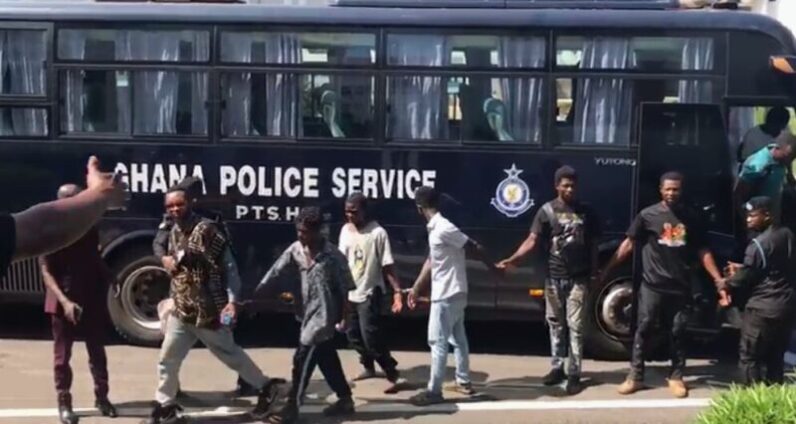
A good number of protesters are facing trial after the police arrested them and accused them of breaking various public order provisions.
Latest Stories
-
Glasner suffers loss on Selhurst return as Palace beat Forest
1 hour -
WAFU B U17: ‘We won but I expected more from my boys’ – Kassim Ocansey
1 hour -
Man City cruise to statement win over 10-man Liverpool
2 hours -
Be careful with cross-border lending, foreign currency exposures – BoG to financial institutions
4 hours -
GPL 2026/27: Medeama go three clear as Hearts of Oak recover and Bechem stage stunning comeback
4 hours -
Ntiamoah Foundation launches “BEYOND 20” anniversary campaign
4 hours -
Credit Risk Management Directive: BoG to begin implementation for banks, others from July 1, 2027
5 hours -
Ghana Brands Awards 2026: Leading brands, business trailblazers to shine on November 20
5 hours -
T-bills auction: Demand improves as government exceeds target by about 76%; interest rates soften
5 hours -
Ziope undertakes initiative to build a technologically inclined community, commissions self-help ICT lab
6 hours -
ECG announces power outage in parts of Tema, Central Region due to network fault, maintenance
6 hours -
When the Gospel Becomes a Weapon: The church, blackmail and the abuse of faith
6 hours -
JoyNews’ Jacqueline Ansomah Yeboah selected for UK Media Excellence for Emerging Technologies Fellowship
7 hours -
Mental Health Alliance urges government to operationalise Mental Health Fund
7 hours -
Ghana–Holy See agreement heads to Parliament after Cabinet approval
7 hours