

Audio By Carbonatix
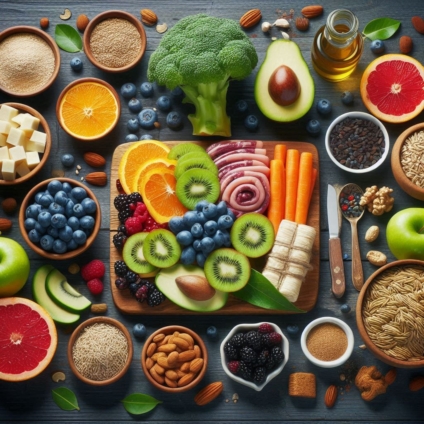
Fruits and Vegetables are vital for a healthy diet as they are rich in essential nutrients and vitamins, contributing to better overall health. Low fruit and vegetable intake is among the five main risk factors for poor health, with over 2 million deaths attributable to low intake of fruits, and 1.5 million deaths attributable to low intake of vegetables globally each year, particularly in low- and middle-income countries.
The World Health Organization (WHO) recommends consuming at least 400g (approximately five portions) of fruit and vegetables per day to help reduce the risk of non-communicable diseases (NCDs) and ensure an adequate daily intake of dietary fibre.
Eating fruits and vegetables is not only beneficial for health but also for the environment. This is because, cultivation of fruits and vegetables require fewer resources (such as water, land, and energy) to produce, compared to animal products, making them more environmentally friendly.
They also have a lower carbon footprint, meaning that their production generates fewer greenhouse gas emissions. Fruits and vegetables also contribute to biodiversity preservation as diverse crops promote healthier ecosystems and protect biodiversity.
These outlined benefits notwithstanding, globally, particularly in low- and middle-income countries, the consumption of fruits and vegetables is often lower than recommended. This low intake is attributable to several factors ranging from policy, production, socioeconomic and personal factors among others.
This article looks at some of the personal reasons why people do not eat enough fruits and vegetables. An understanding of these factors can provide valuable insights into the barriers that prevent individuals from incorporating more fruits and vegetables into their diets. This will help individuals develop targeted strategies that will address these specific obstacles and ultimately promote healthier eating habits.
The relatively high cost of fruits and vegetables may be one of the reasons why people do not eat enough of them. Due to limited financial means, many individuals and families find it difficult to regularly afford to buy fruits and vegetables.
Thus, people frequently choose less expensive staple meals or highly processed foods that provide quick satisfaction over fruits and vegetables. The rise in the cost of living feeds a vicious cycle of unhealthy eating habits that may result in poor health consequences. One way to go around this challenge is to aim to buy fruits and vegetables that are in season. When fruits and vegetables are in season, they are usually less expensive than when they are not in season.
Secondly, some people are cautious about eating fruits and vegetables because of concerns about food safety. Many people worry that the water used for cultivating or handling these fruits and vegetables is not safe and could potentially contain dangerous bacteria and other pathogens that could harm the health of consumers.
This anxiety may reduce trust in their safety and quality, limiting intake. On a personal or household level, one way to go around this is to safely wash fruits and vegetables by rinsing them under running water, being sure to remove any skins or rinds that are not intended for consumption before eating/storing. Even produce that looks clean should be thoroughly washed before eating.
Thirdly, the consumption of fruits and vegetables may also be greatly affected by the availability and accessibility of fresh food. A lack of local markets and inadequate transportation may make it difficult to obtain fresh fruits and vegetables.
People who live in places that are not easily accessible by vendors of fresh produce could therefore find it difficult to frequently buy or eat fresh fruits and vegetables. Residents in these areas may resort to relying more on imported or processed foods, which are frequently less nutritious.
People experiencing this barrier have several options including purposefully engaging traders to purchase/supply fruits and vegetables to them in their households or exploring the possibility of having backyard gardens among others.
It is also interesting to note that even when vegetables are available, accessible, and affordable, most people still do not consume them in large enough quantities.
Scientific evidence suggests that improving nutrition literacy by focusing on nutrition education at all levels is a key component for overcoming barriers and encouraging adequate intake of fruit and vegetables.
Regularly including a variety of fruits and vegetables in our diet offers numerous health advantages, including supplying vital vitamins and minerals that are needed for different body functions, including prevention of non-communicable diseases, strengthening the immune system to aid in the body's defence against infections and illnesses, and keeping your body hydrated due to their high-water content. Barriers to their consumption must be identified and addressed to promote healthier eating habits.
What are your barriers and challenges to eating fruits and vegetables regularly? Share them with us via email on fullproofnutrition@gmail.com or via WhatsApp on 0530542013.
Written by Laurene Boateng (PhD, RD)
Laurene Boateng (PhD, RD) is a Registered Dietitian and Senior Lecturer in the Department of Dietetics, University of Ghana. She is the founder and editor-in-chief of www.fullproofnutrition.com , a website committed to providing reliable, evidence-based, and practical healthy eating advice.
Reference
Harris, J., de Steenhuijsen Piters, B., McMullin, S., Bajwa, B., de Jager, I., Brouwer, I.D. (2023). Fruits and Vegetables for Healthy Diets: Priorities for Food System Research and Action. In: von Braun, J., Afsana, K., Fresco, L.O., Hassan, M.H.A. (eds) Science and Innovations for Food Systems Transformation. Springer, Cham. https://doi.org/10.1007/978-3-031-15703-5_6
Latest Stories
-
EOCO had tactical team ready to arrest Baffour Awuah – Felix Kwakye Ofosu
15 minutes -
Afoko can unite NPP’s factions, says Charles Owusu Juanah
29 minutes -
Guardiola backing Man City after guilty verdicts
35 minutes -
Annoh-Dompreh questions EOCO’s claim that Manhyia South MP was unavailable for questioning
35 minutes -
Djokovic wins first match since Wimbledon at China Open
48 minutes -
KAIPTC, National Peace Council move to bridge civilian-security trust deficit to counter violent extremism
55 minutes -
Infantino should have no place in future of football – Pinto
57 minutes -
A decade of duty: First Commander recounts the unexpected birth of Ministries Fire Station
1 hour -
Mfantsipim must cultivate more business leaders, entrepreneurs – Nana Awuah
1 hour -
MOBA must reduce reliance on donations to protect Mfantsipim’s future – Patrick Kittoe
1 hour -
GCB extends Customer Service Week into month-long customer engagement
1 hour -
Africa risks widening inequality if it fails to build AI expertise – Kweku Awotwi
1 hour -
Women’s Voices Matter Movement petitions Gender Ministry over women’s rights and development
1 hour -
Ronaldo leaves Portugal camp after coach denies rift
1 hour -
Huel ad banned for suggesting its products could replace all meals
1 hour