

Audio By Carbonatix
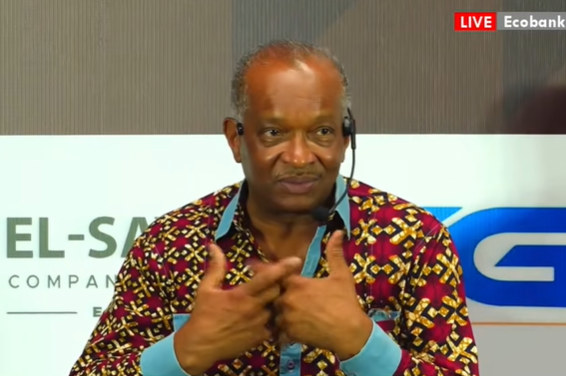
Chairman of the Multimedia Group Limited and Stallion Trust and Administration Company Limited, and a 1976 year-group student of Mfantsipim School, Kweku Awotwi, has warned that Africa risks widening existing inequalities if the continent fails to build the expertise and capacity needed to harness Artificial Intelligence (AI).
He said that while AI was rapidly transforming industries and accelerating innovation globally, Africa continued to lag in its use of the technology and in the generation of data needed to develop effective AI systems.
Mr Awotwi made the remarks at the 11th MOBA Annual Engagement Series held at the Ecobank Ghana Head Office in Accra on Wednesday, September 30, under the theme “Sustaining Mfantsipim’s Legacy Beyond 150 Years.”
He said AI was already having a significant impact on fields including medicine, science, law and software engineering, with the technology reducing the time required for research, discovery and software development.
“AI is having a huge impact on research, people who do research. It collapses research times, discovery times,” he said.
He cited advances in areas such as protein and antibody identification as examples of how AI was accelerating scientific research and expanding the frontiers of human knowledge.
According to Mr Awotwi, the rapid pace of AI development was also reshaping global competition, with major powers such as the United States and China seeking leadership in the technology because of its potential to influence economic and technological advancement.
“The question really is, what do we do about it sitting in Ghana?” he asked.
Mr Awotwi said Africa faced a major challenge because it lacked sufficient expertise and data to influence the development of AI systems.
“I think the issue for us is there's no question that Africa lags the rest of the world in the use of AI, in the generation of data for AI, and that's the challenge we have,” he said.
He warned that the gap could have serious implications for inequality if African countries failed to develop the necessary knowledge and expertise.
“One of the things that we should worry about a lot when we think about AI is that very few people have the knowledge, have the expertise, and are controlling it,” he said.
“And many of us are not. And, you know, when we think about the future, inequality is going to actually increase if that trend continues.”
Mr Awotwi also raised concerns about the lack of African data in the datasets used to develop large language models and other AI systems.
He said much of the historical data informing AI was based on Western models and data, with comparatively little representation of African populations and experiences.
“There’s very little historical data on African people. And that applies across the board, whether that's in science, whether that's in fashion, whether that's just different societal norms,” he said.
He argued that the situation could affect the effectiveness and relevance of AI applications for African populations, particularly in areas such as medicine and scientific research.
Mr Awotwi said education was one of the areas where Ghana needed to confront the rapid development of AI rather than attempt to keep the technology out of classrooms.
He noted that universities and schools were already grappling with questions about how students should use AI and whether it should be restricted or incorporated into teaching and learning.
“If you go to any of your school reunions, especially the universities, you'll be told by your professors, AI is wreaking havoc in terms of how they think about education,” he said.
He said the debate should move beyond whether AI should be banned or restricted to how educators could use the technology to enhance learning.
“There’s been a sort of a ban and restrict, but you can't do that because AI is everywhere and it's how we use it,” he said.
Mr Awotwi challenged educators to find ways of incorporating AI into the classroom while equipping students with the skills to use the technology responsibly and productively.
“And I think as infants and as educators, one of our big challenges is: how do we bring AI into the classroom? How do we empower people to make it useful to us for the rest of our lives?” he said.
Mr Awotwi also called for stronger policy and governance frameworks to guide the development and use of AI.
He said the growing debate over whether AI should be regulated reflected concerns about the potential consequences of allowing the technology to develop without adequate safeguards.
“There are a lot of people, leaders in the AI space, who are warning about the need for governance. Because if you don't have governance and policy, AI will run wild,” he said.
He noted that Ghana was among the countries with a national AI strategy but stressed that having a strategy alone would not be sufficient.
“Ghana is one of four or five countries that have an AI national strategy, but that national strategy needs to translate into action and into governable things,” he said.
Mr Awotwi urged Ghana and other African countries to develop the human capacity, data infrastructure and policy frameworks required to ensure that the continent was not left behind as AI continued to reshape the global economy.
The 11th MOBA Annual Engagement Series brought together stakeholders to discuss how Mfantsipim School could sustain and extend its legacy as it approaches its 150th anniversary.
Latest Stories
-
Afoko can unite NPP’s factions, says Charles Owusu Juanah
21 minutes -
Guardiola backing Man City after guilty verdicts
27 minutes -
Annoh-Dompreh questions EOCO’s claim that Manhyia South MP was unavailable for questioning
27 minutes -
Djokovic wins first match since Wimbledon at China Open
40 minutes -
KAIPTC, National Peace Council move to bridge civilian-security trust deficit to counter violent extremism
47 minutes -
Infantino should have no place in future of football – Pinto
50 minutes -
A decade of duty: First Commander recounts the unexpected birth of Ministries Fire Station
52 minutes -
Mfantsipim must cultivate more business leaders, entrepreneurs – Nana Awuah
54 minutes -
MOBA must reduce reliance on donations to protect Mfantsipim’s future – Patrick Kittoe
55 minutes -
GCB extends Customer Service Week into month-long customer engagement
56 minutes -
Africa risks widening inequality if it fails to build AI expertise – Kweku Awotwi
56 minutes -
Women’s Voices Matter Movement petitions Gender Ministry over women’s rights and development
57 minutes -
Ronaldo leaves Portugal camp after coach denies rift
58 minutes -
Huel ad banned for suggesting its products could replace all meals
1 hour -
Digital Customer Service
2 hours