

Audio By Carbonatix
Wilful loan defaulters could soon face a five-year ban from accessing credit from any regulated financial institution in Ghana.
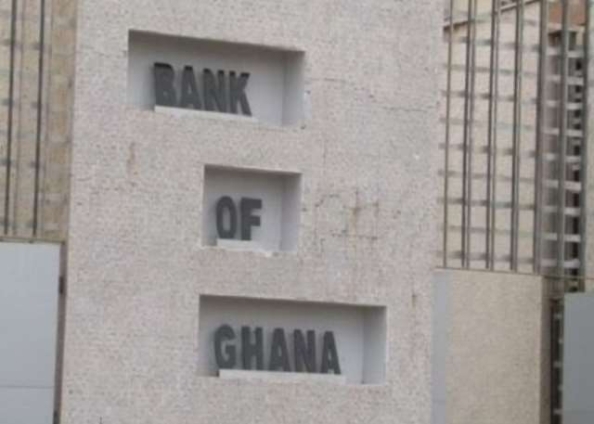
The new Bank of Ghana (BoG) directive also requires commercial banks and other regulated lenders to publish the names of such defaulters twice a year, on June 30 and December 31, in at least two national daily newspapers and on their websites in a prescribed format.
These measures form part of BoG’s latest regulatory actions to curb rising non-performing loans (NPLs) and reduce risks to the profitability, liquidity, and solvency of the banking sector.
The central bank has already notified all regulated financial institutions of the directives and published explanatory notes for the public.
Defining Wilful Loan Default
Under the new rules, a borrower is deemed a wilful defaulter if they fail to repay a loan despite having the capacity to do so, divert loan funds for other purposes, or secure a loan through falsified collateral or fraudulent documentation.
Credit Access Restrictions
The directives bar regulated financial institutions from granting fresh loans to defaulters from the date the BoG approves a loan write-off.
The prohibition period will be twice the length of time between the write-off approval and the full settlement of the debt.
Borrowers listed as wilful defaulters on two or more occasions within ten years will face a mandatory five-year ban, or longer if the calculated prohibition period exceeds that duration.
The restrictions also target directors of companies found to have engaged in fund diversion, misrepresentation, falsified accounts, or fraudulent transactions.
Path to Credit Eligibility
A wilful defaulter may regain access to credit upon fully repaying all written-off loans and fees, and if the lender is satisfied with the borrower’s ability and willingness to meet future repayment obligations.
Prudential Limits on NPLs
The BoG is also enforcing stricter prudential limits, requiring banks and other financial institutions to keep their NPL ratio at or below 10% by the end of 2026.
Microfinance institutions must maintain their existing limit of 5%.
From January 1, 2027, institutions exceeding these limits will be barred from paying dividends, issuing bonuses, or expanding their loan portfolios.
Latest Stories
-
Mr President, Ghana was mentioned at the UN; why aren’t we talking about it?
2 hours -
Accra to convene Africa’s regulators and markets on tokenisation at AVAS 2026
2 hours -
The Paradox of Plenty — When every smartphone becomes a newsroom
2 hours -
GTA sensitises taxi drivers in ‘Know Ghana’ tourism campaign
4 hours -
Archbishop Agyinasare calls for responsible speech amid growing social media abuse
4 hours -
‘It will be inexcusable for gov’t not to honour payment of teachers’ arrears by 30th October’ – Haruna Iddrisu
4 hours -
Forbes’ World’s Best Employers 2026: No Ghanaian firm ranked among 900 companies
4 hours -
Electronic processing of teachers’ data: ‘The decision is the Controller’s’ – GES boss
4 hours -
Teachers’ Strike: Haruna Iddrisu questions paper-based processing of promoted teachers’ data
4 hours -
Savannah Region: Kunfusi bridge collapses again, leaving nearly 4,000 residents cut off
4 hours -
Teachers’ strike: GES targets Monday deadline to submit promotion data to Controller
4 hours -
Inflation to average 11.3% in 2027 – Fitch Solutions
5 hours -
‘I didn’t campaign for NDC to come and do this nonsense’ – Kpebu on EOCO’s conduct
5 hours -
Fitch Solutions maintains policy rate forecast of 14% by December 2026
5 hours -
Diaspora Nasara Caucus congratulates Mohammed Ali Suraj, new NPP executives
6 hours