

Audio By Carbonatix
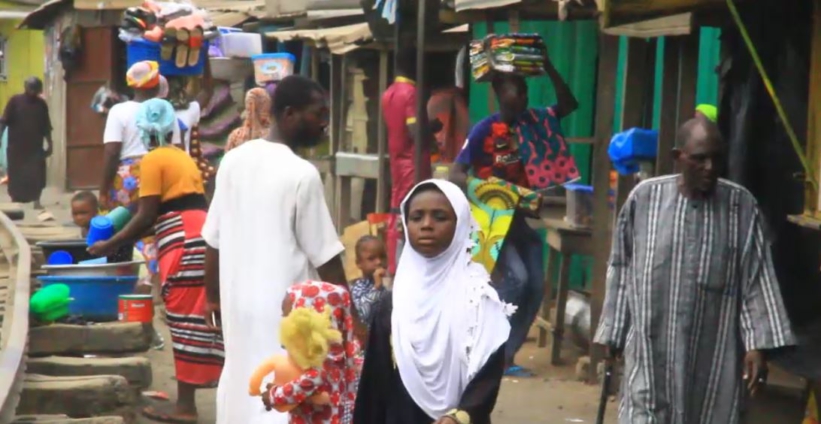
The Ghana National Household Registry (GNHR) is beginning data collection on poor and vulnerable persons living in Covid-19 hotspots within Greater Kumasi and Obuasi areas.
About 50,000 persons are expected to be profiled for relief items.
The rapid data collection exercise would cover Kumasi metro, Asokore Mampong, Suame, Asokwa, Obuasi and Obuasi East municipalities in two weeks.
A comprehensive data on the poor and vulnerable remains key to a successful, productive social protection programme.
According to the coordinator of the GNHR, Dr Prosper Laari, the register would involve collection of information on composition of socio-economic characteristics of households.
The database would inform the government's decision-making processes for relief services to affected groups.
“Upon completion, the register, would serve as a database for the selection of beneficiaries for all social protection programmes in Ghana. It would also improve the effectiveness and efficiency of social protection programme delivery. So far, the GNHR has successfully collected data on households in the Northern, Savannah, North East , Upper West, and Upper East regions.”
With the support of the World Food Programme, up to 75 thousand vulnerable people in the Greater Accra and Ashanti region, identified to be hardest hit by COVID-19 pandemic, will benefit from the relief.
“The WFP support would benefit up to 75,000 vulnerable people in the Greater Accra and Ashanti Regions, which have been deemed to be hardest hit by the COVID 19 infections. The beneficiaries will be identified by the Ghana National Household Registry (GNHR) data aligned with poverty and food insecurity indices; the beneficiaries shall consist of 60 percent female, and 40 percent male.
"The LEAP module shall be utilized. Smallholder farmers are already been profiled by the Ministry of Food and Agriculture (MOFA) for support in collaboration with WFP,” he said.
Dr. Laari says the scope of the Ghana Productive Safety Net Project (GPSNP) has been restructured to improve living conditions of Ghanaians, particularly the poorest and most vulnerable.
He says the restructuring provides emergency cash transfers to the poorest and vulnerable most affected by COVID-19.
The programme targets over one hundred and sixty thousand specific groups of persons in selected districts across the country.
"It is important to note that, only persons confirmed as poor and vulnerable by the Ghana National Household Registry under the MoGCSP qualify to receive the cash transfer. There shall therefore be a mop-up of data collection for an extra twenty thousand households to be funded by the World Bank in this direction,” he added.
Latest Stories
-
‘We can build it ourselves’ – Ibrahim Mahama reaffirms belief in Ghanaian entrepreneurship
43 seconds -
Constitutional reforms must give citizens greater say in local decisions – Sophia Akuffo
1 minute -
Don’t deal with unlicensed loan firms – BoG cautions public against 20 loan apps
24 minutes -
Photos: IGP Yohuno decorates 22 newly promoted DCOPs
26 minutes -
We didn’t deliberately delay negotiations with teacher unions – FWSC
27 minutes -
‘Go back to the drawing board’ – Polo urges Black Stars to find solutions
28 minutes -
Kaerbo For Africa hands over three-classroom block to Gomoa Nyanyano SHS
30 minutes -
KNUST students win Pan African AI Summit Hack-AI-Thon with cocoa waste solution
30 minutes -
Cocoa prices risen by 95% since March 2026, to average US$5,670 in 2026
42 minutes -
British national arrested in connection with RAF Fairford incident
48 minutes -
‘Strike is the only language government understands’ –IFEST backs teachers
49 minutes -
Teachers must not be blamed for maintaining strike; the gov’t failed to act earlier – IFEST
58 minutes -
Attijariwafa’s acquisition of Societe Generale likely to be ratings neutral; Ghana’s banking environment healthy – Fitch
1 hour -
Mahama’s Reset Agenda will make resource wealth benefit citizens – Dr Djokoto
1 hour -
La Pleasure Beach to reopen after demolition exercise
1 hour