

Audio By Carbonatix
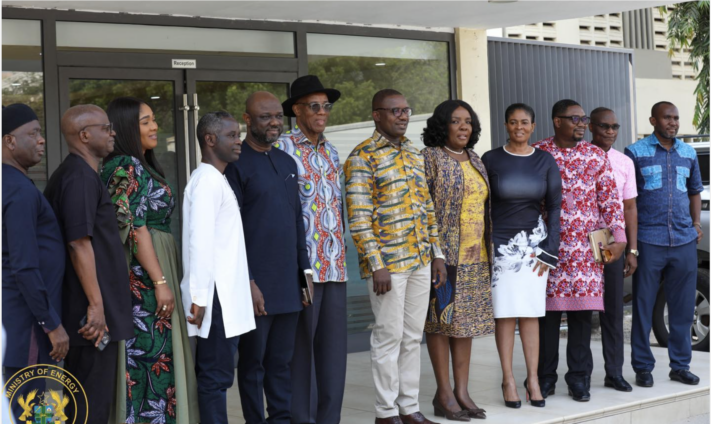
The Energy and Green Transition Minister, John Abdulai Jinapor on Friday inaugurated a seven-member committee to explore options for private sector involvement in the operations of the Electricity Company of Ghana (ECG).
The move is part of the government’s efforts to revitalise the state-owned entity.
The committee has Mr Jabesh Amisah-Arthur, an energy consultant, as Chairman and Dr Shafic Suleman as Secretary.
Other members are Mr Benjamin Boakye; Dr Simon Akorli, Mr Ebenezer Baiden, Mr Emma Akua Bulley and Mr Edward Abrokwah.
The Minister said the move came in response to longstanding challenges faced by ECG, including inefficiencies, financial losses, and growing debt, which had hindered its ability to deliver reliable electricity to Ghanaians consistently.
“…. We believe there should be private sector participation,” he said.
Privatisation or some form of private-sector involvement could provide the resources, expertise, and efficiency required to turn around ECG’s fortunes and enhance electricity supply across the country, Mr Jinapor said.
He, therefore, emphasised a non-partisan approach to the process, stating the importance of neutrality and expertise in the committee's composition.
“… We will stay off as politicians and let them develop a framework in a transparent, open, and frank manner. Once we get the buy-in of Ghanaians, we can set standards using a Request for Proposal (RFP) or competitive tender process,” he said.
During Mr Jinapor’s vetting on Monday, January 13, he explained that the committee’s primary task would be to examine and propose viable models for private-sector involvement that could enhance ECG’s financial and operational sustainability.
Mr Amisah-Arthur, the committee chairman, pledged to work diligently to address the concerns of customers, stakeholders, and the sector as a whole.
While acknowledging the importance of financial sustainability in the sector, he promised the Committee would give attention to recommendations, interventions, and lessons from past efforts.
That would be done by emphasising the Committe’s commitment to prioritising homegrown approaches and strategies, to ensure local private sector entities had the opportunity to contribute to the sector’s development.
“We will do our best to address the concerns of our customers, the owners of the business, the staff, and management,” Mr Amisah-Arthur said.
“… We will consider the main weaknesses of the distribution sector and give priority to homegrown approaches and strategies.”
He expressed the committee’s gratitude for being called upon to provide service through the members expertise to bring benefits to the sector and its customers.
Latest Stories
-
Ghana’s academic calendar in best shape in a decade – Education Minister
2 minutes -
I don’t expect preferential treatment for me, my party or gov’t – Mahama to new EC deputies
4 minutes -
Mahama tasks new EC Deputy Chairpersons to protect electoral integrity
5 minutes -
Police arrest officer after shooting injures 2 at Ritz Junction
6 minutes -
‘Delete, retract, apologise’ – Agyinasare urges Ghanaians to take responsibility for misinformation
6 minutes -
Saudi minister vows ‘serious response’ to Houthi attacks on airports
29 minutes -
When dialogue fails and strikes speak: Is industrial action the only language government understands?
35 minutes -
Ghana launches Social Protection Act regulations and Affirmative Action Gender Equity Regulations
36 minutes -
Mahama swears in Emelia Afi Agbenyo, Joseph Kwaku Asamoah as EC Deputy Commissioners
46 minutes -
Wetland communities in Northern Ghana face a hotter, flood-prone future as climate risks intensif
48 minutes -
Sam George tasks KNUST to develop Twi AI model as Ghana plans local-language artificial intelligence
51 minutes -
Poor roads choking eco-tourism potential – Avatime Paramount Chief cries out
56 minutes -
DVLA records GH¢25 million surplus in 2025 as contributions to state funds reach GH¢98.1 million
1 hour -
Over 10 suspected scam centre kingpins arrested and remanded – CSA
1 hour -
Ministers, CEOs, policymakers to grace 7th Africa Public Sector Conference in Accra
1 hour