

Audio By Carbonatix
Ninety-four per cent of children are in fear of unemployment in the next two decades in the country, a research by Child Rights International (CRI), a non-governmental organisation has found.
The research, conducted from June 2020 to April 16, 2021, targeted children between the ages of 12 and 17 and aimed at providing evidence on the values and issues of concern to children and provided them with the needed opportunity to have their voices heard on key issues that affected them.
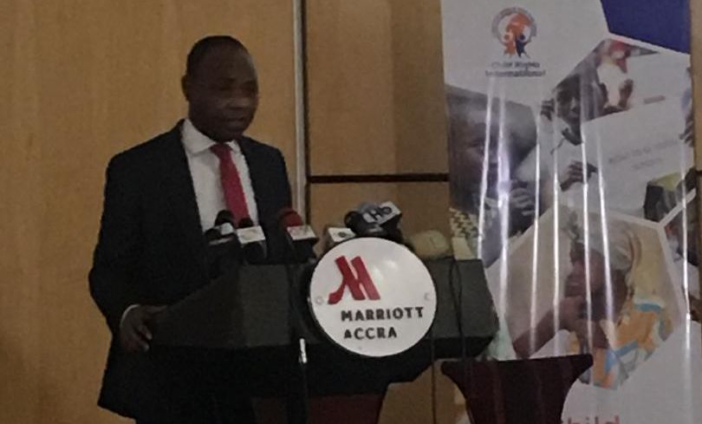
Executive Director of CRI, Bright Appiah, presenting the findings from the report on ‘‘Ghana through the lens of Children, Present and the Next 20 years,’’ said the research was also to gauge and explore children's life experiences on issues affecting them now, and how the country might be in the next 20 years.
He said children were worried about getting jobs in the future, with a majority of them predicting that unemployment would make it harder for some citizens to make ends meet than they did now.
Mr Appiah said 71 per cent of the respondents revealed they would focus their attention on solving the unemployment problem in the country by creating jobs if they became leaders in the future.
According to the report, 31 per cent of the children said, they would encourage entrepreneurship with the intention to create more jobs.
The findings showed that 35 per cent of the respondents said acquiring technical or vocational skills through Technical, Vocational, Education and Training (TVET) would be essential for them to be employable in the next 20 years.
According to the report, 55 per cent of the children said they wished to migrate definitely while 11 per cent said they would either stay in the country or leave eventually, even though a majority of them said they were proud to be Ghanaians.
Prof Joseph Safo, Head of Psychology Department, University of Ghana, said the report had exposed the generational gaps in the country, and that children needed re-orientation of their minds on their outlook on agriculture.
“We should be worried when children are not interested in agriculture, they are the potential adults who are going to be the leaders,’’ he said.
Prof Safo said there was the need to help children see the other side of life, skills and knowledge, and teach values such as hard work, perseverance and attitudinal change and said the Department would partner with the CRI in subsequent studies to influence the government’s policies on the lives of children in the country.
Recommendations from the findings called for a higher level of importance for Science, Technology, Engineering and Mathematics (STEM) and TVET courses, and asked the government to invest heavily in the sector.
It also recommended that children should be educated and encouraged to venture into the industrial sector, particularly manufacturing and artisanship for the creation of more jobs.
It recommended that conscious efforts be made to expose agricultural opportunities to children within the supply chain to clear the notion that agriculture was only farming.
Child Rights International is an organisation currently working in seven regions of the country and has over the years worked with different partners and implemented major projects across Ghana with the objective to provide support for children, to ensure that children’s voices and contributions are recognised and valued in society, and to reaffirm children’s faith in a better and brighter future.
Latest Stories
-
Ghana eyes stronger trade ties as Australia hosts multicultural trade and investment forum
5 minutes -
Margaret-Marie Krakue
8 minutes -
Ayariga announces plans for live broadcast of MMDAs’ meetings on local radio stations
11 minutes -
Mrs Anna Tackie
13 minutes -
Ghana links Afghan heroin and Brazilian cocaine to global drug markets – Global Organised Crime Index
20 minutes -
NHIA launches nationwide inter-school quiz to deepen students’ knowledge of NHIS
27 minutes -
Political protection could be masking Ghana’s cocaine trade – Global Organised Crime Index
32 minutes -
AFCON 2027Q: ‘We have to dissolve the GFA’ – Effia MP after Black Stars lose to Gambia
34 minutes -
NPP announces voting schedule and ID requirements for October 3 national elections
36 minutes -
Lupus can mimic HIV symptoms and damage kidneys if untreated – KNUST expert
39 minutes -
Focus on Sickle Cell Foundation seeks to introduce sickle cell education through comics in Ghanaian schools
44 minutes -
NPP rewrites the campaign playbok as opposition reality shapes National Executive contest
46 minutes -
Road safety education will fail without enforcement – NRSA boss
47 minutes -
Daily Insight for CEOs: Finishing Q3 strong and entering Q4 with purpose
48 minutes -
National Ambulance Service begins ‘Operation Restore Fleet’ to restore grounded ambulances
48 minutes