


Audio By Carbonatix
One of the reliable constants in Dubai is the pace of change.
Half a century of transformation from humble backwater to global city has seen new islands dredged from the ocean, new towers drive the skyline higher, and a new population of international visitors arrive.
But one distant corner of the Emirate is prized for its quiet continuity.
The Hatta Mountain Conservation Reserve is found in the Hajar Mountains that stretch from the east coast of Oman into the northern UAE.
The Reserve falls within a tiny exclave of Dubai that is surrounded by the neighboring emirates of Ras al-Khaimah and Ajman, and Oman to the South.
The arid landscape and temperatures that touch 55 degrees Celsius might seem inhospitable. But Hatta is swiftly becoming one of Dubai's most popular attractions and worst-kept secrets.
The reserve is subject to a program to develop its assets for tourism, with visitors drawn to the "glamping" experiences, the hiking trails - and the surprisingly rich wildlife.
"We have approximately 4,000 arthropods (in the UAE) -- bees, wasps, spiders, and other organisms," says Brigitte Howarth, an ecologist at Zayed University who has long studied the region. "We would probably find 30-40 per cent in the Hajar Mountains."
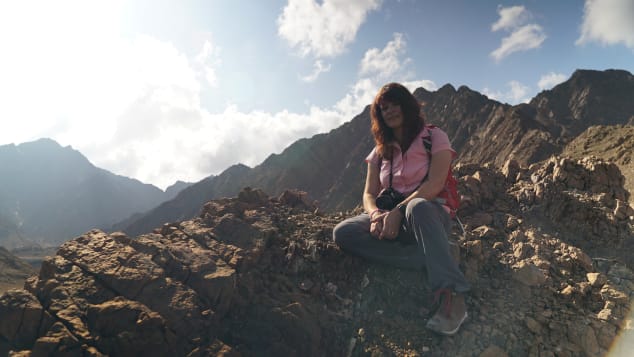 Ecologist Brigitte Howarth studies wildlife in the Hatta reserve. Edward Scott-Clarke
Dozens of species entirely new to science have been discovered in the region since a series of studies were commissioned in 2008, the ecologist adds.
There are larger species here too, including mammals.
"The Arabian spiny mouse does very well in some of the elevations," says Howarth. "Also Wagner's gerbil...(and) we sometimes find certain owls."
The Arabian Tar -- a species of wild goat -- is well adapted to the steep slopes and "very prominent" in the mountains, she adds.
Hardy plants can also make a home here. "We know of a small lily that occurs right on the top of the mountains," says Howarth.
One native plant comes with its own history lesson, the Ziziphus spina-christi, or Christ's thorn tree, is believed by some to have supplied the thorns that formed Jesus Christ's crown of thorns.
Ecologist Brigitte Howarth studies wildlife in the Hatta reserve. Edward Scott-Clarke
Dozens of species entirely new to science have been discovered in the region since a series of studies were commissioned in 2008, the ecologist adds.
There are larger species here too, including mammals.
"The Arabian spiny mouse does very well in some of the elevations," says Howarth. "Also Wagner's gerbil...(and) we sometimes find certain owls."
The Arabian Tar -- a species of wild goat -- is well adapted to the steep slopes and "very prominent" in the mountains, she adds.
Hardy plants can also make a home here. "We know of a small lily that occurs right on the top of the mountains," says Howarth.
One native plant comes with its own history lesson, the Ziziphus spina-christi, or Christ's thorn tree, is believed by some to have supplied the thorns that formed Jesus Christ's crown of thorns.
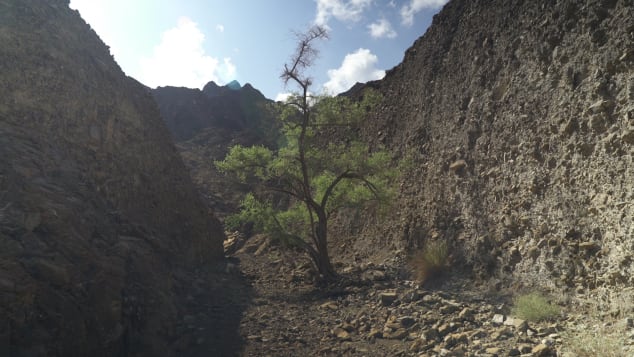 The Ziziphus spina-christi, or Christ's thorn tree. Edward Scott-Clarke
New discoveries have fueled greater interest in the region. Howarth says she collaborates with leading institutions such as the Natural History Museum in London with research on Hajar mountain species.
But the growing popularity of Hatta brings challenges as well as benefits, and the ecologist sounds a note of warning.
"Eco tourism, if it's done well, is extremely valuable," she says. "There should always be learning opportunities for people to appreciate and understand the biodiversity of areas such as the Hajar Mountains."
"Unfortunately, some eco tourism does not necessarily take into consideration that we shouldn't impact on the biodiversity...at times it is still impacting negatively."
The Ziziphus spina-christi, or Christ's thorn tree. Edward Scott-Clarke
New discoveries have fueled greater interest in the region. Howarth says she collaborates with leading institutions such as the Natural History Museum in London with research on Hajar mountain species.
But the growing popularity of Hatta brings challenges as well as benefits, and the ecologist sounds a note of warning.
"Eco tourism, if it's done well, is extremely valuable," she says. "There should always be learning opportunities for people to appreciate and understand the biodiversity of areas such as the Hajar Mountains."
"Unfortunately, some eco tourism does not necessarily take into consideration that we shouldn't impact on the biodiversity...at times it is still impacting negatively."
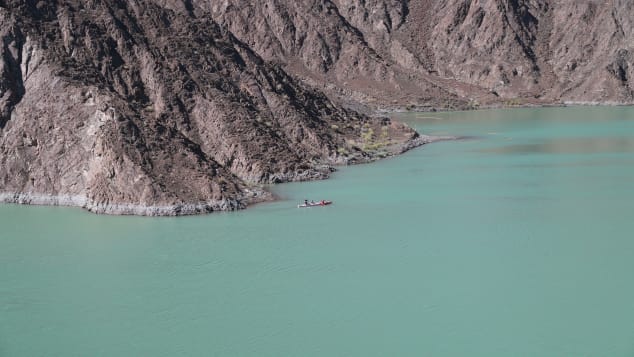 Visitors row a kayak in Hatta reservoir, one of the reserve's few bodies of water. Edward Scott-Clarke
Ecologist Brigitte Howarth studies wildlife in the Hatta reserve. Edward Scott-Clarke
Dozens of species entirely new to science have been discovered in the region since a series of studies were commissioned in 2008, the ecologist adds.
There are larger species here too, including mammals.
"The Arabian spiny mouse does very well in some of the elevations," says Howarth. "Also Wagner's gerbil...(and) we sometimes find certain owls."
The Arabian Tar -- a species of wild goat -- is well adapted to the steep slopes and "very prominent" in the mountains, she adds.
Hardy plants can also make a home here. "We know of a small lily that occurs right on the top of the mountains," says Howarth.
One native plant comes with its own history lesson, the Ziziphus spina-christi, or Christ's thorn tree, is believed by some to have supplied the thorns that formed Jesus Christ's crown of thorns.
The Ziziphus spina-christi, or Christ's thorn tree. Edward Scott-Clarke
New discoveries have fueled greater interest in the region. Howarth says she collaborates with leading institutions such as the Natural History Museum in London with research on Hajar mountain species.
But the growing popularity of Hatta brings challenges as well as benefits, and the ecologist sounds a note of warning.
"Eco tourism, if it's done well, is extremely valuable," she says. "There should always be learning opportunities for people to appreciate and understand the biodiversity of areas such as the Hajar Mountains."
"Unfortunately, some eco tourism does not necessarily take into consideration that we shouldn't impact on the biodiversity...at times it is still impacting negatively."
Visitors row a kayak in Hatta reservoir, one of the reserve's few bodies of water. Edward Scott-ClarkeDISCLAIMER: The Views, Comments, Opinions, Contributions and Statements made by Readers and Contributors on this platform do not necessarily represent the views or policy of Multimedia Group Limited.
Tags:
DISCLAIMER: The Views, Comments, Opinions, Contributions and Statements made by Readers and Contributors on this platform do not necessarily represent the views or policy of Multimedia Group Limited.
Latest Stories
-
Schizophrenia-related disorders lead mental health cases recorded in Ghana
15 minutes -
Dutch authorities enlist Ghana in hunt for fugitive drug lord Bolle Jos
39 minutes -
Ghana housing finance conference adopts communiqué to improve affordable housing access
5 hours -
Special Initiatives Minister urges Wa Technical Institute to enrol more girls as EU-backed solar training lab opens
5 hours -
In the matter of my first year at the Bar
6 hours -
ActionAid Ghana calls for an end to child marriage, greater investment in girls’ rights
6 hours -
Newsfile to tackle World Cup visa scandal, beach demolitions, education strikes, BRICS bid
6 hours -
UK-Ghana Trade & Investment Summit: Trade Resource Centre to help businesses maximise UK-Ghana trade opportunities
6 hours -
Embassy of Denmark celebrates World Maritime Day
7 hours -
Linking LEAP to productive inclusion could cut extreme poverty by 2030 – UNICEF
8 hours -
Trade Ministry backs use of creative arts to rehabilitate prison inmates
8 hours -
Negotiations with government to continue despite strike suspension – GNAT
8 hours -
‘Ghana cannot afford to waste public resources; every cedi has a job’ – Ato Forson
8 hours -
Ghana expects economic boost as World Assemblies of God Congress brings 10,000 delegates to Accra
8 hours -
Joy in Nayilifong as Farouk Aliu Mahama donates 100kVA transformer to improve power supply
8 hours