

Audio By Carbonatix
The use of Ghana Interbank Payment and Settlement System (GhIPSS) instant pay (GIP) services continues to see huge jumps in volume as more people turn to the service.
The volume of instant pay transactions between January and March this year, stood at a little over one million, representing a growth of 693.8 percent compared to 126,925 transactions during the same period last year.
GhIPSS Instant Pay is an electronic payment system that enables a customer to transfer money from one bank account to another of a different bank or to a wallet and the transfer is effected instantly.
Though instant pay can be accessed from the banking halls, it is mostly available on the various internet and mobile banking platforms of the banks.
Many Fintechs also ride on the GIP technology for their money transfer services.
Electronic payment channels have become important in the wake of the coronavirus (Covid-19), as cash could be a channel of spreading it.
Although a full assessment of the impact of COVID-19 on electronic payments was yet to be done, a further analysis of the data from GhIPSS showed a significant increase in GIP transactions in the month of March, when Ghana started recording its positive cases.
According to the figures, while GIP volumes in February this year dropped by seven percent compared to January of the same year, the volume of transactions increased in March by 53.6 percent.
This shows that GIP was used many more times in March compared to January and February of 2020, a development attributable to increased use of electronic payments due to COVID-19.
Instant Pay has become a preferred form of transfers for many across the world and Ghana has recorded the same trend since GhIPSS introduced it a couple of years ago.
Mr Archie Hesse, the Chief Executive of GhIPSS, explained that an overwhelming majority of GIP transactions involved people moving funds from their bank accounts to mobile money wallet of others or themselves.
He added that the trend showed how convenient mobile money wallets had become for many people.
The challenge, however, is that many people after moving funds from their bank account to mobile wallets, cash out to make payments.
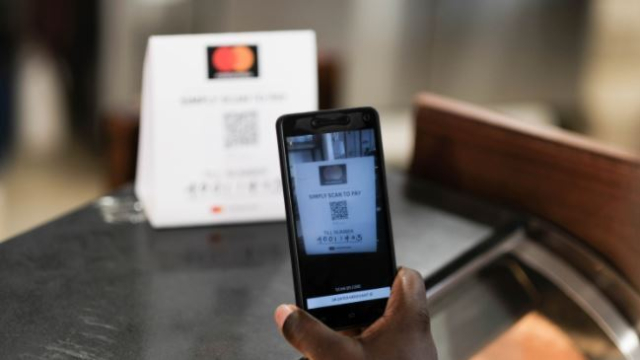
But with the launch of the universal QR code, funds stored in mobile money wallets can be used to make payment, Mr. Hesse further explained.
GhIPSS last month launched the universal QR code which enables individuals to pay for goods and services by scanning displayed QR codes with their phones.
Users of feature phones can also pay via QR Code by dialing a merchant’s number that will also be displayed at the location.
Mr Hesse hoped that GIP would experience growth especially in this era of COVID-19 as more and more people turned to electronic payment channels.
Latest Stories
-
SSNIT says La Beach clearance was to protect hotel investments, beaches to remain public
7 minutes -
APSU congratulates St Augustine’s College after back-to-back National Investment Quiz wins
11 minutes -
Renewed flood intervention at Mallam Junction raises hopes among residents, businesses
52 minutes -
St Augustine’s College retain National Investment Quiz title after nail biting grand finale
1 hour -
Education infrastructure investment will drive Banda’s development – Ahmed Ibrahim
1 hour -
Teacher unions strike: Gov’t presents fresh proposals as talks end inconclusively
2 hours -
51,000 teachers’ promotion arrears to be validated for October payment – Education Minister
2 hours -
Kwabena Boamah appointed Board Chair for Impact Investing Ghana
2 hours -
Striking teacher unions to meet Fair Wages and Salaries Commission on October 6
3 hours -
EOCO working with AG to arraign Nana Baffour Awuah before weekend court
3 hours -
Duraplast reassures customers after fire, announces October 5 reopening
3 hours -
Call off strike, gov’t will not renege on promotion arrears pledge – Haruna Iddrisu to teacher unions
3 hours -
Committee set up to validate teachers eligible for 20% deprived-area allowance – Education Minister
3 hours -
Five-member committee to search for new Black Stars coach after Sports Ministry-GFA meeting
4 hours -
Pinktober: Breast cancer survival exceeds 90% when detected early – Breast Society of Ghana
4 hours