

Audio By Carbonatix
Lebanon's parliament has approved a state of emergency that grants sweeping powers to the army, citing the exceptional circumstances in the country following a massive explosion in Beirut last week.
The cabinet had declared a two-week state of emergency on August 5, the day after the Beirut blast that left at least 200 dead and some 6,000 injured. Parliament on Thursday voted for the emergency declaration eight days in, as is legally required, though it could have also voted it down.
The state of emergency allows the army to curb free speech, freedom of assembly, and freedom of the press, as well as to enter homes and arrest anyone deemed a security threat.
Judicial proceedings are to take place in the country's military courts, which Human Rights Watch and other rights groups have shown do not conform to standards on due process.
Rights groups have raised serious concerns about the state of emergency, saying it would enable security forces to crack down on a public raging with anger against the ruling class following the blast.
The huge explosion - one of the biggest non-nuclear blasts in history - was fueled by some 2,750 tonnes of dangerous chemicals left in storage at Beirut's port for nearly seven years, with the knowledge of top security and political officials.
'Room for protest'
Citing the "militarization of the state", parliamentarian Osama Saad was the only one out of the 119-member chamber, a reduced number after the resignation of nine MPs since the explosion, to oppose the state of emergency.
Parliament Speaker Nabih Berri responded the army had "not taken steps that people fear, nor suppress television [channels] and despite the chaos in the media it did not intervene and left room for protest", according to local media. Sessions are not televised and, therefore, statements by lawmakers are carried by local media.
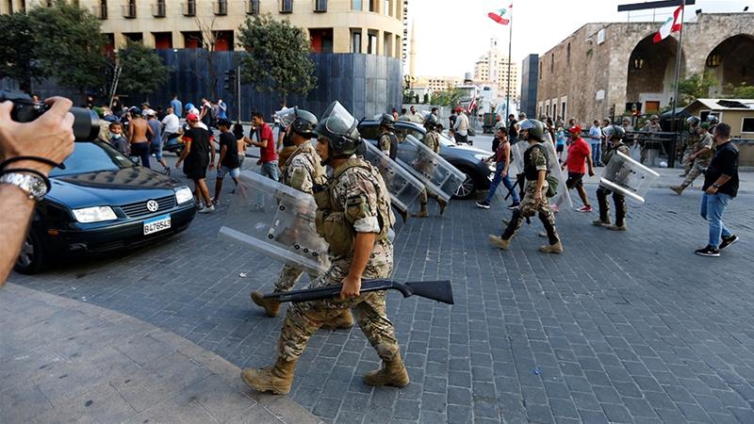
But the Lebanese army, Internal Security Forces, and armed plain-clothes officers were observed using excessive force against anti-establishment protesters on Saturday.
Some 728 people were injured, many left with serious wounds that required emergency surgery. About 12 journalists were also assaulted, including at least four who were assaulted by soldiers, one of whom was an Al Jazeera reporter.
'Control the streets'
The state of emergency is set to run until August 21 but it can be renewed.
Karim Nammour, a member of legal NGO Legal Agenda, told Al Jazeera the state of emergency was entirely unnecessary to address the aftermath of the Beirut blast, given that the country had already been in a state of "general mobilization" because of the coronavirus pandemic.
"This general mobilization already allows cabinet the powers to mobilize the armed forces and to control stores and matters of a strategic nature, including controlling the prices of things like glass and wood, as well as to raise the rubble and provide relief to people," said Nammour.
"The only real reason we can see for a state emergency is to grant security forces powers to control the streets as much as possible - to give legal coverage to things that would otherwise be impossible," he said.
"The ruling regime knows that it is weak and unpopular on the streets, and they are afraid because the fingers are pointed at them, and there are calls for revenge."
Latest Stories
-
Stakeholders demand action against foreign-led illegal mining in Ahafo Region
1 hour -
Ghana handed tricky draw at 2026 Amputee World Cup
1 hour -
2024 Nyankpala election violence: Youth group petitions authorities over slow probe
1 hour -
Ghana, UNICEF strengthen partnership to advance child protection
2 hours -
Day Two of 3rd Republic Bank-JoyNews Habitat Fair ends with great homeownership offers and financing solutions
2 hours -
Guinness Ghana DJ Awards 2026 Pub Fest celebrates Ghana’s DJ culture as Accra turns up the energy
2 hours -
10th woman found dead in South Africa’s string of killings
2 hours -
French Embassy trains Ghana Police CTU in counter-terrorism operations
3 hours -
UPSA uncovers mass results manipulation involving 178 students, over 500 results compromised
3 hours -
ECG announces planned power outages in parts of Tema from Sept. 29 to October 1
4 hours -
Sylvester Mensah urges Latenu FM to promote trade, export opportunities in Ga
4 hours -
Ga language under threat of decline as children shy away from speaking it – Sylvester Mensah
4 hours -
‘Let every Ga child you raise know the Ga language and story’ – Sylvester Mensah
4 hours -
‘We are not deterred’ – Ablakwa responds to backlash over South Africa evacuation
4 hours -
Day Two: Republic Bank-JoyNews Habitat Fair gains momentum at Junction Mall
5 hours