

Audio By Carbonatix
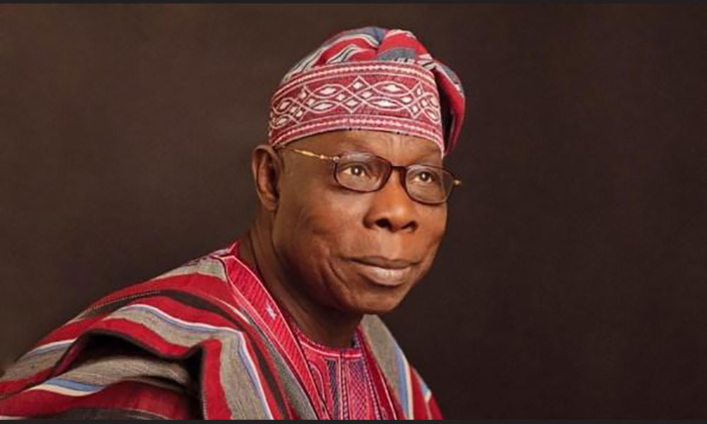
Former Nigeria President, Olusegun Obasanjo says he does not care what is said or how he is remembered when he passes on.
Most Nigerians do not speak ill of the dead. So, Obasanjo’s tribute of the late former senator, Buruji Kashamu, stung them as something of a culture shock.
Kashamu, who represented Ogun East in the 8th Senate, was a sworn enemy of Obasanjo’s and the duo’s political differences and public spats has been well documented through the years.
The tribute
After Kashamu died on Saturday, August, 8, 2020 from Covid-19 complications, Obasanjo noted that he was a man who used his political and financial influence to evade justice abroad--at a time eulogies were pouring in.
“The life and history of the departed have lessons for those of all of us on this side of the veil. Senator Esho Jinadu (Buruji Kashamu) in his lifetime used the maneuver of law and politics to escape from facing justice on alleged criminal offences in Nigeria and outside Nigeria,” Obasanjo wrote.
“But no legal, political, cultural, social or even medical maneuver could stop the cold hand of death when the creator of all of us decides that the time is up,” he added.
Kashamu was wanted in the United States for alleged drug trafficking offences. His extradition from Nigeria to the US to face trial, never happened.
“When I was growing up, in our community, when anyone known with a bad character died, we usually only mourn him and bury him. No eulogy. No praise-singing," Obasanjo told Premium Times, as criticisms of his tribute to Kashamu dominated social media discourse.
“There is an English saying that urges us never to talk ill of the dead. But in this case, we are not talking ill of the dead. We are only drawing lessons from the life and history of the dead. I am not gloating over his death. It is sad for anyone to die and we must mourn him.
“But we must learn from such a passage. There will be bad lessons. There will be good lessons. But we should not just be praise-singing or eulogising the dead, especially when there is no need to do so.
“We should not cover up bad histories and conducts so that the right lessons can be learnt.
“As you know, I say my mind as truthfully as I know them and in line with my convictions. People are free to say whatever they want about my comment. I don’t begrudge people for holding opinions on whatever I say or do.
“Let people say whatever they like when I transit. Now that I am alive, am I not being abused? Whenever I transit, let people say whatever they know or think about me. Let them say it as it is. What my maker thinks of me is what matters most,” he said.
Orange is the new black
In December of 1998, Kashamu was arrested by operatives of the UK Metropolitan Police on drug trafficking allegations, as he touched down in London.
Seven months before, Kashamu had been indicted by United States authorities for allegedly being the mastermind of a heroin smuggling ring.
After his arrest and incarceration in a UK prison, the Department of Justice Office in the U.S commenced a process to have him extradited to the United States to face trial.
Kashamu was indicted by three of his alleged co-conspirators. He was detained at the Brixton Prison pending the completion of his extradition process.
Kashamu somehow fled to Nigeria, contested an election and won. Attempts to extradite him from Nigeria to the U.S, also failed.
Piper Kerman's book, Orange Is the New Black: My Year in a Women's Prison, was inspired by Kashamu’s exploits.
The book’s adaptation into the American comedy-drama web television series of the same title, also had Kashamu written all over it.
Kashamu is the drug kingpin called ‘Alhaji’ in the series.
Kashamu denied the allegation of drug-running. The so-called drug-smuggling 'Alhaji' alleged co-conspirators had told U.S. authorities about, he said, was his brother, Adewale Kashamu.
Kashamu said Adewale was allegedly killed in 1989 by personnel of the Nigerian Customs. He said he had an uncanny resemblance with his deceased brother and that it was all a case of mistaken identity.
Kashamu was a PDP governorship aspirant of Ogun State in the 2019 general elections.
Obasanjo, 83, served as Nigeria’s democratically elected president from 1999 to 2007. He famously shredded his PDP membership card in 2015 because he couldn’t stand being in the same political party as Kashamu, among other political reasons.
A prolific letter writer and famed straight-talker, Obasanjo has criticized all the presidents who succeeded him, in long, winding and pejorative-laden public essays.
Latest Stories
-
Ghana’s fuel market is built for turbulence – NPA’s Edudzi Tamakloe explains why
1 hour -
Postponement not an option as Kenya races to be ready for Afcon 2027
2 hours -
ICE agent shoots and wounds man in Texas as locals demand answers
2 hours -
Ed Sheeran admits ‘mistakes’ at first show since Macklemore controversy
2 hours -
We are ready for the turbulence – NPA boss on Ghana’s fuel crisis
3 hours -
Lady I wanted serious relationship with said she’s not ready – Rema
3 hours -
I’ll never discuss my finances with man, even if he’s my husband – Nancy Isime
3 hours -
Wizkid, Wande Coal advised me on how to leave school for music – Davido
4 hours -
Senegal job an ‘absolute dream’ for new boss Vieira
4 hours -
Harry and Meghan’s media treatment echoes what happened to Diana, Earl Spencer tells BBC
4 hours -
Nvidia boss rejects AI extinction fears as ‘doomsday narratives’
4 hours -
Workers came across human remains – and unearthed a mass grave of 572 people
4 hours -
Each Jehovah’s Witness member now decides whether to accept or donate main blood components
4 hours -
Trump says US will form ‘AI Force’ and appoint an artificial intelligence tsar
5 hours -
Google’s Gemini AI hacked three companies in security test
5 hours