


Audio By Carbonatix
“I don’t think Rupi Kaur knows the impact that she’s had on my life,” Ebinehita Iyere, the 27-year-old founder of Milk Honey Bees, tells British Vogue.
“I stopped reading as a teenager because I was told it wasn’t cool, but when I got back into reading hers was one of the first books that I read,” she says, referring to Milk and Honey, the collection of poetry Kaur self-published in 2015 that earned her critical acclaim and a spot on the New York Times bestseller list. “Her book actually made me very angry.
I was like, who the hell does this woman think she is? How dare she write about things that me and my friends went through.” But therein lies the beauty of brilliant poetry: it makes you feel the spectrum of raw emotions. Better still, it inspires you to get creative, too.
Fast-forward to 2020, and Iyere is still channelling the burst of creativity Kaur inspired, for herself, and for young Black girls.
At weekly meetings of the London-based organisation she founded, “We do healing circles,” Iyere explains. “So a healing circle might be that we look at a poem by Kaur.
We’ll sit and take it in, close our eyes and the girls will listen to me reading a poem, then I’ll read it again but with their eyes open. Then everyone will talk about what that poem brought up for them.” Healing circles are a key part of the safe space Iyere has created in order to allow young Black girls to thrive and take ownership of HER [healing, empowerment and resilience].
Iyere – whose full-time job involves working with 10 to 17-year-olds currently in police custody and going through the criminal justice system, offering them emotional support and more – has been involved in youth work for years now.
Back in 2016, she crossed paths with another young woman, and together they set out their vision for what would become a female-led space.
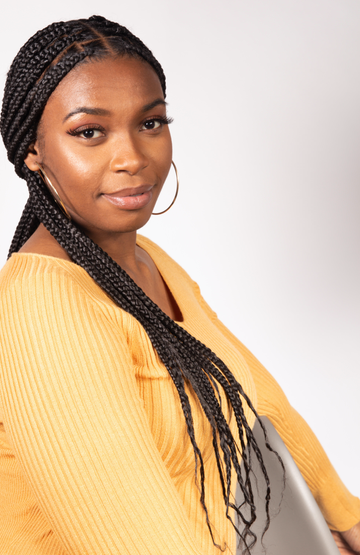
Before this year, Iyere’s focus was “the role the girls play in their community”, and moving her hub into taking “an intersectional approach looking at ‘the girl’”.
In 2020, her main focus has become “demanding that Black girls are seen and heard”. “They show up for everyone and their aesthetic is used for almost everything,” explains Iyere.
“If we don’t see and hear Black girls now, when they become women they’re going to feel less heard and less seen. To be seen and heard you have to make more noise, and people don’t like noisemakers.
We can’t say that Black women are angry, aggressive, and all these stereotypes that people lay on Black women if we didn’t support them as Black girls.”
In a year that has witnessed the resurgence of the Black Lives Matter movement, her efforts couldn’t feel more timely. From photography workshops to self-focused projects, Iyere plans sessions based on what the girls want to do, see and learn.
“Right now, I’m doing a project looking at different parts of our identity and being Black girls, so we’ve looked at self-esteem, healthy relationships etc,” says Iyere. “For so long society has told these girls that they have to grow up too quickly, which means they nurture everyone else and forget about nurturing themselves.”
In short: they skip girlhood and become women before their time.
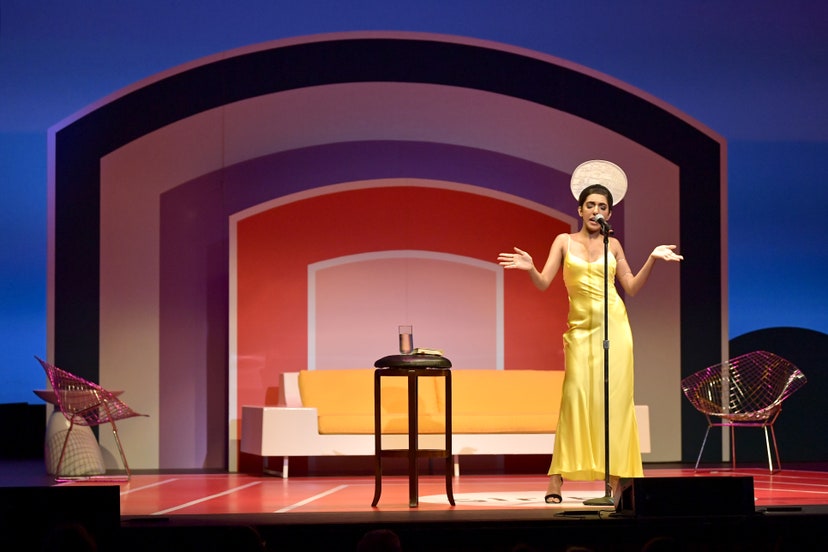
© Emma McIntyre
For this reason, Iyere’s work centres around Black British girlhood (which includes Black mixed race girls, too). Though this year we’ve seen it expertly captured in Netflix’s original film, Rocks, it’s scarcely seen on screen.
“The reason why I use Black British girlhood is because we don’t see it and we don’t talk about it,” says Iyere.
“I don’t know what my experience should or shouldn’t have been as a Black British girl because it’s never been documented. I was rushed into becoming a Black woman by society.
This is why I’m asking every Black woman to go and reclaim the girl that they had to leave behind to become the woman that they are today.
We’ve had to forget how to play, nap and do the things that we wanted to do as girls, in order to become this pillar of strength that people want us to be.”
Milk Honey Bees provides that space to document Black British girlhood. “It’s a hub for demanding that Black British girls need to be recognised, and the only people who can recognise it are Black British girls,” says Iyere.
“It’s about enhancing their creative potential, but you can’t enhance their potential if you don’t see them. People need to start seeing Black girls and stop putting them in the same category as women.
We have to stop taking from them if we’re not going to give anything back to them.
The arts industry as a whole needs to know it’s not just about putting a picture of a Black girl on show, but crediting them and allowing them to feel included in the things that they are influencing.”
If there’s one thing we’ve learned in 2020 it’s that leadership is changing shape. We only have to look to New Zealand’s prime minister, Jacinda Ardern, to see that leading with kindness and compassion is the way forward.
And Iyere is tapping into that in her current work with Black British girls. “A willingness to learn and a desire to educate – that’s my strapline for MHB. I can’t do the work without learning from the girls.
They teach me everything,” she says. While Covid-19 may have made group sessions a bit more difficult this year, the organisation is still carrying out great work. “Since we started we’ve probably reached and impacted about 100 girls.
We also have a sister project called Creative Connections, which harbours about 30 young girls into the creative industries.
That’s how MHB really works: every girl impacts another girl, sometimes without having actually met each other,” says Iyere. Just as Kaur has inspired and influenced Iyere in more ways than she’ll ever know.
Latest Stories
-
GTA 6 leaks – a nightmare or a blip for the biggest video game of the year?
4 hours -
Two injured in stabbing attack at Canada Sikh temple
4 hours -
Modi spent years building his strong image – why is he making Gen Z reels now?
4 hours -
Canada ‘should fight’ as US trade deadline looms, Manitoba premier says
4 hours -
Man Utd agree £70m fee for Brighton’s Baleba
4 hours -
Inter-Agency Football Gala: YEA organize event as part of National Youth Month celebration
4 hours -
Receiver fights High Court order to hand over No.1 Oxford Street Hotel to Cheddar’s company
5 hours -
Partey begins new chapter in Saudi Arabia with Al Shabab
5 hours -
NSMQ 2026: St. Francis Xavier deny debutants Pentecost SHS one-eighth spot
5 hours -
One killed in sword attack at Swedish school
5 hours -
NSMQ 2026: Tamale SHS sweep aside Kalpohin, Wenchi Methodist to reach one-eighth stage
6 hours -
Tupac murder accused told police in 2008 his nephew fired fatal shots
6 hours -
Heart of the Beast to Practical Magic 2: 10 of the best films to watch this September
6 hours -
NSMQ 2026: Tears of relief as Labone SHS survive Notre Dame Sem. in thriller to secure one-eighth spot
6 hours -
Onga Tomato Mix unveils Diana Hamilton as Brand Ambassador
6 hours