

Audio By Carbonatix
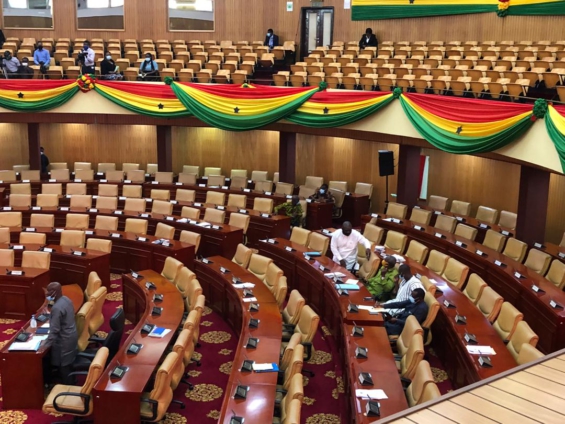
Parliament is working on a Bill to help plug the holes in the existing anti-money laundering regulatory framework and make it more responsive to international standards.
The Anti-Money Laundering Bill, 2020, is to amend and consolidate the laws relating to money laundering and provide for related matters.
“This Bill is to avoid piecemeal legislation in addressing all the deficiencies in Act 749,” Mr Kwaku Kwarteng, the Deputy Finance Minister, told Parliament on Tuesday when the Anti-Money Laundering Bill, 2020, was considered by the House.
Moving the motion for the Second Reading of the Bill, the Deputy Finance Minister observed that the Inter-Governmental Action Group against Money Laundering and Terrorism in 2016 carried an anti-money laundering and financing of terrorism evaluation.
The focus of the exercise was on technical compliance as well as assessed the effectiveness of the anti-money laundering and counter financing of terrorism regime of the country.
The evaluation report identified some strategic deficiencies in the anti-money laundering regulatory framework and said:
“Even though the result reflected significant improvement; it still did not meet the revised Financial Action Task Force (FAFT) methodology.” Mr Kwarteng said Ghana was accordingly placed on the FAFT “grey” list.
In order to address the strategic deficiencies and comply with the FAFT recommendations, the Government had decided to repeal the current Anti-Money Laundering Act, 2007 (Act 749) and submit to Parliament a new Bill.
This is to avoid piecemeal legislation in addressing all the deficiencies in Act 749.
Alhaji Inusah Fuseini, Ranking Member on the Constitutional, Legal and Parliamentary Affairs, stated that the status of Ghana on FAFT was not desirable as it posed very stringent measures not only on Ghanaian businesses but also Ghanaian travellers as they had to demonstrate the sources of their resources.
He said Ghana, being a member of FAFT, imposed on her a responsibility to ensure that she complied with the anti-money laundering requirement by the international regulators.
He said the new comprehensive Bill was intended to incorporate all the current requirements of FAFT to enable Ghana to get out of the “grey list” of countries that had failed to comply with the international regulations.
Latest Stories
-
Upper West Police bust armed robbery syndicate after MoMo attacks; 6 arrested
11 minutes -
BoG sells over $8bn through FX Programme as cedi faces fresh pressure
20 minutes -
Private citizen drags Chief Justice, Attorney General to Supreme Court over legal vacation
31 minutes -
Accra Brewery may shut down operations over revised excise duty
41 minutes -
Why I always play witch, wicked roles in Nollywood movies – Patience Ozokwor
50 minutes -
It is worrying to say that vacation courts do not conduct trials – Young Lawyers Forum President
59 minutes -
Global youth unemployment rises amid sluggish job creation and looming AI risk, UN labour agency says
1 hour -
Dangote refinery spurs West Africa fuel trading hub ambitions
1 hour -
New transmission from animals likely caused Congo-Uganda Ebola outbreak, study says
2 hours -
Legal vacation trials: Chief Justice has power to order specific cases heard – Young Lawyers Forum President
2 hours -
Oil rises as doubts over US-Iran deal heighten supply concerns
2 hours -
Nigeria police say 10 officers, 17 suspected bandits killed in clash in Kebbi state
2 hours -
Vacation courts can handle substantive matters – Young Lawyers Forum challenges GBA position
2 hours -
Oil, gold prices rise as geopolitical tensions mount before CPI
3 hours -
Congo says number of confirmed Ebola cases rises to 4,449
3 hours