

Audio By Carbonatix
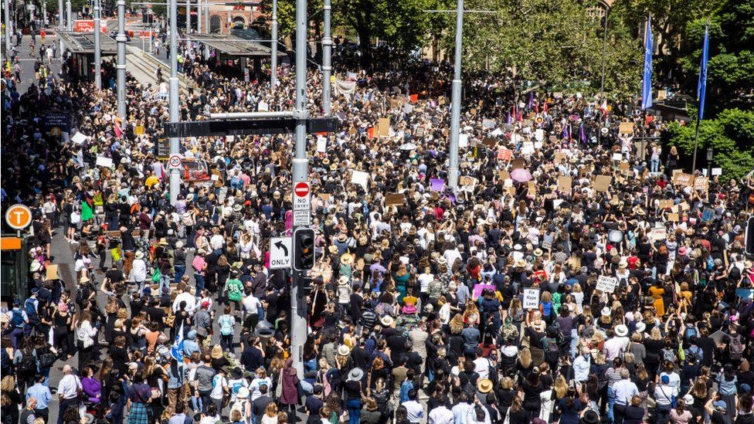
Tens of thousands of people have turned out to marches across Australia, protesting against the sexual abuse and harassment of women in the country.
They were spurred by a recent wave of allegations of sexual assault, centred around Australia's parliament.
The allegations have focused scrutiny on the conservative government.
The protests were organised a week ago, after Attorney General Christian Porter revealed he was the subject of a 1988 rape allegation - which he denies.
A separate case - that of Brittany Higgins, an ex-political adviser who alleged in February that she was raped in a minister's office in 2019 - has also fuelled public anger.
Protesters feel the government's response to the sexual assault allegations has been inadequate.
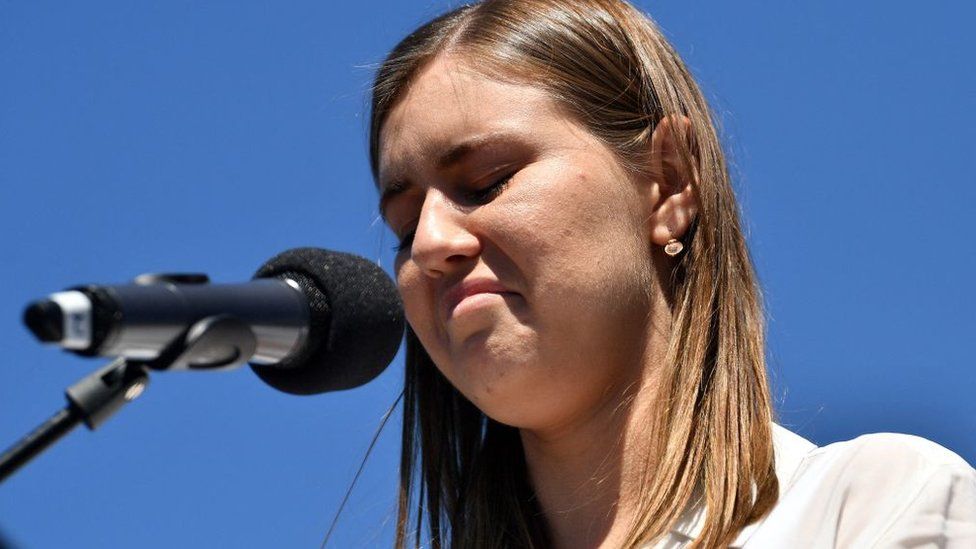
Ms Higgins spoke to the thousands of protesters outside Parliament House on Monday, saying: "There is a horrible societal acceptance of sexual violence experienced by women in Australia."
"My story was on the front page for the sole reason that it was a painful reminder to women that if it can happen in Parliament House, it can truly happen anywhere."
What happened at the protests?
The protest rallies - known as the March 4 Justice - formed from noon on Monday across 40 cities and towns in Australia including the major capital cities of Canberra, Sydney and Melbourne as well as smaller country towns.
Organisers suggested it could be the "biggest uprising of women that Australia's seen".
Many attendees carried placards and wore black in protest. In Melbourne, protesters carried a long banner listing the names of women killed in acts of gendered violence in the past decade.
Organisers at the Canberra rally also presented a petition to lawmakers with over 90,000 signatures calling for greater accountability of sexist behaviours in parliament.
They have also called for Mr Porter - a senior government minister -to stand aside. Police have closed their case against the attorney general, but others have argued for a separate inquiry into the allegation against him.
How has the government responded?
Prime Minister Scott Morrison declined to meet the protesters despite their urging, and was forced to defend his decision in parliament.
On Sunday, he had invited a delegation to meet with him in Parliament House but protest organisers declined, arguing that he and the government's minister for women should meet with them at the rally.
"We have already come to the front door, now it's up to the Government to cross the threshold and come to us. We will not be meeting behind closed doors," tweeted march organiser Janine Hendry on Monday.
Most government lawmakers declined to join the rallies. However the Labor opposition and several other prominent lawmakers joined the crowd in Canberra.
Latest Stories
-
Ghana, India sign MoUs to deepen cooperation in agriculture, healthcare, railways and ICT
11 minutes -
Pete Edochie becomes first Pan-African honouree of Ghana’s Legacy Project
14 minutes -
GCB MSME Caravan Clinic unfolds in Accra, boosting support for Ghanaian small businesses
15 minutes -
AMA urged to crack down on unauthorised billboards in Accra
16 minutes -
Obuasi East Assembly orders removal of containers from road reservation
17 minutes -
From selling body splash to Best Female Graduating Student at UDS – Hamdia’s inspiring journey
18 minutes -
Ghana can learn from Nollywood’s pool of behind-the-scenes talent to revive the movie industry – Jackie Appiah
18 minutes -
Tension at Obuasi Rabb Junction as shop owners resist demolition exercise
24 minutes -
Ghana to apply to join BRICS – Okudzeto Ablakwa
28 minutes -
MTN SMEGA Awards: Ghana’s SMEs urged to expand operations and tap into international markets
32 minutes -
Galamsey could wipe out Ghana’s forest reserves, put Atewa Forest at risk – Afenyo-Markin
42 minutes -
Teachers strike: You cannot negotiate while holding the other party in handcuffs – Austin Gamey
56 minutes -
4 injured, including baby, in multi-vehicle crash at Sofoline flyover in Kumasi
59 minutes -
GES should consider regional processing of teacher promotions – FWSC CEO
1 hour -
Minerals Commission suspends reconnaissance license of Gold Coast GRC Ghana Limited
1 hour