

Audio By Carbonatix
“Mental illness that affects white men is often characterized as a sign of genius,” wrote Ghanaian American author Meri Nana-Ama Danquah in her 1998 memoir Willow Weep for Me: A Black Woman’s Journey Through Depression. “White women who suffer from mental illness are depicted as spoiled or just plain hysterical. Black men are demonized and pathologized,” she goes on to say. And then there are Black women.
“Black women are certainly not seen as geniuses or even labeled as hysterical or pathological,” Danquah writes. “When a Black woman suffers from a mental disorder, we are labeled as weak. And weakness in Black women is intolerable.”
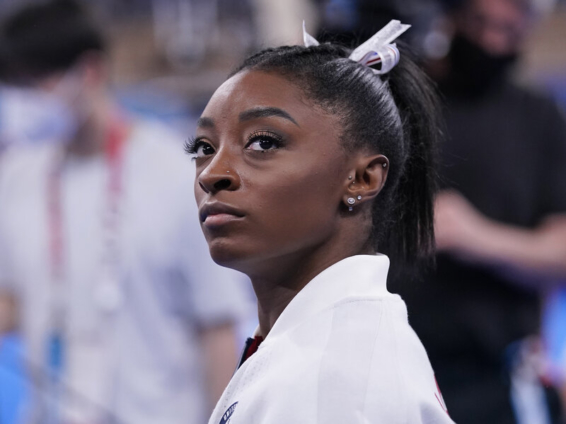
I thought about Danquah’s words, which were introduced to me via a blog post by University of Virginia professor Seanna Leath, while watching Simone Biles, the greatest gymnast to ever tumble across the mat, bow out of the Tokyo Olympics this week.
After getting the “twisties” midair, and running the risk of serious injury, Biles withdrew from the Games, later citing the pressure she’s been facing in the spotlight and a mental health struggle as the reasons behind her decision.
“I have to put my pride aside. I have to do what’s right for me and focus on my mental health and not jeopardize my health and well-being,” said Biles. “That’s why I decided to take a step back.”
Biles’ decision was huge for many reasons: Top athletes don’t often drop out of competition without a physical injury, certainly not at the Olympics, and until recently, talking about mental health struggles on a giant public stage just wasn’t done. But for me, Biles’ withdrawal was particularly monumental because, as a Black woman, I know how hard it is to show vulnerability.
Black women are socialized to accept and internalize the “Strong Black Woman” trope. As one paper put it, “Research indicates that Black women highly endorse the Strong Black Woman (SBW) stereotype.” It continues: “SBW is perceived as naturally resilient, able to handle with ease all the stress, upset, and trauma life throws at her. Challenges that would break others just make SBW stronger.”
I didn’t need a paper to tell me that. All my life, Black women around me have felt we’re expected to have self-control, suppress natural human emotions, and suffer in silence.
This is why Biles’, and tennis star Naomi Osaka’s, decision to prioritize mental health and reject the idea that they must meet every day with tenacity is so important. It’s more than an athlete choosing to do what is best for her or an acknowledgment that mental health is just as important as physical health; it is a duo of visible Black women making the clear statement that we don’t have to be tough. And I cannot begin to adequately express how meaningful that is to me, and I’m sure to many other Black women.
I will never understand what it’s like to be an Olympian. But I do know what it’s like to feel as though you need to be perfect. I understand being a Black woman who feels immense pressure to continue forward even when my mental health is on the ropes.
Black women are more likely to experience depression and anxiety while being less likely to get help. This, coupled with the societal stigma against mental distress, within and outside of our communities, and the narrative that Black women are superhuman, can be dangerous.
I suppose this is why the love Biles is receiving is equally encouraging and worrying. It’s been heartening to see that, while there have been barbs from some questioning Biles’ “toughness” and calling her a quitter, she has largely been embraced, not shunned, for her decision. It certainly signals a shift in how we discuss mental health publicly, and hopefully, it won’t stand alone as an isolated moment of hero worship. And, for Biles, it sounds like it’s boosted her self-esteem, which matters most.
“The outpouring love & support I’ve received has made me realize I’m more than my accomplishments and gymnastics which I never truly believed before,” she wrote on Instagram and Twitter.
But while the love is indeed great, I can’t help but worry when I see Biles’ supporters praise her for being “superhuman,” “powerful,” and “strong” for dropping out. Displays of vulnerability don’t have to be signals of strength or tenacity. They can exist as moments of tenderness worthy of grace and kindness. They can even exist as moments of frailty. Danquah wrote that “weakness in Black women is intolerable.” I’ll know the real shift has happened when Black women are allowed to show weakness, and still be loved without caveat.
Latest Stories
-
Photos: Joy FM Back-to-School Fair buzzes with excitement, strong patronage on Day 2
9 minutes -
Dissolving inactive SOE boards is justified – Dennis Miracles Aboagye
21 minutes -
John Boadu: I am not contesting for president; I am contesting to make Bawumia President
21 minutes -
Zoomlion begins post-flood disinfection exercise in West Gonja to curb health risks
50 minutes -
When Lady Justice Counted Eight Years
50 minutes -
SIGA reporting should distinguish commercial performance from public service – Yaw Appiah Lartey
52 minutes -
SOEs must hold AGMs, not just submit audited accounts – Deloitte Partner
58 minutes -
There are errors in SIGA report that affected its conclusions – Miracles Aboagye
1 hour -
Joy FM Back-to-School Fair gains momentum as Day 2 gets underway
1 hour -
Bright Simons fires back, rejects claims he used AI to critique SIGA report
2 hours -
SIGA did not conjure or manufacture figures – Prof Kpessa-Whyte
2 hours -
Government just put a spin on SIGA report – Miracles Aboagye
2 hours -
Gideon Boako: Cocoa farmers deserve better support
2 hours -
Big Chef Season 5: Two contestants face exit in Jollof Challenge
2 hours -
SIGA’s ‘massive turnaround’ claim not borne out by data – Bright Simons
3 hours