

Audio By Carbonatix
Information Minister, Kojo Oppong Nkrumah has highlighted the key role played by the mass media and marketing communications in the country’s quest to achieve economic growth post-Covid-19.
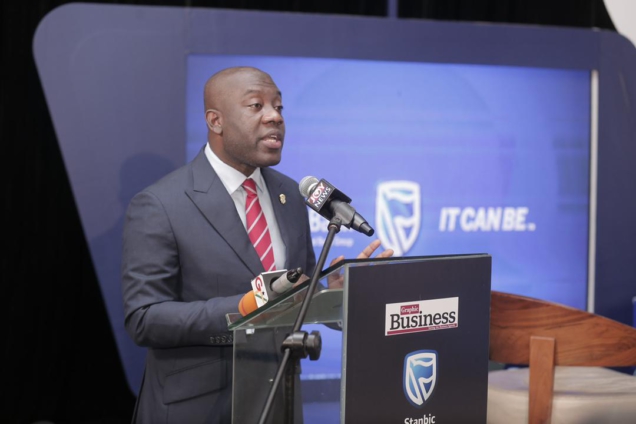
Speaking at the Graphic Business-Stanbic Bank Breakfast Meeting on Tuesday, Mr Oppong Nkrumah tasked the media to preach the importance of supporting the government in these critical times, particularly, those who refuse to pay taxes.
According to him, government is executing some policies to revamp the economy, however, it cannot achieve its objectives if the public fails to contribute its quota.
“Government will not even make an effort to pretend it is a walk in the park. They require difficult, unpopular decisions and a lot of public goodwill if they are to succeed.
“You [media] have to convince the 33,000 engineers, lawyers accountants and other professionals who are not known to the Tax database, yet demand that you fix everything around at a go, that they have to pay their due if we are to rake in the outstanding 10% of GDP that is not coming to the national treasury and reduce borrowing some more,” he said.
On government’s measures against Covid-19, the Minister charged the media to propagate the need for citizens to get vaccinated and abide by the safety protocols in order for the country to win the fight against the pandemic.
“In a robust media and democratic culture like ours, You have to convince the citizen who will not protect himself and could die if not vaccinated, yet who rightly holds you to live up to the full text of the law, that, you have to do all you can to procure a vaccine to protect his life?
“You have to convince the very person who refuses to wear the mask that the economy needs to be re-opened so he doesn’t go hungry,” Mr Oppong Nkrumah said.
Whilst recognizing that the media needs support to survive the effects of the Covid-19 pandemic, Mr Oppong-Nkrumah asked the media to deliver the right information that will make the country attractive to investors.
“How we report the aims the strategies and the evaluation of policy interventions can fuel or distort the picture of and for the general public. And in return becomes the new stimulus of how the economic actors, the general public, and even the governments further act in this recovery cycle.
“For any set of interventions to be successful as has been observed, it must gain the goodwill and support of the people,” he said.
Latest Stories
-
Mortgage repayments and existing debts should not exceed 50% of income – Republic Bank
10 minutes -
Republic Bank to offer up to 100% mortgage financing at JoyNews Habitat Fair clinic.
12 minutes -
You sounded like an NDC official – Arthur Kennedy criticises Chief Justice over SOE comments
38 minutes -
Lands Minister inspects Ankobra, cites progress in galamsey fight
45 minutes -
GRA clarifies phone, laptop duty rules; number of items not automatic trigger
1 hour -
2026 U20 WWC: GFA Prez Kurt Okraku visits Black Princesses in Poland ahead of opener against Ecuador on Sunday
1 hour -
Ghanaian Coaches dominate Ghana Premier League 2026/27 dugouts
2 hours -
Black Maidens drawn against Nigeria, Togo and Niger in WAFU B U-17 Cup
2 hours -
GMTF Administrator hails NHIA boss on first anniversary
3 hours -
Today’s Front pages: Friday, September 4, 2026
3 hours -
From Kantamanto to the TEDx Stage: How waste became innovation
3 hours -
MMDCEs charged to ensure Landing Beach Committees do not sell premix fuel beyond approved prices
4 hours -
The Inconvenient Truth: Democracy does not fail in The Chamber, it fails in the Committee Room
4 hours -
There is absolutely nothing wrong with what the Chief Justice said
4 hours -
App launched to help Ghanaians verify prospective partners’ marital status before marriage
4 hours