

Audio By Carbonatix
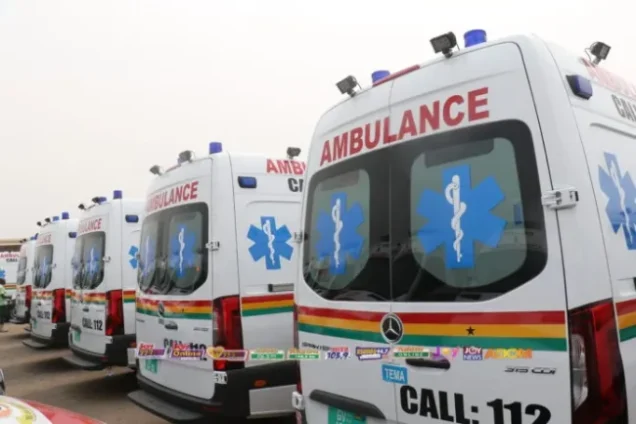
The three-member committee investigating the death of Charles Amissah has raised serious concerns about the response of the National Ambulance Service (NAS), highlighting deficiencies in documentation, equipment functionality, and patient handover procedures during emergency care.
Chair of the committee, Agyeman Badu Akosa, presenting the findings of the Health Minister, Kwabena Mintah Akandoh, on May 6, pointed out that the ambulance personnel were able to record initial vital signs, including blood pressure and oxygen saturation (SPO₂), at the scene.
However, it noted that there was “very little documentation of critical vital signs” as care progressed during transportation.
The report further identified equipment-related challenges, including a torn blood pressure cuff, which affected the ability of paramedics to monitor the patient’s condition consistently. It also noted that some equipment in the ambulance was stationary, limiting the scope of pre-hospital intervention.
One of the key concerns raised was the "absence of a formal handover procedure between ambulance crews and receiving health facilities."
Mr Akosa noted that "there was no structured communication system to ensure proper transfer of patient information upon arrival at hospitals."
It described the situation as a breakdown in coordination, noting that there was a “lack of proper chain-of-command interaction” during the emergency response process.
The report concluded that these gaps in documentation, equipment readiness, and communication protocols may have compromised the continuity of care provided by emergency responders, raising questions about systemic weaknesses within pre-hospital emergency services.
Charles Amissah, the 29-year-old engineer with Promasidor Ghana Limited, was reportedly knocked down in a hit-and-run incident near the Kwame Nkrumah Circle Overpass in Accra on February 6, 2026.
He was initially attended to by personnel from the National Ambulance Service, but later faced difficulties accessing emergency care.
Reports indicate that he was turned away by multiple health facilities, including the Police Hospital, Ridge Hospital, and the Korle Bu Teaching Hospital, reportedly due to a lack of available beds.
He subsequently died while still in transit, sparking national outrage and renewed scrutiny of Ghana’s emergency healthcare system.
The incident prompted the establishment of a three-member committee to investigate the circumstances surrounding his death, amid concerns about delays in treatment and systemic gaps in emergency response.
Latest Stories
-
Muzic Mensah finds healing and renewed love in new single ‘WayƐ Late’
2 minutes -
FIFA to offer extra £2.6bn for football development
4 minutes -
Government backing is no EPA permit – Authority warns GoldBod, ministries
12 minutes -
Real Madrid produce stunning late fightback to down Roma
24 minutes -
EPA orders immediate halt to unpermitted reclamation and dredging nationwide
33 minutes -
Afenyo-Markin’s lawsuit against Sammy Gyamfi takes focus away from development – Kpebu
48 minutes -
FWSC urges media to guard against misinformation in proposed IPEC transition
48 minutes -
MoMo Fest 2026: Shatta Wale to Rock Accra Stadium on October 17
50 minutes -
GTEC’s letter directing public universities to reopen by October 16 is unprofessional – GAUA
1 hour -
Suspect in viral video assaulting wife jailed for 3 months
1 hour -
GAUA insists strike will end only after Fair Wages addresses market premium issue
1 hour -
Kpemka seeks compensation as he sues BOST over alleged unlawful termination
1 hour -
GES asks applicants to check status of 2026 promotion applications on October 15
2 hours -
Kobe Boujee joins Olympics.com team for Dakar 2026 Youth Olympic Games
2 hours -
Slaty egret’s shifting nesting sites offer clues to changing ecosystems
2 hours