

Audio By Carbonatix
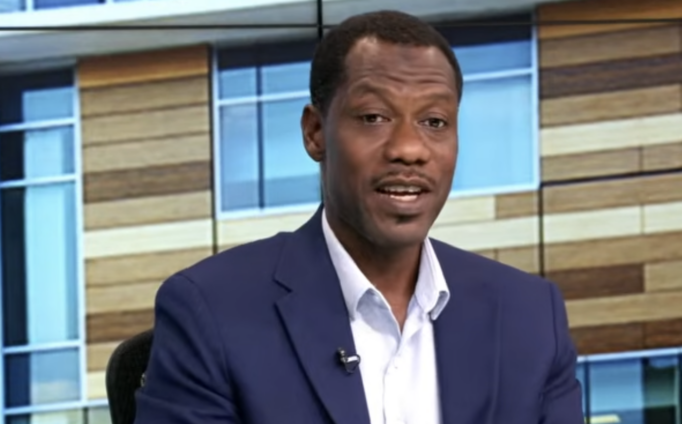
Neurosurgeon Hadi Mohammed Abdallah says the death of 29-year-old engineer Charles Amissah will not lead to meaningful reforms in Ghana’s healthcare system because the country has developed what he describes as a “culture of scapegoats.”
Speaking on PM Express on Wednesday, Dr Abdallah said he was saddened but not surprised by the findings of a government committee, which concluded that Charles Amissah died from medical neglect after being turned away by three major hospitals in Accra.
“To be honest, I wasn’t surprised. I was also sad, and I was alarmed that after so many years, because about seven to eight years ago, we had a similar incident involving an elderly person,” he said.
According to him, Ghana repeatedly reacts emotionally to national tragedies but fails to fix the underlying systems that cause them.
“A lot of things were said around that time. And I remember telling my colleagues that it’s not going to change anything, because for us as a country, whenever we run into a monumental catastrophe, we tend to be very emotional about it, and we always look for a scapegoat,” he stated.
Dr Abdallah argued that authorities often focus on blaming individuals rather than on reforming institutions.
“Managers of that sector would always find a scapegoat. So in fact, I am not surprised with what has happened, because we are a country that is not ready to learn,” he stressed.
He contrasted Ghana’s response to crises with that in other countries, where major incidents trigger policy and legal reforms.
“In certain countries, when events like this happen, be it in healthcare or in education, it leads to significant changes in terms of policy, even the law,” he noted.
“But for us, it’s always trying to find fault, and the fault is always personalised. We don’t look at how to solve the problem.”
Dr Abdallah drew parallels between the Charles Amissah case and the May 9 Stadium Disaster, arguing that Ghana has a history of blaming individuals while ignoring systemic failures.
“I tried to juxtapose this with the May 9 disaster,” he said.
“I lost friends and colleagues in the university, and I quite remember when it happened, there was hue and cry about the police officers, how unprofessional they were.”
According to him, the focus at the time shifted entirely to punishing officers rather than examining institutional weaknesses.
“Nobody looked at the system that trained them and what was there for them to control the crowd at the time,” he stated.
He said the officers eventually became scapegoats after a committee was established.
“At the end of it, the police officers were scapegoats. We sent them to court. Eventually, they could not establish a case against them,” he added.
Latest Stories
-
WASH gaps threaten quality maternal healthcare – GHS
1 hour -
BoG clears Attijariwafa Bank’s takeover of Société Générale Ghana
1 hour -
Cryptocurrency regulation: BoG, SEC must collaborate closely to align risk assessments – IMF
2 hours -
Shatta Wale performs Stonebwoy’s ‘Putuu ’, preaches unity among artistes and fans
2 hours -
Congo’s Ebola outbreak has killed more than 4,000, government data shows
2 hours -
Ethiopian rebel forces withdraw from Tigray regional capital
2 hours -
All set for 7th Ghana Credit Excellence Awards 2026 on October 10
2 hours -
Why pastors may not be seen – or heard – preaching on buses for much longer
2 hours -
Oil slips as Middle East crude exports rise, G7 to release stocks
2 hours -
France to step up Ebola funding in Congo amid resurgence fears, minister says
2 hours -
Djokovic beats Zverev to reach China Open semis
3 hours -
Brazil election goes to run-off as right-wing Flávio Bolsonaro wins first round
3 hours -
Modric ‘ashamed’ of Croatia’s ‘catastrophic night’
3 hours -
Klopp’s mixed start continues as Germany held
3 hours -
The job interview question you don’t have to answer
3 hours