

Audio By Carbonatix
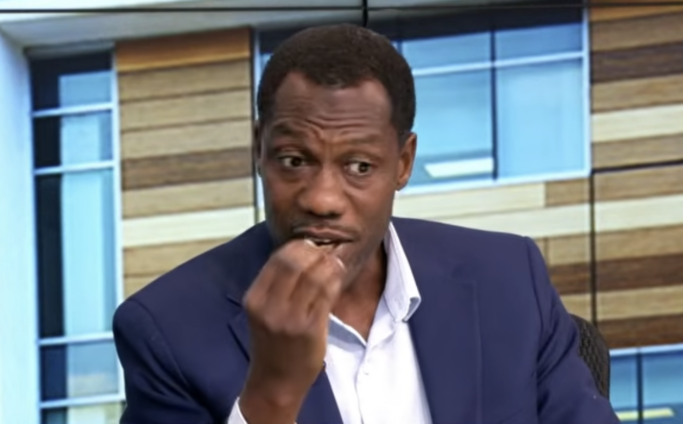
Neurosurgeon Hadi Mohammed Abdallah says healthcare failures cannot continue to be blamed solely on individuals, insisting the country is ignoring deeper systemic problems that repeatedly lead to tragedy.
Speaking on PM Express on Wednesday, Dr Abdallah reacted to the findings of a government committee that investigated the death of 29-year-old engineer Charles Amissah after he was allegedly denied emergency care at three hospitals in Accra.
“To be honest, I wasn’t surprised,” he said.
“I was also sad and alarmed that after so many years… we had a similar incident involving an elderly person. A lot of things were said around that time.”
According to him, Ghana has developed a pattern of reacting emotionally to national tragedies without implementing meaningful reforms.
“I remember telling my colleagues that it’s not going to change anything, because for us as a country, whenever we run into a monumental catastrophe, we tend to be very emotional about it, and we always look for a scapegoat,” he stated.
“And managers of that sector would always find a scapegoat.”
Dr Abdallah argued that the country focuses too much on blaming individuals instead of fixing institutional failures.
“In certain countries, when events like this happen, be it in healthcare or in education, it leads to significant changes in terms of policy, even the law,” he said.
“But for us, it’s always trying to find fault, and the fault is always personalised. We don’t look at how to solve the problem.”
He compared the current situation to the 2001 Accra Sports Stadium disaster, commonly known as the May 9 disaster, in which more than 120 football fans died.
“I tried to juxtapose this with the May 9 disaster,” he said.
“I lost friends and colleagues in the university, and I quite remember when it happened, there was hue and cry about the police officers, how unprofessional they were.”
According to him, the same mistakes were repeated because the system itself was never examined.
“Nobody looked at the system that trained them and what was there for them to control the crowd at the time,” he stressed.
He said the officers involved eventually became scapegoats.
“At the end of it, the police officers were scapegoats. We sent them to court. Eventually, they could not establish a case against them.”
A government-appointed committee chaired by Professor Agyeman Badu Akosa concluded that Charles Amissah died from medical neglect and denial of emergency care after being turned away by the Police Hospital, Greater Accra Regional Hospital and Korle Bu Teaching Hospital.
Latest Stories
-
The job interview question you don’t have to answer
1 hour -
Trump unveils ‘Super Intelligence Force’ to oversee AI policy
1 hour -
[Video]‘I have asked God to take me when it is time’ – Pete Edochie on health struggles
4 hours -
Manager remanded over $1m auto fraud
4 hours -
Mr President, Ghana was mentioned at the UN; why aren’t we talking about it?
4 hours -
US Marine arrested over murder of woman in Okinawa, Japan
4 hours -
Accra to convene Africa’s regulators and markets on tokenisation at AVAS 2026
4 hours -
Indian police accused of sexually harassing journalists at protest
5 hours -
Jeffrey Archer returns to his former school library
5 hours -
France to close up to 500 schools on Monday over student protests
5 hours -
The Paradox of Plenty — When every smartphone becomes a newsroom
5 hours -
Australia investigating Flydubai co-pilot’s links to country
5 hours -
GTA sensitises taxi drivers in ‘Know Ghana’ tourism campaign
6 hours -
Archbishop Agyinasare calls for responsible speech amid growing social media abuse
6 hours -
‘It will be inexcusable for gov’t not to honour payment of teachers’ arrears by 30th October’ – Haruna Iddrisu
6 hours