

Audio By Carbonatix
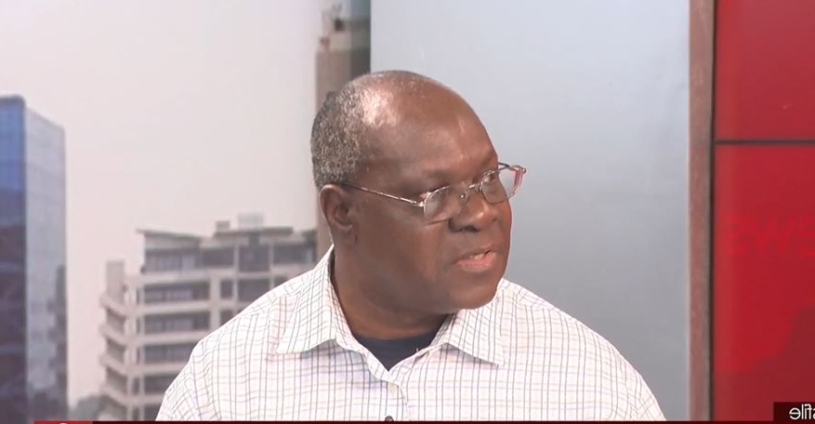
US-based Ghanaian medical doctor and former New Patriotic Party presidential aspirant, Dr Arthur Kobina Kennedy, has criticised what he describes as the narrow focus of the Prof. Agyeman Badu Akosa Committee report into the death of 29-year-old engineer Charles Amissah, insisting that Ghana’s healthcare crisis is the result of a longstanding systemic failure rather than the negligence of a few frontline workers.
In a statement issued on 8 May 2026, Dr Kennedy commended the committee for its “thorough work” and recommendations, but argued that its conclusions did not go far enough in confronting the deeper structural failures that continue to undermine emergency healthcare delivery in Ghana.
“The idea that the findings of the committee are new is astonishing,” he said, pointing to Ghana’s long-standing “no-bed syndrome”, which he noted had plagued the health sector for decades.
According to Dr Kennedy, the phenomenon predates Prof. Akosa’s tenure as Director-General of the Ghana Health Service and reflects a culture of institutional neglect that successive governments have failed to address.
His comments follow the release of the Prof. Akosa Committee report, which investigated the circumstances surrounding the death of Mr Amissah, who died after being denied emergency treatment at three major hospitals in Accra.
The committee found that Mr Amissah, an engineer with Promasidor Ghana Limited, suffered a motorcycle accident near the Kwame Nkrumah Circle Interchange on 6 February 2026 and was transported by the National Ambulance Service to the Police Hospital, Greater Accra Regional Hospital, and Korle Bu Teaching Hospital, but was denied emergency intervention at each facility due to claims of unavailable beds. He was pronounced dead approximately 118 minutes after the accident, while still in the ambulance.
Presenting the findings, Prof. Akosa concluded that Mr Amissah died from excessive blood loss caused by “medical neglect” and the denial of emergency care, describing his death as avoidable. The committee found that all three hospitals failed to properly triage and stabilise the patient, despite his arriving alive at each facility.
The report also recommended disciplinary action against six healthcare professionals—three doctors and three triage nurses—whose actions were found to have contributed directly to the fatal delays. It further proposed sweeping reforms, including mandatory emergency treatment regardless of bed availability, improved ambulance protocols, and stronger enforcement of patient care standards.
However, Dr Kennedy believes the committee wrongly focused on frontline personnel while failing to hold senior administrators and political leaders accountable.
“The idea that three bad doctors and three bad triage nurses in three of our best hospitals just happened to be at work on this particular day beggars belief,” he argued.
According to him, the healthcare workers involved were merely operating within a broken system that has normalised delayed emergency care, weak triage systems, and poor institutional compassion.
“On that fateful day, our healthcare system functioned as it was supposed to function—inefficiently and without compassion,” he stated.
Dr Kennedy further criticised what he described as generations of political leaders who created and maintained both the “no-bed syndrome” and the “cash-and-carry” culture in healthcare, arguing that these systemic failures have gone largely unchallenged.
He also raised concerns about the structure of Ghana’s National Ambulance Service, claiming that it remains inadequately staffed and should be reformed to ensure trained emergency medical technicians are deployed, while eliminating the practice of demanding payment for fuel during emergencies.
Beyond ambulance reform, Dr Kennedy called for a comprehensive national health reform law that would compel hospitals to adequately prepare for common emergencies such as strokes, heart attacks, trauma injuries, and other urgent medical conditions.
He maintained that while doctors and nurses must be held to high professional standards, healthcare facilities themselves must be properly equipped and empowered to provide timely emergency care.
Drawing comparisons with international practice, he noted that in countries such as Spain and Portugal, similar failures have resulted in accountability at both political and frontline levels.
Dr Kennedy expressed hope that the Prof. Akosa Committee’s recommendations would be fully implemented, but warned that without broader systemic reform, Ghana risks repeating the same tragic failures.
“When these are done,” he concluded, “hopefully, our leaders will abandon the practice of heading abroad whenever they are sick.”
Latest Stories
-
Ghana explores centre of excellence for hearing, communication and cochlear implant care
1 hour -
Schizophrenia-related disorders lead mental health cases recorded in Ghana
2 hours -
Dutch authorities enlist Ghana in hunt for fugitive drug lord Bolle Jos
2 hours -
Ghana housing finance conference adopts communiqué to improve affordable housing access
6 hours -
Special Initiatives Minister urges Wa Technical Institute to enrol more girls as EU-backed solar training lab opens
7 hours -
In the matter of my first year at the Bar
7 hours -
ActionAid Ghana calls for an end to child marriage, greater investment in girls’ rights
7 hours -
Newsfile to tackle World Cup visa scandal, beach demolitions, education strikes, BRICS bid
7 hours -
UK-Ghana Trade & Investment Summit: Trade Resource Centre to help businesses maximise UK-Ghana trade opportunities
8 hours -
Embassy of Denmark celebrates World Maritime Day
8 hours -
Linking LEAP to productive inclusion could cut extreme poverty by 2030 – UNICEF
9 hours -
Trade Ministry backs use of creative arts to rehabilitate prison inmates
9 hours -
Negotiations with government to continue despite strike suspension – GNAT
9 hours -
‘Ghana cannot afford to waste public resources; every cedi has a job’ – Ato Forson
9 hours -
Ghana expects economic boost as World Assemblies of God Congress brings 10,000 delegates to Accra
9 hours