

Audio By Carbonatix
Peace and stability are becoming the most important marker of a competitive economy or market.
As events in Afghanistan have shown, political risk (read political unrest/ regime change/war) trump all other risks. These risks are discontinuous and can happen so quickly and sometimes abruptly. This makes it very difficult to price into one’s cost of doing business. It is also a risk which is almost impossible to hedge against.
The only viable hedge is to be in countries or regions where this risk is almost negligible.
For digital companies (read companies whose primary product is digital eg: Google, they deal with this by locating servers in regions with stability. They are largely agnostic to where servers and other physical infrastructure are located. They can literally operate from anywhere and they don’t need to be centralised. This is the power of the cloud.
Increasingly for internet providers, the advent of low earth orbit satellites could also help them mitigate this risk. If low earth satellites can communicate directly with each other and communicate with little antennas on people’s homes, the need for ground stations is eliminated. This means potentially they can operate in a decentralised manner as well. To an extent, these companies are isolated from some very real risks. This explains their dominance in the market and also the general shift of investors’ concentration to these firms.
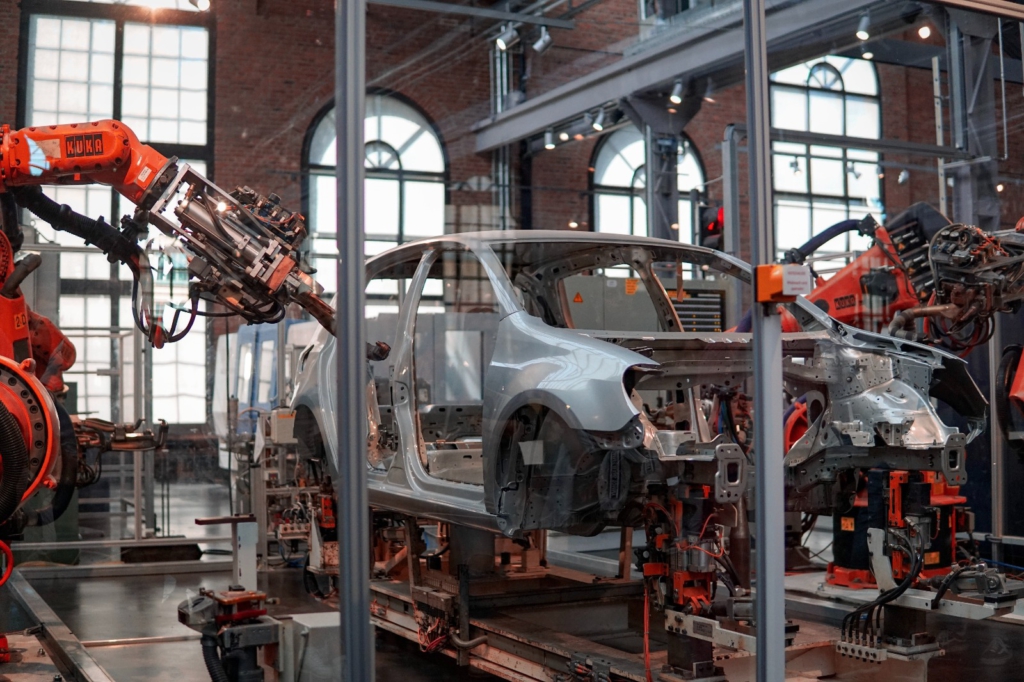
This is all good, but humans still live in a physical world. We need physical things like food, shelter etc. Companies in these sectors are more sensitive to where their factories are sited. Ideally, they look for a combination of cheap cost of manufacturing, proximity to their customers (market) and political stability of the location of their manufacturing base.
As seen during the Covid 19 crisis, over concentration of manufacturing in one country or even one region can carry enormous risks. Currently, there is an over concentration of manufacturing in Asia. Almost the entire supply chain of the world sits in Asia. With the increasing bifurcation of the world’s political systems into eastern and western systems, this is a risk. China and Russia are aligning on one side while the NATO allies are on the other side. This means for NATO and its allies, there is an urgent need to find alternative supply chains outside the region. Ideally the supply chains should also have low cost of manufacturing and political stability. This combination of factors leads us to the West African coast, specifically Ghana.
Ghana has been relatively stable and peaceful over the past 2 decades. It enjoys a vibrant democracy with a relatively peaceful changeover of government. It’s within 10 hours flight to NATO allies. It has a youthful population with a low-cost labour base. It also has lots of raw materials. This makes it the ideal location to site alternative supply chains for supply to NATO aligned countries. It is not perfect, but it has the potential to become the hub for manufacturing and supply. However, to achieve this, a few things are critical. These include:
- Maintaining the peace and stability of the country.
- Developing efficient systems for the easy access to cheap capital especially for local entrepreneurs. This is critical in ensuring that they can plug into the supply chains and provide the inputs for these industrial outfits.
- Laying a foundation which makes it easy for businesses to set up and start running is critical. This includes training a workforce who are technically literate. This will involve investing resources into TVET. This will ensure that the workforce is ready and prepared to control these industries. Provision of cheap and constant supply of power and water. Quick and easily accessible government / public services.
- A public sector that is efficient and ready to support the private sector and help build a relationship, an enabling environment and facilitation that will fuel this agenda in a sustainable way.
This is the opportunity that awaits us and has the potential to transform Ghana into an industrialized economy. Is Ghana positioning itself to take advantage of this? Is the AFCFTA a platform or starting point? This calls for a committed, long-term vision and action that should start now. Will we take advantage of it?
Author : Omoni Watson Elekima, PhD student , Imperial College London
Latest Stories
-
Atta Akyea fumes as Manhyia MP is to spend another night in EOCO custody
6 minutes -
SSNIT says La Beach clearance was to protect hotel investments, beaches to remain public
58 minutes -
APSU congratulates St Augustine’s College after back-to-back National Investment Quiz wins
1 hour -
Renewed flood intervention at Mallam Junction raises hopes among residents, businesses
2 hours -
St Augustine’s College retain National Investment Quiz title after nail-biting grand finale
2 hours -
Education infrastructure investment will drive Banda’s development – Ahmed Ibrahim
2 hours -
Teacher unions strike: Gov’t presents fresh proposals as talks end inconclusively
3 hours -
51,000 teachers’ promotion arrears to be validated for October payment – Education Minister
3 hours -
Kwabena Boamah appointed Board Chair for Impact Investing Ghana
3 hours -
Striking teacher unions to meet Fair Wages and Salaries Commission on October 6
4 hours -
EOCO working with AG to arraign Nana Baffour Awuah before weekend court
4 hours -
Duraplast reassures customers after fire, announces October 5 reopening
4 hours -
Call off strike, gov’t will not renege on promotion arrears pledge – Haruna Iddrisu to teacher unions
4 hours -
Committee set up to validate teachers eligible for 20% deprived-area allowance – Education Minister
4 hours -
Five-member committee to search for new Black Stars coach after Sports Ministry-GFA meeting
4 hours