

Audio By Carbonatix
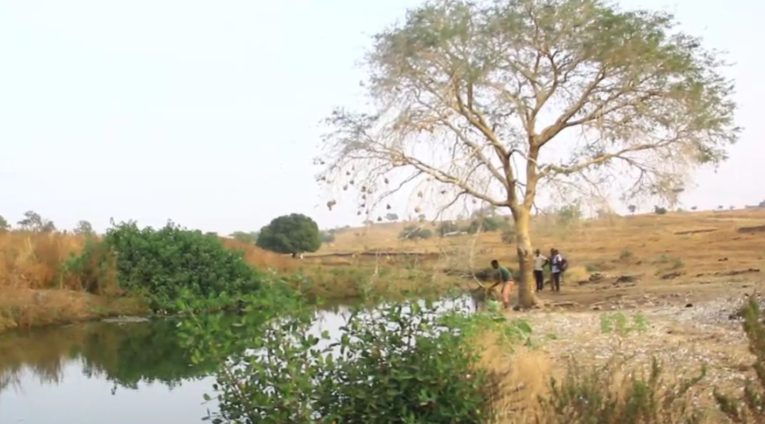
Yarigun crocodile pond in the Binduri District in the Upper East Region is yet to be put on the World Tourism Map.
The town's sacred pond known to accommodate a number of crocodiles is yet to receive the attention of the district assembly.
Residents want measures in place to help transform the pond into a tourist site to generate revenue.
“There are many crocodiles here. We can’t count them because most of them don’t come out during the day.”
One of the residents, Reverend Elisha Usman Agbon, told JoyNews Mahmud Mohammed-Nurudeen.
Known as 'akpol wɔɔg', it is one of the few crocodile ponds in the Upper East Region. But little or no attention has been paid to the pond.
Residents suggest that the development of the pond should be fenced to prevent the invasion of other animals.
Located at a strategic point in the Agoll mountains, it is believed that there are hundreds of crocodiles of different sizes, which are as old as the community.
Reverend Agbon, Alumbilla Adayine and Imoro Zakari Akugri have all witnessed and monitored the activities of the crocodiles over the past three decades.
‘This is where we swam when we were children and we have always come here.” Said Imoro Zakari Akugri.
The pond was their playground as children and they saw the reptiles on several occasions.
But in recent times, the level of water in the pond is gradually decreasing, at a rate, residents are concerned.
They attribute the drying up to farming activities along the pond among others, which can affect living conditions of the reptiles.
Chief of Yarigun, Naba Alumbilla Alal-Kudug says the pond is at the verge of death.
“It was expanded several years ago. I think those who farm near the pond are destroying it. The Crocodiles used to come out for fresh air. But because of the farmers, they don't come out anymore.”
The people of Yarigun believe they have special connections to the pond, which is why there is mutual respect for it. Killing, harming or eating crocodiles is a taboo.
Naba Alumbilla Alal-Kudug says the pond is one of the respected earth gods which on many occasions communicated to them about the future.
“If the water dries up now, we would not be happy. What our grandfathers said, our lives depend on the survival of the pond which is an earth god. If something was about to happen, it communicated to us.”
Nobody knows the age of the pond. Not even Naba Alal-Kudug. All he knows is his grandparents came to meet it.
How residents could channel their concerns to government officials is one of the biggest challenges.
The development of the crocodile pond will not only serve as a tourist site, but also generate revenue for the country.
Residents believe it will also develop the community and surrounding areas to a lot more opportunities.
Until something significant is done to transform the current state of the pond, it will remain as it is, or even worse for many years to come.
Latest Stories
-
‘October 3 is the only poll I believe in’ – Paul Afoko dismisses NPP chairmanship survey
11 minutes -
Contractors who delay projects risk losing Big Push contracts – Agbodza
13 minutes -
NPA uses Fetu Afahye to educate consumers on petroleum safety
27 minutes -
Roads Minister orders contractors to keep working during official visits
37 minutes -
New 4-year bond attracts GH¢4.46bn in bids
37 minutes -
AIA VIP Lounge to be completed without taxpayer funds – Ablakwa
41 minutes -
KEEA Assembly disburses GH¢267,518 to 94 PPCs in third quarter
44 minutes -
GAF clears 175.6km corridor for Accra-Kumasi Expressway ahead of schedule
49 minutes -
Dr Abu Sakara urges African youth to lead economic freedom
49 minutes -
24-Hour Economy mobilises GH¢1bn for poultry value-chain transformation
55 minutes -
From working in his room to building a business group – Michael Bartlett-Vanderpuye’s journey
56 minutes -
SOEs dividend contributions fall 45.5% in 2025- Report
1 hour -
DBG steps up textile industry financing with new investor-ready projects
1 hour -
GPL: Hearts make emphatic winning start, Debibi United hold Kotoko
1 hour -
Middle East conflict disrupts Ghana’s gold exports as first-half volumes dip
1 hour