

Audio By Carbonatix
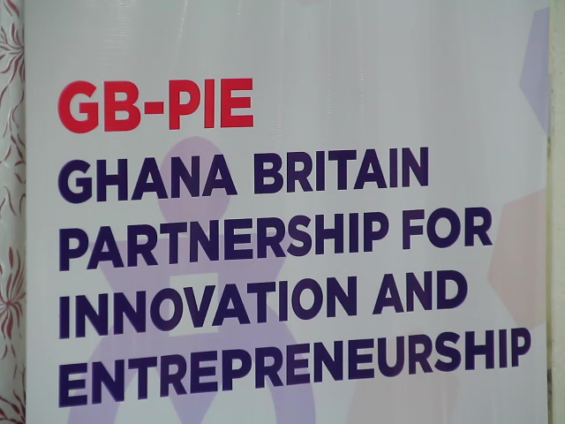
The Ghana-Britain Partnership for Innovation and Entrepreneurship (GB PIE), has been launched at the University of Cape Coast.
Launching the program, the lead of the Ghana-Britain Partnership for Innovation and Entrepreneurship, Prof. Desmond Omane Acheampong, underscored the need for Ghana to equip its youth with entrepreneurial skills, to make them competitive anywhere they find themselves.
According to him, if the skills of the youth are properly harnessed, it will increase the working-age population, which could promote high productivity and more robust economic growth across the African continent.
The GB-PIE project has the goal of driving collaboration among all Innovation for African Universities (IAU) projects in Ghana to bring to the attention of the general public the successes and opportunities available to the youth in the area of innovation and entrepreneurship.
Prof. Desmond Acheampong says that in light of the numerous opportunities available to the youth, the British Council designed and introduced the Innovation for African Universities program, which is part of a growing global partnership program.
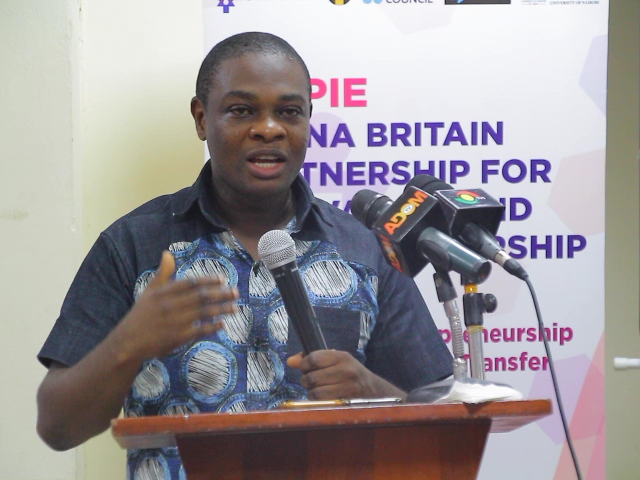
“A major constraint to job creation and youth employability in Ghana is the deficit in translating innovation into viable ventures and businesses. Currently, the IAU projects in Ghana are working on various aspects to bring about the needed change, "he stated.
The IAU program aims to foster the culture of innovation and entrepreneurship within universities and facilitate the development of the skills required to build industry, companies, products and services.
Additionally, he stated that the program is designed to promote the development of Africa-UK university partnership that builds institutional capacities for high education engagement and entrepreneurship and innovation ecosystems in the selected African countries.

The Pro Vice-Chancellor of the University of Cape Coast highlighted how the university was putting in place structures and programs to make the university an entrepreneurial university.
She indicated that the university has begun reworking its curriculum to enable students that are trained there to acquire entrepreneurial skills before they graduate from the university.
Prof. Rosemond Boohene, says making students acquire 21st century skills is the university’s current direction and all structures are being put in place for its success.

She stated, “Currently, what we are doing is revising our curriculum. We have a team that is looking at our curriculum development. We want to incorporate 21st century skills into the curriculum. This curriculum will encompass entrepreneurship, ICT skills, innovation, and creativity. ”
Prof. Boohene says the university has started stakeholder analysis with the department and faculties, and they are hoping that in the next year or two, all their programs will be revised. The revision of their curriculum, she explained, would come with 21st century skills components in them.
According to her, when the students of the university are able to develop such skills before they graduate, they will be able to operate anywhere, whether in Ghana, Africa or globally.

“ICT skills alone enable one to collaborate, think critically and immerse themselves deeply in entrepreneurship. They are all aimed at developing an all-around student, "she stated.
The Professor of Entrepreneurship further indicated, that there’s a university-wide entrepreneurship course that aims at developing the entrepreneurial mindset of students at the university.
Apart from the business incubator the university has, the university recently launched the Design Thinking and Innovation Hub, which is aimed at helping students grow and nurture their business ideas so that they can turn them into startups.
“Our ultimate aim is to develop entrepreneurial leaders and we are determined to groom the young ones within the university to be agents of transformation and change.
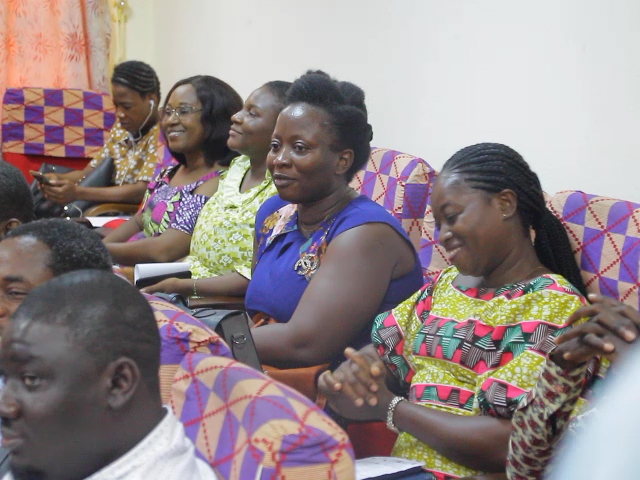
In addition, she explains that the university was looking at how they would commercialize and internationalize their research. “We are doing these already, but we want to strengthen them to make them super viable and support our students and our research to grow."
The program comprises 24 partnerships between UK universities and Sub-Saharan African universities as well as entrepreneurial ecosystem organizations and runs in Kenya, Nigeria, and Ghana.
This project is being implemented by the University of Cape Coast, Ghana, and the University of St. Andrews, Scotland.
Latest Stories
-
Power restoration fault suspected in Kumasi Central Market fire
4 hours -
The 7-foot giant of Ngleshie Amanfro: Seven-foot Ghanaian Ephraim Saawa dreams of joining the national basketball team
5 hours -
Government promises support for Kumasi Central Market fire victims
5 hours -
Vibes The Movie: Big Ghun’s Ghanaian film earns five nominations at 2026 REFFA
5 hours -
MamaCare CEO warns unresolved conflicts among health workers could undermine maternal and neonatal care
6 hours -
Health professionals urged to translate medical knowledge into practice to save mothers
6 hours -
Conflicts among care providers linked to maternal, neonatal deaths – Expert
7 hours -
GIS marks 10th TIME conference, champions improved teaching practices
7 hours -
BRICS Or Balance? What Ghana’s bid really means
8 hours -
GPRTU wants full TRAFFITECH-GH implementation to start in 2027
8 hours -
How 10-mile walks for basic education birthed a 50-year legal career for Justice Korbieh
8 hours -
Mahama announces plans to import electric wheelchairs for PWDs
8 hours -
KGL U17 Colts 2026: Western beat Prempeh Elite Academy to set up final final with Greater Accra Region
9 hours -
Late Solanke strike salvages 10-man Spurs draw at Man United
9 hours -
Gender Ministry to monitor welfare of Nana Akua Addo’s children amid domestic violence case
9 hours