

Audio By Carbonatix
The National House of Chiefs is entreating the government to engage organised labour and other disgruntled groupings on the debt exchange programme.
It comes on the backs of threats from the labour groups to embark on an indefinite strike over the implementation of the programme.
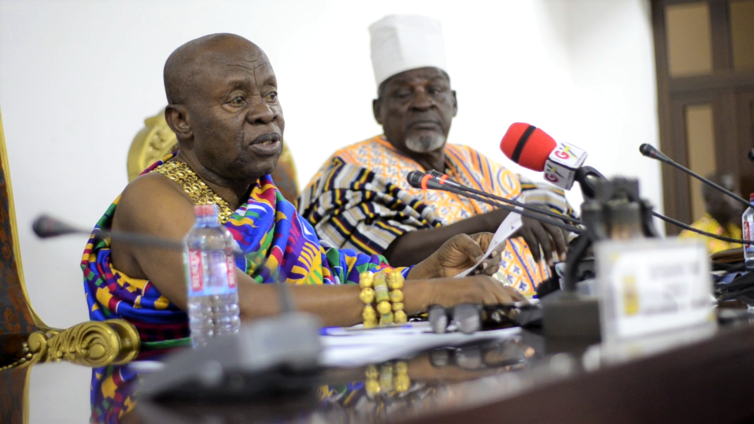
President of the House of Chiefs, Ogyeahohuo Yaw Gyebi II believes the buy-in of various interest groups will ease implementation.
“Government has announced very necessary but difficult measures to revive the ailing economy. We call on the government to engage the labour front to appreciate the rationale behind the harsh measures in the budget. In the same vein, we also call on the labour front and all people affected by this haircut to reasonably dialogue with government so that we can go through the IMF programme successfully”, he said.
To deal with the country’s ailing economy, the government asked the International Monetary Fund for a USD3 billion support. The Fund, as a precondition for extending the support, has laid down a number of requests, including the need for the country to restructure its debts.
In the 2023 budget, the government froze public sector employment and introduced other austere measures.
A decision to enter into a debt exchange programme which has a negative effect on investments is being fiercely opposed by labour.
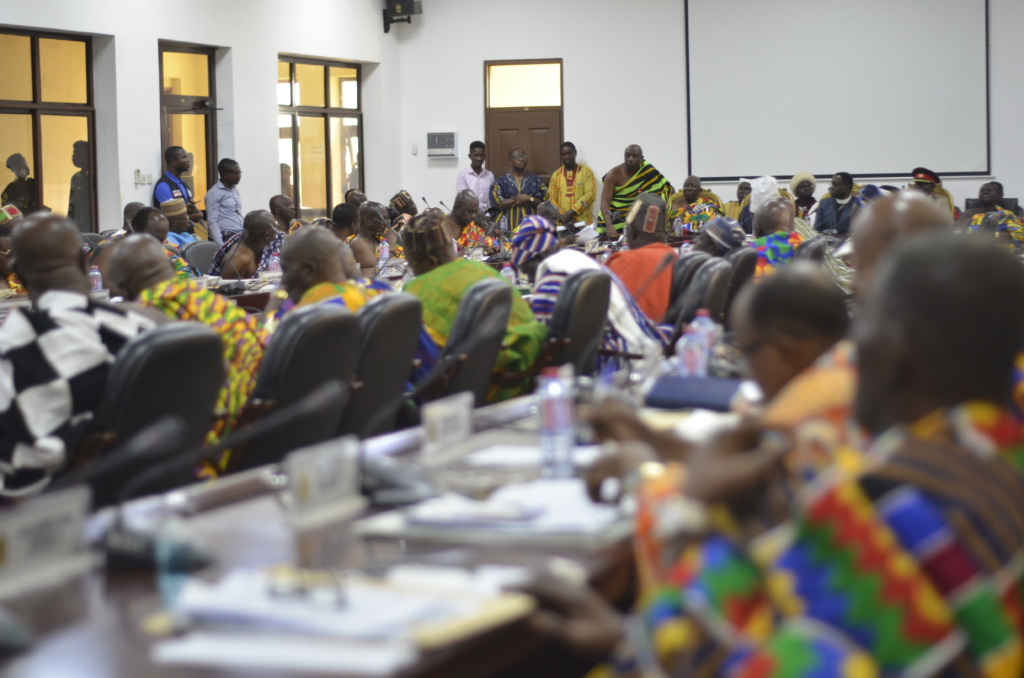
President of the National House of Chiefs, Ogyeahohuo Yaw Gyebi II, addressed the house on the issue.
“Indeed the austerity measures of the debt exchange programme and freezing of public sector employment and of course, the economic policy statement of government as well as consistent hikes in prices of goods and services coupled with the haircut on Government of Ghana bonds have all caused uproar at the labour front”, he said.
The house is also entreating the public to support steps being taken by the government to improve the economy.
Meanwhile, the traditional leaders are encouraging investments in technology to spur the agriculture sector.
Ogyeahohuo Yaw Gyebi believes such investments can help reduce importation and stabilise the local currency.
“We also call on support from the government and other organisations to come to the aid of farmers with farming implements and logistics that will help in shifting from the labour intensive system of agriculture to a more mechanised farming to produce in large quantities,” he emphasised.
Latest Stories
-
Fuel prices set to rise again from Sept 1; petrol could hit GH¢16.21 – COPEC
45 minutes -
REGSEC restricts Akwasidae celebrations in Denkyira amid security concerns
51 minutes -
Eric Adjei distributes free fertiliser to farmers in Jaman North
58 minutes -
Akufo-Addo urges NPP factions to unite behind Bawumia for 2028 victory
1 hour -
NDC mourns Western Regional Elections Director Papa Assan
1 hour -
Minerals Commission warns against fake job recruitment schemes
1 hour -
10 recruits dismissed for defying phone ban – Interior Minister
1 hour -
IEAG commends GoldBod, BoG for improving forex stability
2 hours -
Bawumia donates GH¢50,000 to St Jude Catholic Church at Weija
2 hours -
Mahama calls for faster mobilisation of AU Peace Fund resources
2 hours -
Improved roads bring new vehicle options to Tumu-Bolga, Tumu-Tamale, Tumu-Wa routes
2 hours -
Cedi records 7.9% depreciation against US dollar in first half of 2026
2 hours -
GIS launches operation on anti-human trafficking and exploitative street begging
2 hours -
Awutu-Senya District Assembly organises clean-up ahead of Awubia Festival
2 hours -
Vice President Opoku-Agyemang receives Democracy Cup
2 hours