

Audio By Carbonatix
Africa’s unfinished independence and the quiet contradiction between dignity, identity and inherited power language
Across Africa, there is a deep, justified and often emotional conversation about history.
- Colonialism.
- Exploitation.
- Economic imbalance.
- Cultural disruption.
We speak about it with conviction. We debate it in lecture halls, dissect it in policy forums and amplify it across radio, television and digital platforms. We question its legacy, challenge its consequences and demand redress, as we should. Yet, in the same breath, something quietly persists.
A contradiction.
A subtle but powerful inconsistency that rarely makes front page headlines, yet quietly shapes our institutions, our leadership culture and our sense of identity.
We reject colonial structures in principle, yet preserve many of their symbols in practice.
We criticise the past, yet keep its language.
We challenge its authority, yet embrace its titles.
- “Honourable.”
- “His Excellency.”
- “Her Ladyship.”
- “Lord.”
- “Royal Highness.”
- “His or Her Majesty.”
And so, once again, we must ask, not in anger but in sober reflection:
What is wrong with us?
The language we kept without interrogation
Titles are not mere formalities.
- They are instruments of meaning.
- They communicate hierarchy.
- They reinforce authority.
- They shape behaviour.
Many of the titles widely used across African governance systems today are not indigenous. They were introduced within colonial administrative frameworks designed to organise power, stratify society and legitimise authority. In British colonial territories, titles such as “His Excellency” were used to elevate governors as extensions of imperial authority. Post independence, many African states retained these titles, often without interrogating their relevance.
Contrast this with Tanzania under Julius Nyerere. In the early years of independence, Nyerere deliberately rejected excessive formal titles, preferring to be addressed simply as “Mwalimu” meaning teacher. It was a conscious attempt to redefine leadership as service rather than status. Yet, across much of the continent, such restraint did not endure.
We changed political control, but we retained symbolic structures.
NyansaKasa (Words of Wisdom):
“A borrowed crown still weighs on the head.”
Interpretation: Symbols adopted without reflection continue to shape identity.
The quiet contradiction we live with
There is nothing wrong with respect. Societies require structure. Leadership deserves recognition. Protocol has its place. But the contradiction lies here:
- We criticise the system that introduced these titles, yet we preserve them with pride.
- We question colonial dominance, yet maintain colonial expressions of hierarchy.
- We challenge inherited inequality, yet reinforce inherited symbolism.
In Ghana, Nigeria, Kenya and beyond, elected officials are addressed as “Honourable”, a term rooted in British parliamentary tradition. In many African states, presidents are formally addressed as “His Excellency”, echoing colonial administrative language. Yet these same societies actively critique colonial influence.
NyansaKasa (Words of Wisdom):
“You cannot reject the tree and water its roots.”
Interpretation: True transformation requires reexamining what sustains the past.
When titles shape behaviour
Titles do more than describe authority.
- They influence it.
- They shape how leaders see themselves.
- They influence how citizens respond.
- They create distance between office and people.
When titles become elevated beyond service, they risk fostering entitlement. Consider the contrast with Scandinavian leadership culture. In countries such as Sweden and Denmark, ministers and even prime ministers are often addressed by name in public discourse. The emphasis is on accessibility, not elevation. In Rwanda, while formal titles exist, there has been a deliberate effort to align leadership identity with national service, supported by visible accountability mechanisms.
Authority that depends on titles risks weakening the need for performance.
NyansaKasa (Words of Wisdom):
“Titles should remind us to serve, not to be served.”
Interpretation: Leadership must remain anchored in responsibility.
This is not just Ghana
This is not a Ghanaian peculiarity. It is an African pattern.
- Across West Africa, parliamentary titles mirror British conventions.
- Across East Africa, administrative language reflects colonial legacy.
- Across Southern Africa, ceremonial protocols echo inherited systems.
Even in countries with different colonial histories, similar structures exist.
- In Nigeria, colonial era titles continue within both governance and traditional systems.
- In Kenya, official protocols still reflect British administrative influence.
- In parts of Francophone Africa, titles and administrative language reflect French colonial structures.
Different histories, similar outcomes.
NyansaKasa (Words of Wisdom):
“What is repeated across borders becomes a shared habit.”
Interpretation: Widespread practices reflect collective mindset.
The global contrast we sometimes overlook
Globally, authority is expressed differently. In the United States, officials are addressed by office rather than elevated ceremonial titles. A senator is a senator, not “His Excellency”.
In New Zealand, leadership culture emphasises accessibility and humility.
In Japan, respect is deeply embedded in culture, yet demonstrated through conduct rather than elaborate formal titles in governance. Singapore presents an interesting case. While formal respect exists, governance is anchored in performance, efficiency and accountability, not ceremonial elevation.
Respect does not require theatrical expression to be effective.
NyansaKasa (Words of Wisdom):
“True respect is felt, not announced.”
Interpretation: Authority is strengthened by conduct, not vocabulary.
The psychology of continuity
Why do we continue to use these titles? Part of the answer lies in institutional inertia.
- They are embedded in law.
- They are reinforced through protocol.
- They are normalised through repetition.
But there is also a psychological dimension.
- A comfort with familiarity.
- A reluctance to disrupt established norms.
NyansaKasa (Words of Wisdom):
“What is familiar is rarely questioned.”
Interpretation: Long standing practices often escape scrutiny.
The deeper risk: identity without ownership
Symbols shape identity.
- They influence how societies define themselves.
- They affect how leadership is perceived.
- They determine how authority is exercised.
When societies retain inherited symbols without reflection, they risk limiting their ability to redefine themselves.
True independence is not only political. It is psychological.
Consider South Africa’s post-apartheid transition. While many institutional structures remained, there has been an ongoing effort to redefine identity through language, symbolism and cultural expression. Africa’s broader challenge is similar.
NyansaKasa (Words of Wisdom):
“Freedom of land without freedom of mind is incomplete.”
Interpretation: Independence must extend beyond governance into identity.
When authority becomes performance
Titles can sometimes encourage performance rather than substance.
- Ceremony over service.
- Protocol over purpose.
- Recognition over results.
Public office risks becoming a stage rather than a responsibility.
NyansaKasa (Words of Wisdom):
“A loud title does not guarantee quiet competence.”
Interpretation: Leadership is measured by outcomes, not introductions.
The role of citizens in sustaining the system
It is easy to focus on institutions, but citizens play a critical role.
- We use the titles.
- We repeat them.
- We reinforce them.
We rarely question them.
NyansaKasa (Words of Wisdom):
“What people repeat becomes tradition.”
Interpretation: Culture is sustained through collective behaviour.
A moment for reflection, not rejection
- This is not a call for abrupt abandonment.
- It is not a rejection of respect.
- It is not a dismissal of tradition.
It is a call for reflection. A call for alignment between values and expression. Should leadership in Africa be defined by inherited language, or by evolving identity?
NyansaKasa (Words of Wisdom):
“Identity grows when it is defined, not borrowed.”
Interpretation: Self definition strengthens cultural confidence.
What must change
Change begins with questioning. Institutions must review the relevance of inherited expressions. Leadership culture must emphasise service over status.
Public discourse must shift towards substance. Educational systems must encourage critical engagement with historical structures.
Respect must be earned through action, not assumed through titles.
NyansaKasa (Words of Wisdom):
“Respect that is earned lasts longer than respect that is assigned.”
Interpretation: Sustainable authority is built on trust.
Conclusion: a question for our conscience
Africa has made significant strides.
- Political independence.
- Economic ambition.
- Cultural resurgence.
But the journey is not complete. Because independence is not only about removing external control. It is about redefining internal identity. So we must ask again, not defensively but honestly:
What is wrong with us?
- Why do we criticise colonial systems while preserving their symbols?
- Why do we challenge inherited structures but maintain inherited language?
- Why do we seek transformation but hesitate to redefine ourselves fully?
NyansaKasa (Words of Wisdom):
“A people who do not redefine themselves remain defined by others.”
Interpretation: Self-determination requires conscious identity shaping.
Africa’s future will not only be shaped by policy, investment or resources.
- It will be shaped by mindset.
- By identity.
- By the courage to question what we have inherited.
Because true independence is not only about what we remove. It is about what we consciously choose to become.
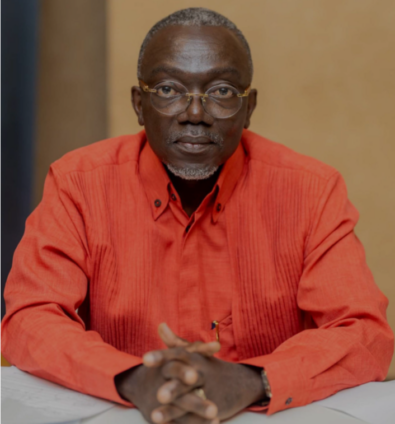
About Ing. Professor Douglas Boateng
Ing. Professor Douglas Boateng is a pioneering international industrial, manufacturing, and production systems engineer, governance strategist, and Pan-African thought leader whose work continues to shape boardroom thinking, supply chain transformation, and industrialisation across both the continent and globally. As Africa’s first appointed Professor Extraordinaire in Supply Chain Management, he has consistently championed the integration of procurement, value chain, industrialisation strategy, and governance into national and continental development agendas, aligning practice with purpose and long-term impact. An International Chartered Director and Chartered Engineer, he has received numerous lifetime achievement awards and authored several authoritative books. He is also the scribe of the globally acclaimed and widely followed daily NyansaKasa (Words of Wisdom), which continues to inspire reflection, accountability, and purposeful living among audiences worldwide. His work is driven by a simple yet powerful belief: Africa’s transformation will not come from rhetoric but from deliberate action, strong institutions, and leaders willing to build for future generations.
Latest Stories
-
Ghana must close gaps that allow drug trafficking – Dr Pelpuo
7 minutes -
Emmanuel Osei: President Mahama, dissolve GFA and save our soul
20 minutes -
Uganda Airlines to launch direct Accra-Entebbe flights from October 27
22 minutes -
Ghana records surge in 2025 tourism receipts as Ahafo Region honors top industry players
24 minutes -
I don’t have an official car, I use my own – Pelpuo
35 minutes -
Maiden Black Star Fashion Week to highlight Ghana’s national fashion platform
35 minutes -
GPRTU has entrusted vehicle inspection responsibility to station masters – GPRTU member
35 minutes -
President Mahama to open housing finance conference in Accra on October 7
43 minutes -
Cocaine probe: Speaker is right in dismissing Minority’s motion of parliamentary inquiry – Dr Pelpuo
43 minutes -
Academic City presents cybersecurity white paper to Communications Minister
44 minutes -
Pelpuo calls for independent commission to oversee Ghana’s public sector remuneration
44 minutes -
Bekwai MP to engage Assembly over traders displaced by market redevelopment
46 minutes -
Accra-Abidjan flight relaunch will boost trade, investment and regional integration – Ambassador Alhassan Abu
47 minutes -
Mahama tasked me to identify initiatives that fit Reset Agenda – Pelpuo
48 minutes -
Makola and Abossey Okai named in crime index as fake goods trade grows
51 minutes