

Audio By Carbonatix
Over thousand cocoa planting communities in Ghana are expected to benefit from the World Bank’s Forest Carbon Partnership Facility for reducing emissions from deforestation and forest degradation (REDD+).
The government received $4,862,280 from the World Bank for reducing 972,456 tons of carbon emissions for the first monitoring between June and December 2019 under the program.
Sixty-nine percent of the amount received is expected to be allocated to participating communities across the Western-North, Central and Eastern regions for development and financial upkeep.
The beneficiary communities equipped with the climate-smart skills fall under the Sefwi-Wiawso, Juaboso-Bia, Kakum National Park to Assin Fosu, Asunafo-Asutifi and Atiwa-Kwae bebrem districts.
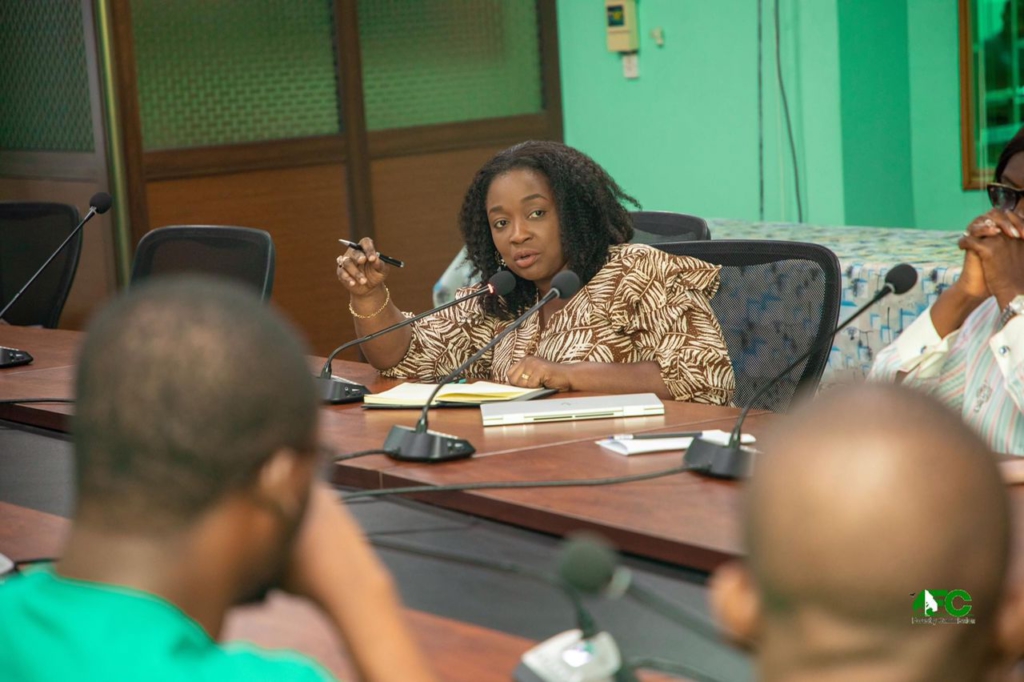
Director of Climate Change at the Forestry Commission, Roselyn Fosuah Adjei, assured the fund allocation shall not be paid through intermediaries as the communities have established committees to oversee smooth payments of the funds.
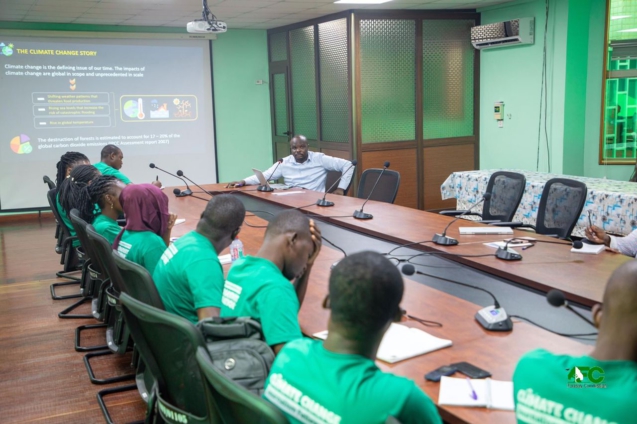
She spoke during an institutional visit to the Commission by ten West African journalists under the 2022 Climate Change Journalism Fellowship organized by the Media Foundation for West Africa.
“We’ve set up a governance structure with the communities. They have their leadership. They have their own bank accounts with signatories. We will work out how they are able to utilize their funds to their maximum best,” she said.
Mrs. Fosuah Adjei further indicated that the remainder of the funds will be paid into the coffers of the Commission and the secretariat in-charge of the initiative.
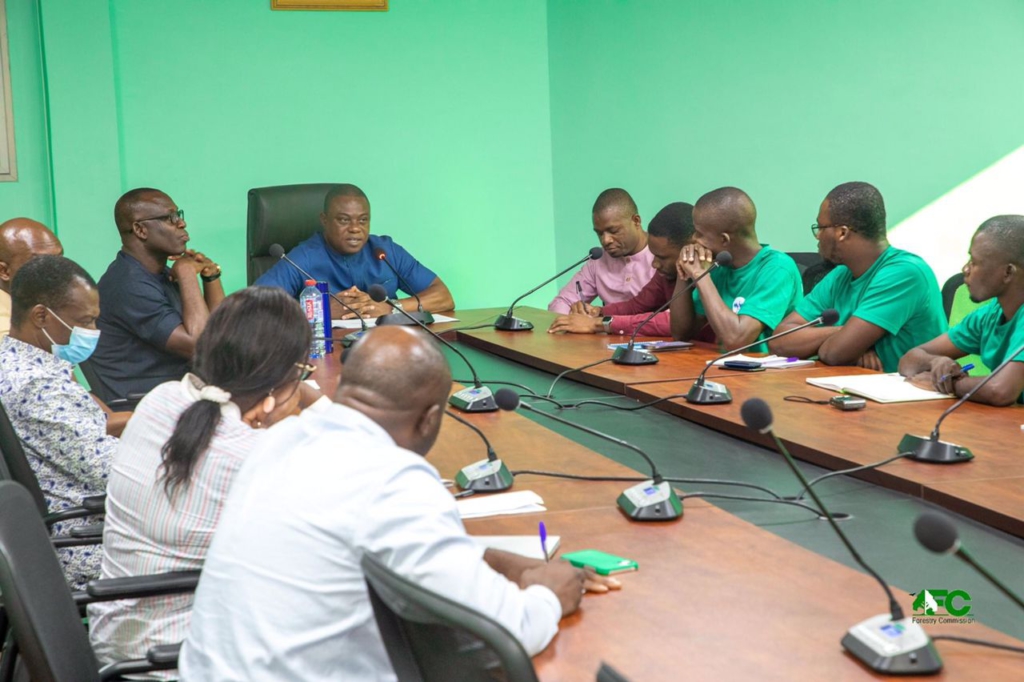
According to her, the allotted funds to the governmental bodies are for the sustainability and management of the project and the Commission’s stringent enforcement of laws governing deforestation and land degradation.
“This is because we have a secretariat and we need to run the programme, conduct monitoring and evaluation. We need to learn and keep being innovative and creative on how best we can advance the whole programme,” she said.
The payment is the first of four under Ghana’s Emission Reductions Payment Agreement (ERPA) with the World Bank to demonstrate potential for leveraging results based payments for carbon credits.
Ghana has a potential of receiving a maximum of $50 million for 10 million tons of carbon dioxide emissions reduced by the end of 2024.
The cocoa producing country is second among the fifteen African countries, after Mozambique, to receive payment after signing the ERPAs.
About the Ghana-Cocoa Forest REDD+ programme
The Ghana-Cocoa Forest REDD+ programme is the premiere global commodity-based emission reduction programme.
The initiative aims at reducing significantly, emissions driven by deforestation and forest degradation by employing climate-smart cocoa production strategies.
This however improves the livelihoods of farmers through substantial yield increases and other beneficial arrangements.
The program is being implemented in high forest zones located in the South of the country, covering approximately 6 million hectares (ha) of the West Africa Guinean Forest biodiversity hotspot.
The programme was birthed to curb the ballooning deforestation rates in Ghana caused by cocoa farming expansion into forest covers.
Ghana’s emission reductions program is hinged on the country’s national strategy for reducing emissions from deforestation and forest degradation (REDD+).
It is in alignment with national policies and strategies such as the National Climate Change Policy, Ghana’s Shared Growth and Development Agenda, the National Forest and Wildlife Policy, the National Gender Policy, and Ghana’s Nationally Determined Contributions to the UN Framework Convention on Climate Change.
The writer is a fellow of the Climate Change Journalism Fellowship (CCJF) Programme by the Media Foundation for West Africa (MFWA), a non-for-profit media development and freedom of expression organization based in Ghana but working across West Africa. The Fellowship trains journalists to promote climate change awareness and responses through increased and quality media reporting and public education. To learn more about the fellowship, click here or visit the www.mfwa.org (climate change journalism fellowship)
Latest Stories
-
Office of the Registrar of Companies marks Risk Awareness Week with push for risk-smart, resilient institution
3 minutes -
Full text: Mahama’s speech at high-level side event on return and restitution of cultural properties and heritage
7 minutes -
ICU urges Ghanaian smock weavers to scale up production for local and export markets
7 minutes -
Human remains are not collectibles, specimens – Mahama demands restitution of Africa’s heritage
8 minutes -
EOCO, Baffour Awuah clash: Article 117 does not give MPs blanket protection from arrest – Samson Ayenini
10 minutes -
Mahama unveils 3 pillars to advance global reparatory justice agenda
28 minutes -
JoyNews Democracy Is Not for Sale regional dialogue – My take
33 minutes -
US ready to work with Ghana on reparatory justice despite opposing UN resolution – Ablakwa
44 minutes -
UK, Netherlands, Denmark ready to work with Ghana on reparatory justice – Ablakwa
51 minutes -
Ghana TVET Service partners TOR to strengthen industry skills training
57 minutes -
KNUST hosts Nyansapo Photonics School, commissions GPOL to boost research and innovation
1 hour -
Minority Leader outlines procedure for security agencies seeking to arrest MPs
1 hour -
Baffour Awuah’s lawyers dispute EOCO claim over February invitations
1 hour -
Pursuing Manhyia South MP through Parliament would have made arrest process more decorous – Interior Ministry spokesperson
1 hour -
2026 Women’s Super Cup: Hasaacas, Prisons Ladies dominate first round of games
1 hour