

Audio By Carbonatix
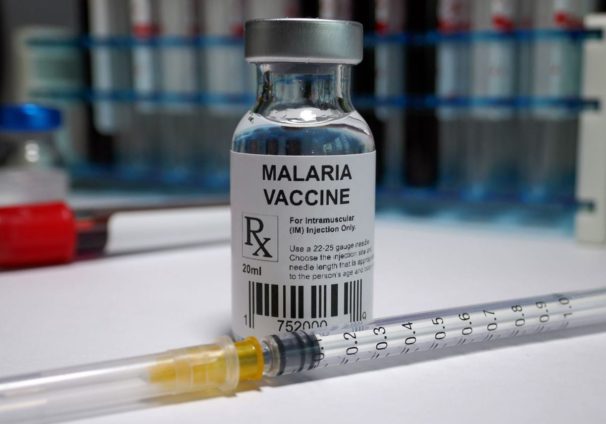
A keenly-watched malaria vaccine from Oxford University has secured its first approval, in Ghana, as the African country ramps up efforts to combat the mosquito-borne disease that kills a child every minute.
The effort is one of several focused on addressing the disease that kills over 600,000 each year, most of them children in Africa.
The complicated structure and lifecycle of the malaria parasite has long stymied efforts to develop vaccines.
After decades of work, the first malaria vaccine, Mosquirix from British drugmaker GSK, was last year endorsed by the World Health Organization (WHO), but a lack of funding and commercial potential has thwarted the company's capacity to produce as many doses as needed.
The Oxford vaccine, which has secured regulatory approval in the age group at highest risk of death from malaria - children aged 5 months to 36 months - has a manufacturing advantage thanks to a deal with Serum Institute of India to produce up to 200 million doses annually.
In contrast, GSK has committed to produce up to 15 million doses of Mosquirix every year through 2028, well under the roughly 100 million doses a year of the four-dose vaccine the WHO says is needed long-term to cover around 25 million children.
Mid-stage data from the Oxford vaccine trial involving more than 400 young children was published in a medical journal in September.
Vaccine effectiveness was 80% in the group that received a higher dose of the immune-boosting adjuvant component of the vaccine, and 70% in the lower-dose adjuvant group, at 12 months following the fourth dose. The doses were administered ahead of the peak malaria season in Burkina Faso.
Data from an ongoing phase III clinical trial in Burkina Faso, Kenya, Mali and Tanzania that has enrolled 4,800 children is expected to be published in a medical journal in the coming months.
However, late-stage data - which suggests a similar vaccine performance as in the phase II trial - has been shared with regulatory authorities over the last six months, Oxford scientist Adrian Hill said.
Childhood vaccines in Africa are typically paid for by international organisations such as Gavi and UNICEF after they have been backed by the World Health Organisation (WHO).
This is the first time a major vaccine has been approved first in an African country, before rich nations, Hill added, noting that it was unusual that a regulatory authority in Africa had reviewed the data quicker than the WHO.
"Particularly since COVID, African regulators have been taking a much more proactive stance, they've been saying...we don't want to be last in the queue."
Latest Stories
-
YEA records GH¢110.4m surplus after turning around 2024 deficit – SIGA report
1 minute -
Madina MP Francis-Xavier Sosu prioritises road rehabilitation, education and healthcare
7 minutes -
Valco-Kpone road turns nightmare as motorists fume, tanker drivers threaten fresh strike
7 minutes -
STC cuts net loss by 93% to GH¢5.18m despite 12% revenue decline
14 minutes -
Tanker drivers threaten strike over deplorable VALCO-TOR-Kpone road
20 minutes -
NPA surplus jumps 76% to GH¢447m in 2025 – SIGA
23 minutes -
Railway workers push for completion of Takoradi-Nsuta line by 2027
27 minutes -
Police arrest 6 suspected notorious armed robbers in Kumasi
30 minutes -
Opinion: GHS1m is welcome, but Ghana Premier League’s biggest problem remains unsolved
31 minutes -
Stylen Boy’s ‘Adole’ featuring Kurl Songx hits No. 1 on Ghana iTunes
34 minutes -
CBG’s assets rise to GH¢17.86bn as deposits, revenue and equity grow in 2025 – SIGA Report
37 minutes -
KNUST SHS considers slashing admissions over infrastructure deficit
42 minutes -
GEXIM Bank’s capital adequacy ratio rises to 75.3% in 2025 – SIGA Report
45 minutes -
CPC’s revenue plunges 47% as net loss widens to GH¢144m — SIGA
46 minutes -
Ghana Water turns GH¢3.06bn loss into GH¢635.23m profit in 2025 – SIGA Report
47 minutes