

Audio By Carbonatix
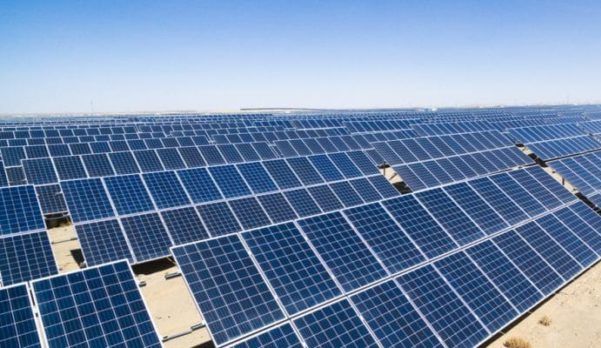
Morocco is at a crossroads. Its ecological conditions, with the sun of the Sahara and the wind of the Atlantic coast, make it a prime candidate for massive-scale solar and wind farms. Its numerous port cities and proximity to Europe also make it a prime candidate for becoming a major source of European energy as the continent pivots away from its dependence on Russian natural gas. But while this approach would undoubtedly be a boon to the Moroccan economy, it would come at a major cost to the African energy market.
As much as North Africa needs investment and industry to build its economy, it also desperately needs energy to fuel its own development. Despite its vast clean energy potential, Morocco currently depends on imports for 90% of its energy, the lion’s share of which comes from fossil fuels. In 2021, just 2.4% of Morocco’s energy mix came from wind power, and 4.4% from solar.
Under a scenario put together by the International Energy Agency in 2019, electricity demand in North Africa is projected to increase by almost 35% by 2030. A large amount of this demand will come from air conditioning, a need that is projected to increase as the blistering Saharan climate grows even hotter with climate change. Renewable energy growth is therefore an essential pathway toward helping the region meet its energy needs as well as its own climate goals.
There are already major renewable energy projects underway in North Africa, many of which were designed to meet the high and growing demand to power African grids and lessen the region’s own carbon footprint.
However, this added energy production capacity is being increasingly diverted to European markets as Europe struggles to regain energy security.
“Morocco has connections via a regional power pool that could send green electricity to most nations in West Africa, while Egypt is similarly linked to most of East Africa,” Yale360 recently reported. “But both countries’ electricity exports are currently earmarked for European markets instead.”
Many Moroccan politicians and business leaders are cheering this trend, but for the North Africans who won’t benefit from the business dealings with Europe, the outlook is starker. The scale of the clean energy projects being planned in Morocco means that North Africa is primed for a fresh round of land-grabbing.
“Utility-scale solar and wind farms require at least ten times as much space per unit of power as coal- or natural gas–fired power plants, including the land used to produce and transport the fossil fuels,” McKinsey recently reported about solar and wind farms in the U.S.
“Wind turbines are often placed half a mile apart, while large solar farms span thousands of acres.” And some of the projects being planned in North Africa are among the largest in the world.
What’s more, these developments will likely take place “with minimal community consultation or ecological assessment,” warns Yale. Assessment or not, we can be sure that there will inevitably be major disturbances to the flora, fauna, and human populations where these mass-scale projects are developed.
While the Sahara Desert is often portrayed as an empty and desolate place, the desert is actually a fragile and essential ecosystem that supports communities of nomadic pastoralists whose lives and grazing patterns will be upended by the arrival of an industrial energy revolution.
The reality of this disturbance would be especially bitter if that energy were never to touch the country’s own energy grid.
But there are, of course, two sides to this story. Producing wind and solar energy for export to Europe could create as many as 28,000 jobs per year, according to the World Bank's lead economist for the region, Moez Cherif.
This is extremely meaningful in a nation with an unemployment rate of 11.2%. Cherif also said this approach would allow Morocco to "position itself as an industrial hub for investments for exports of green industrial products."
Latest Stories
-
IMF urges tighter controls over GoldBod programme amid concerns over BoG losses
16 minutes -
Appointments Committee to vet Zanetor Agyemang-Rawlings today
20 minutes -
GMA strengthens competencies of seafarer examiners, instructors
23 minutes -
‘Crime is crime’ – Mahama Ayariga cautions MPs against shielding politicians from prosecution
29 minutes -
IMF cautions Ghana against early return to international capital markets
34 minutes -
GoldBod ‘losses’ have helped stabilise Cedi, contain inflation – Mahama Ayariga
40 minutes -
NDC formally notifies Speaker of James Agalga’s appointment as Majority Leader
45 minutes -
DGPP’s GH¢21.89bn ‘loss’ is accounting adjustment, not cash expense – Sources
49 minutes -
Tuba murder: Court adjourns case to September 28, as police prepare to forward docket to AG
51 minutes -
Debt restructuring key to Ghana’s economic recovery – IMF
56 minutes -
Let’s wait and see – Agalga refuses to take sides on extortion allegation as OSP probe begins
57 minutes -
FDA intensifies drive to ensure iodised salt reaches consumers
1 hour -
HTU partners Praise Export to boost student training, employability
1 hour -
Samuel Abu Jinapor proposes independent body to fight galamsey
1 hour -
Government moves to review Minerals and Mining Act to strengthen regulation
1 hour